Reading the full series? Browse all volumes here.
Before diving in — Vol. 2 sets out the author’s framing and caveats.
The Ohmi Shonin used horses on land; at sea, they used ships.
In the early Edo period (the early seventeenth century), the Tokugawa shogunate, seeking to forestall rebellion by the daimyo, banned the construction of vessels able to carry more than 500 koku (roughly 75 tonnes). That said, the merchants pushed back, and as early as the first half of the seventeenth century the restriction was lifted for merchant vessels.*1
Partly because of this, a class of operators known as kaisen-don’ya — wholesalers who acted as intermediaries between cargo owners and shipowners — came to prosper in Edo-period Japan.
One town near Ohmi where the kaisen-don’ya flourished was Tsuruga.*2 Modern Tsuruga lies in Fukui Prefecture, which borders Shiga Prefecture — the present-day name for the Ohmi region — directly to the north. Tsuruga is also known today as the site of a nuclear power station.
Tsuruga was not the only place on the Japan Sea coast near Ohmi to have kaisen-don’ya; they were also found in nearby Obama and Mihama, and in Komatsu, which today belongs to Ishikawa Prefecture. The Ohmi Shonin are thought to have used the kaisen-don’ya in these towns to ship their goods.
This is because the Ohmi Shonin would, in effect, form joint ventures among several merchants and transport their goods together.*3 Because the shipments were pooled, this gave the Ohmi Shonin leverage when negotiating prices with the kaisen-don’ya. It is also natural to suppose that, to improve their margins, they dealt not only with Tsuruga — the city closest to Ohmi — but with the kaisen-don’ya of the various neighbouring port towns within reach by land.
Shipping in the Service of the Edo-Period Ohmi Shonin
These chartered vessels of the Ohmi Shonin, setting out from Tsuruga and elsewhere, headed for Hokkaido. Calling at port towns along the Japan Sea coast, they were bound for the Matsumae domain in southern Hokkaido.
Matsumae was the only part of Hokkaido that the Tokugawa shogunate’s authority reached during the Edo period. The Ohmi Shonin therefore shipped goods from Honshu and elsewhere to Matsumae and, on the return voyage, loaded up Hokkaido’s marine produce and the like to carry home.
The Japan Sea shipping route that linked Matsumae, the Tohoku region, the Hokuriku region and the Chugoku region in this way — or the merchant vessels that plied it — is known as the kitamaebune. Part of modern Japan’s National Route 8 also goes by the nickname the Hokkoku Kaido. This was originally the highway the Ohmi Shonin used in the Edo period to cross over into the Hokuriku region, and much of the cargo carried to and from the kitamaebune travelled this same route.
As noted above, the limit placed on ship size at the very start of the Edo period was soon lifted. Many kitamaebune appear to have been around 500 koku — the former upper limit — though some are said to have carried 1,000 koku (roughly 150 tonnes), or even 2,000 koku.
The kitamaebune served the Japan Sea route, but there was a Pacific-side route as well. Its leading example was the higaki-kaisen, which connected Edo and Osaka. Like the kitamaebune, the higaki-kaisen was an important means of transport for the Ohmi Shonin.*4
The Couriers and Shipping Behind Their Commercial Success
In the previous instalment the author looked at travel by land, and in this one at travel by sea — at how the Ohmi Shonin moved their goods. Both tie back to earlier instalments, specifically Vol. 7 and Vol. 8.
Vol. 7 examined mochi-kudari — carrying goods from Ohmi to other cities and regions to sell — and mochi-nobori — buying up local produce once the selling was done. Together these are called nokogiri-akinai, or “saw trading”. Buying across a range of regions and selling across a range of regions is termed, in the language of the Ohmi Shonin, shokoku sanbutsu mawashi.
Nokogiri-akinai on its own might be managed by a single merchant. Shokoku sanbutsu mawashi, however, also calls for organisational muscle. On this point, an individual Ohmi merchant might set about organising himself, or — as discussed in this instalment — form a joint venture. One can see, too, how much the presence of couriers and ships did to make both nokogiri-akinai and shokoku sanbutsu mawashi possible.
Vol. 8, meanwhile, took up the low-margin, high-volume approach that the Ohmi Shonin adopted as a business tactic. Here again, it was precisely because couriers and shipping allowed large quantities of goods to be moved that a low-margin, high-volume business could stand up at all.
A Dish Born of the Kitamaebune: Tori-Yasai Nabe
Now that place names such as Tsuruga and Obama have come up, the author would like to close with an aside connected to these areas.
Kitamaebune crews, naturally, spent a great deal of time aboard ship. One problem this created for them was a shortage of vegetables — and hence of vitamins — in their diet.
One dish devised to remedy this is tori-yasai nabe. The tori here is not the Japanese word for chicken — which happens to be pronounced the same way — but a different tori that means “to take in”, so the name really denotes a hotpot for taking in your vegetables. Even Japanese speakers sometimes misread it as “a hotpot of chicken and vegetables” — a confusion only compounded by the fact that chicken is, indeed, often added.
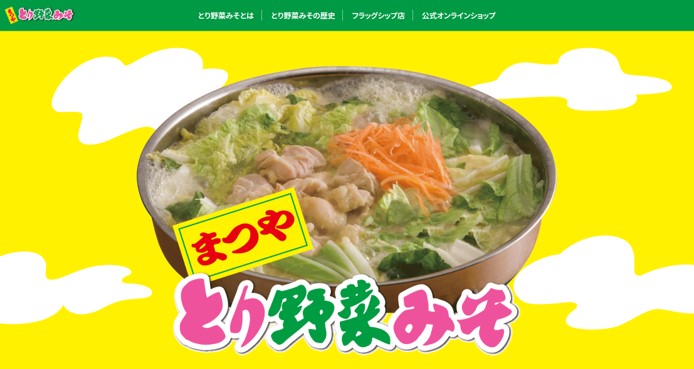
The first place the author ever ate tori-yasai nabe was Komatsu. So any reader planning a trip around Ishikawa or Fukui might like to give it a try.
The broth of tori-yasai nabe is miso-based, so tastes may differ from one person to the next. Anyone fond of miso soup, on the other hand, should be able to take to it without a second thought.
OHYASHIMA is seeking information about the Ohmi Shonin
In connection with this series, OHYASHIMA welcomes information about the Ohmi Shonin. The author would be particularly grateful to hear from:
- Museum curators and archivists — in Japan or elsewhere — who hold collections related to the Ohmi Shonin
- Those who work for companies with ties to the Ohmi Shonin, or whose own ancestors were Ohmi Shonin
- Those who know of Ohmi Shonin merchants who conducted business outside Japan
OHYASHIMAは近江商人に関する情報を求めています
本連載にあたり、近江商人に関する情報を募集しています。たとえば、下記に該当する方はぜひご存じの情報をお寄せください。
- 日本国内外を問わず、近江商人に関する所蔵品がある博物館などの学芸員の方
- 近江商人と関連のある企業にお勤めの方、先祖などに近江商人がいらっしゃる方
- 日本国外でビジネスをした近江商人についてご存じの方
*1 “Wasen no Gijutsu to Sakoku no Joshiki: Mono no Kankaku kara Miru Gijutsu no Rekishi” [The Craft of Japanese Ships and the Received Wisdom of National Seclusion: A History of Technology Seen Through a Sense of Things], Hiroyuki Adachi, Mizkan Mizu no Bunka Center, Mizu no Fudoki / Mizu no Bunka, Hito Network
*2 “Kitamaebune to wa” [What the Kitamaebune Was], Kitamae-bune Promotion Council
*3 Ohmi Shonin-gaku Nyumon — CSR no Genryu ‘Sanpo Yoshi’ — Kaitei-ban, Kunitoshi Suenaga, Sunrise Publishing
*4 “Shūun Kibun (Mōdo),” Hideki Usami, Mizkan Mizu no Bunka Center, Mizu no Bunka, No. 25 https://www.mizu.gr.jp/kikanshi/no25/05.html