Reading the full series? Browse all volumes here.
Before diving in — Vol. 2 sets out the author’s framing and caveats.
From this instalment onwards, I turn to the other element that sits alongside the Ohmi Shonin in the title of this series: the Jodo ethic, and Buddhism itself.
By way of disclosure, I am a lay follower of Jodo Shu, and therefore a Buddhist. Jodo Shu resembles, in name, the Jodo Shinshu to which many of the Ohmi Shonin belonged. The reason is that Shinran — nominally the founder of Jodo Shinshu, though historically he appears to have had no sense of founding a school of his own, a point I will take up in a later instalment — studied under Honen, the founder of Jodo Shu. The doctrines of the two schools are, accordingly, closely related.
That said, I am no more than an ordinary lay follower, and my religious knowledge extends little further than what I have heard from priests at religious observances. I would ask readers to bear in mind that what follows on Buddhism and the Jodo ethic represents only what one editor happens to know and has been able to look into.
How a Prince of the Indian Subcontinent Attained Enlightenment and Became the Buddha
There are, by one estimate, some 324 million Buddhists in the world.*¹ That is not a small number, but because most of them are concentrated in the eastern part of Asia, I suspect Buddhism remains an unfamiliar thing to people in the West, the Middle East and Africa.
It seems best, then, to begin with the question of what Buddhism actually is.
Buddhism was founded in the fifth century BC by the Buddha.*² His original name was Gotama Siddhattha, and he is said to have been the prince of a small state in what is now the India–Nepal border region. Gotama is accordingly said to have wanted for nothing as he grew up, save that he lost his mother shortly after birth.
Even so, from a young age he was given to dwelling on a single question: how might a human being attain true happiness? That preoccupation grew until, at the age of 29, he left the palace and set out on his travels. He undertook severe austerities, but enlightenment did not come. One day, while bathing to purify himself, a young woman named Sujata who lived nearby gave him a bowl of milk porridge. Body and mind alike, worn out by his austerities, recovered rapidly, and Gotama sat in meditation beneath a bodhi tree. There, it is said, he attained enlightenment. From that point on he took the name Buddha.
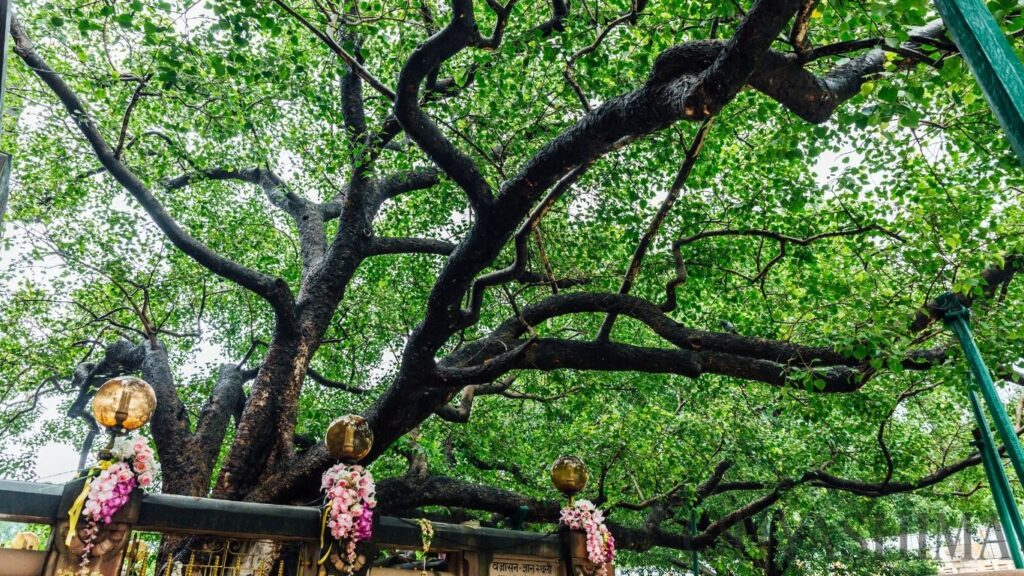
I attended a kindergarten run by a Buddhist temple — of the Shingon school, not one of the Pure Land schools. For the three years I was there, I have a faint memory of hearing a sermon on this exchange between the Buddha and Sujata every April, when the school year begins in Japan.
Let me jump now to the present day. Buddhism in modern Japan is sometimes called “funeral Buddhism”, it does have a side to it that has become something like a format. And so that the deceased may reach heaven, or the Pure Land — though Jodo Shinshu does not take this view, a point for another instalment — Japanese Buddhist funerals include passages in which everyone present chants sutras together.
Modern Japanese Buddhism is, in short, “a religion for getting the dead into heaven”. In this respect it may be said to resemble the Semitic monotheisms, Christianity among them.
Yet when one follows the process by which Gotama attained enlightenment and became the Buddha, the emphasis falls squarely on how to live. This may be precisely what modern Buddhists, myself included, have forgotten. It also occurs to me that the Ohmi Shonin — who practised nothing like the Buddha’s austerities — may nonetheless have given hard thought to how they themselves should live, and how they and others should live together. That impression surfaces from time to time as I conduct interviews and work through source material.
The Death of the Buddha and an Asian Sense of Value
For this instalment, however, I want to keep the focus on the Buddha and the beginnings of Buddhism.
The five men who had entered the ascetic grove and practised alongside him became his first disciples. He then travelled across India, preaching his teaching, and it won a wide following.
But a religious leader who leaves his name to history is, having been born into a human body, no less subject to the end of life. The Buddha died around the fourth century BC in the town of Kushinagar, in India. Not only his disciples and followers but animals and insects too, it is said, gathered to mourn his passing.
Paintings depicting the dying Buddha surrounded by these people and animals are known as nirvana paintings, or nehan-zu.
Another personal recollection from childhood: the kindergarten I attended had a nirvana painting on display. As I remember it, there were several paintings depicting the Buddha’s life, not the nirvana painting alone, hung on the staircase between the ground and first floors of the school building. The nirvana painting there was not, to my eye, a particularly beautiful thing. It may not have been the work of a painter at all, but a torn-paper collage made as some year’s graduation project.
What has stayed with me, though, is the composition itself: animals as well as people mourning the Buddha’s death. It sets me wondering whether a sense — one I would call Asian — that the lives of human beings, animals and plants weigh equally already existed before the rise of Buddhism, and that this is why the ground was prepared for Buddhism to be accepted; or whether, conversely, Buddhism developed by honouring such a sense of things.
OHYASHIMA is seeking information about the Ohmi Shonin
In connection with this series, OHYASHIMA welcomes information about the Ohmi Shonin. The author would be particularly grateful to hear from:
- Museum curators and archivists — in Japan or elsewhere — who hold collections related to the Ohmi Shonin
- Those who work for companies with ties to the Ohmi Shonin, or whose own ancestors were Ohmi Shonin
- Those who know of Ohmi Shonin merchants who conducted business outside Japan
OHYASHIMAは近江商人に関する情報を求めています
本連載にあたり、近江商人に関する情報を募集しています。たとえば、下記に該当する方はぜひご存じの情報をお寄せください。
- 日本国内外を問わず、近江商人に関する所蔵品がある博物館などの学芸員の方
- 近江商人と関連のある企業にお勤めの方、先祖などに近江商人がいらっしゃる方
- 日本国外でビジネスをした近江商人についてご存じの方
*¹ Why is Buddhism shrinking worldwide?, Yunping Tong, Dalia Fahmy, Conrad Hackett, Pew Research Center
*² Jodo Shinshu Made Clear, Naka Uryu, Kadokawa Sophia Bunko