
Reading the full series? Browse all volumes here.
Before diving in — Vol. 2 sets out the author’s framing and caveats.
When we hear the word ‘exile’, many of us probably picture being made to live somewhere with next to nothing, surrounded only by people with whom one has no prior connection, and unable to escape because the place is so cut off. The author suspects that this image of exile differs little between East and West.
Among the famous figures in world history who were sent into exile, Emperor Napoleon would surely count as one. Strictly speaking, Napoleon was not sentenced to exile: he surrendered to Britain in the course of war and was placed in British custody. Even so, in 1815 he was sent to St Helena, a remote British island in the Atlantic, so his treatment was close to that of an exile.
Napoleon’s life there may not have been comfortable, but he did not suffer extreme hardship in matters such as food. Even on that small island, however, he was required to be accompanied by a British officer whenever he went out, and he is said to have received humiliating treatment from the Governor, Hudson Lowe.*¹
Life in exile, surrounded by kin
How, then, did Shinran fare after being exiled in the Ken’ei Persecution, also known as the Jogen Persecution?
Before turning to that, the author would like to touch briefly on how the Japanese view Shinran.
The author’s impression is that a notable number of Japanese people, whether or not they are followers of Jodo Shinshu, feel an affinity with Shinran. The author once edited a book by a certain politician, and heard that this person had chosen Shinran as the subject of their undergraduate dissertation. The politician is a serious-minded person, but never struck the author as particularly devout.
This is admittedly an example close to home, but the sheer number of books, films and television dramas made about Shinran would seem to bear out that many Japanese feel an affinity with him. The religious studies scholar Hiromi Shimada attributes this phenomenon to the fact that ‘there is something in Shinran’s humanity that connects with the modern self, and his very way of life holds an appeal for people today’.*² In Japan, the ‘modern self’ (kindaiteki jiga) refers to the anguish of being torn between the premodern and the modern.*³ It is close to, but not quite the same as, the modern self associated with Descartes. For the Japanese, the modern self denotes a mind wavering between the Western ideas and systems imported from the 19th century onwards and things Japanese.
While sharing Shimada’s analysis, the author suspects that people also find something romantic in the way Shinran questioned the existing currents of Buddhism and created a new one. In other words, there is respect for, and admiration of, the fact that he and Honen laid the foundations of the Pure Land Buddhism that continues to this day. This may be something that resonates with people outside Japan as well.
Some readers may then wonder whether Honen does not enjoy the same affinity among the Japanese as Shinran. Rather than saying that Honen fails to win sympathy, the author would say that he tends to be less conspicuous than Shinran. One reason, the author believes, is that at the time of the Ken’ei Persecution Honen was already in old age, and he died not long afterwards. There are other possible reasons too, but those must wait for another occasion.
To return to the story. Shinran was banished to the kokufu, or provincial capital, of Echigo Province (present-day Joetsu, Niigata Prefecture). In terms of Japan’s present system of local government by prefecture, a kokufu corresponds to the town that serves as the prefectural capital. The books and screen works about Shinran mentioned above sometimes depict him enduring hardships in Echigo, including further persecution.*⁴
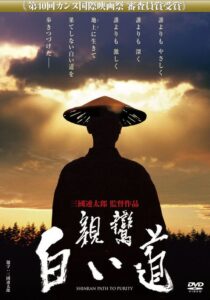
In reality, however, this was not necessarily the case. Life there may well have been inconvenient in some respects compared with life in Kyo, the capital — present-day Kyoto. Yet a month before Shinran was exiled, his uncle Munenari Hino had been appointed Gon-no-suke of that same Echigo Province. A Gon-no-suke was something like a senior official in the provincial government of the day.
Moreover, the family of Shinran’s wife, Eshin-ni, were the Miyoshi, a powerful local clan based in Echigo. At the time of Shinran’s exile, the Miyoshi still held lands in Echigo.
It follows that Shinran, in exile, did not at least lead a life of extreme stress. Satoko Koyama, a historian of Japanese religion, likewise observes that he ‘was probably not forced to live in hunger or the like’.
Why did Honen and Shinran escape heavy punishment?
Some readers may feel that this rather defeats the purpose of exile. The author feels the same.
On this point, Shimada, mentioned earlier, suggests that Shinran may never have been exiled at all, or that he may not have gone to Echigo as an exile. His grounds are that Echigo was not a designated place of exile under the laws of the day, and that nothing outside the sources produced on Shinran’s side indicates that he was exiled.
Looked at another way, it is also possible that the imperial court and its officials harboured a ‘fear of the unseen’. This is the author’s own view, but the age in which Shinran lived was, after all, the medieval period. People then believed that invisible things such as mononoke (malevolent spirits) and ghosts could bring illness upon people or cause political and economic turmoil. Anrakubo and the others who had directly led ladies-in-waiting favoured by the ex-Emperor Go-Toba to take the tonsure had to be executed if the court was to demonstrate its authority. Yet the court may have feared that if other monks such as Honen and Shinran were also kept in exile until they died, their ghosts might run amok after death. Honen in particular, though he belonged to an emerging force within Buddhism, was held in high regard by the aristocracy. From a modern standpoint, on the other hand, one could also see it as holding Anrakubo and the others directly responsible, while holding Honen responsible only in a supervisory capacity.
In the end, Shinran was pardoned in 1211. His punishment had lasted about five years. Yet he did not return to Kyo straight away.
OHYASHIMA is seeking information about the Ohmi Shonin
In connection with this series, OHYASHIMA welcomes information about the Ohmi Shonin. The author would be particularly grateful to hear from:
- Museum curators and archivists — in Japan or elsewhere — who hold collections related to the Ohmi Shonin
- Those who work for companies with ties to the Ohmi Shonin, or whose own ancestors were Ohmi Shonin
- Those who know of Ohmi Shonin merchants who conducted business outside Japan
OHYASHIMAは近江商人に関する情報を求めています
本連載にあたり、近江商人に関する情報を募集しています。たとえば、下記に該当する方はぜひご存じの情報をお寄せください。
- 日本国内外を問わず、近江商人に関する所蔵品がある博物館などの学芸員の方
- 近江商人と関連のある企業にお勤めの方、先祖などに近江商人がいらっしゃる方
- 日本国外でビジネスをした近江商人についてご存じの方
*¹Napoleon’s Exile In Saint Helena: Prisoner of State or War?, Sophie Gee, History Hit
*² Why Is Jodo Shinshu the Largest School in Japan? The Riddle of Buddhist Schools, Hiromi Shimada, Gentosha Shinsho
*³How Should We Face Fundamental Nothingness?, Hironobu Kikuchi, The Center for Shin Buddhist Studies
*⁴ What Is Jodo Shinshu? Shinran’s Teaching and Its Lineage, Satoko Koyama, Chuko Shinsho