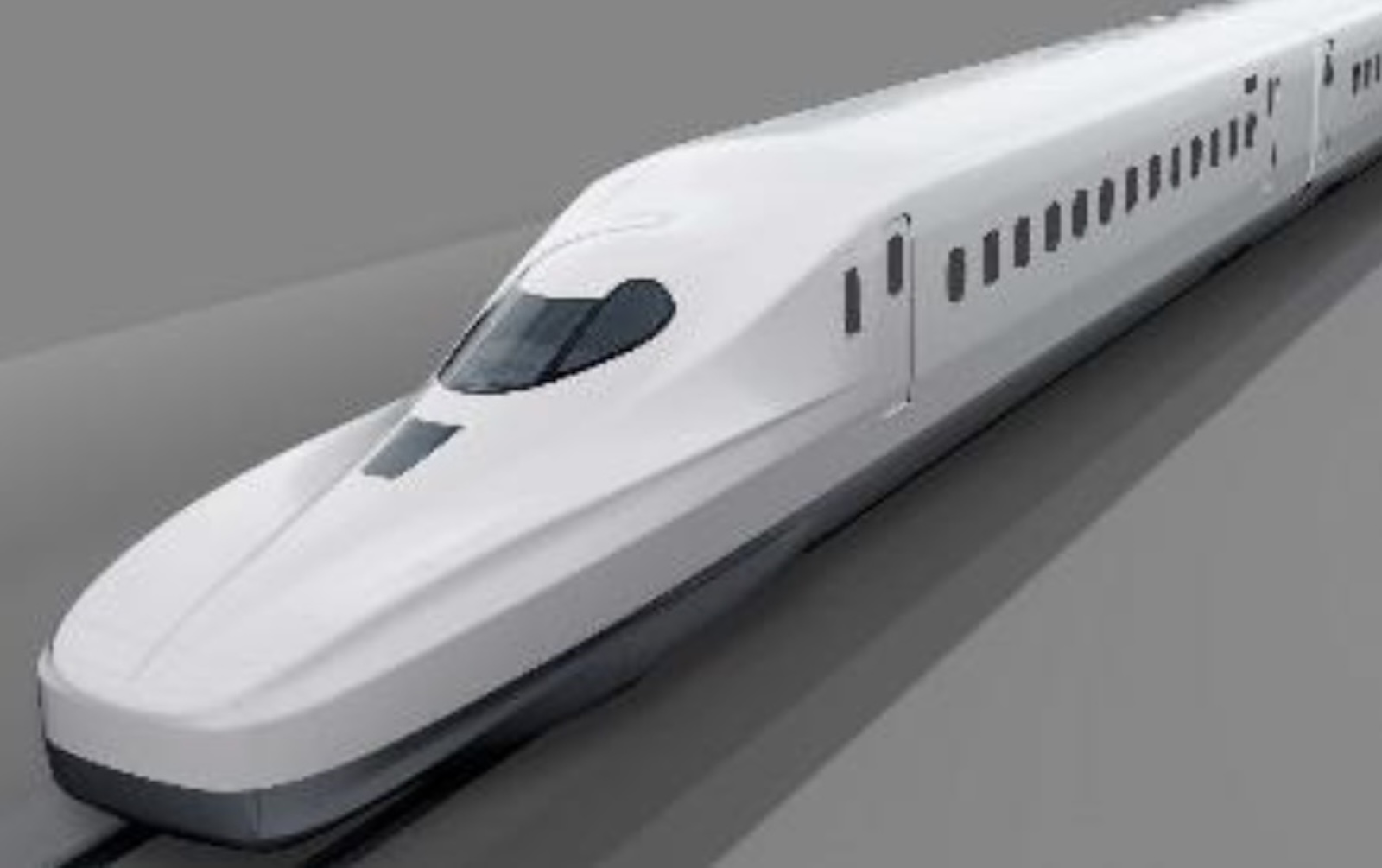
Central Japan Railway Company (JR Central) announced on 16 October that it will introduce a new train model, the S0 Series, on the Tokaido and Sanyo Shinkansen. Commercial service is scheduled to begin in July 2029.
Safety and environmental performance of the S0 Series | Automatic train operation
This article looks at the S0 Series’ features in two parts: safety and environmental performance, and passenger services.
On safety and environmental performance, the first item JR Central lists is automatic train operation. The S0 Series will carry a system called GOA2, which sets an energy-saving planned speed based on information received via millimetre-wave train radio and runs the train according to that plan. The system can also update the plan when the timetable is disrupted, for example by a slowdown caused by a preceding train.
JR Central describes how GOA2 works in practice: after departing at the press of a button, the train ‘runs automatically in accordance with the set planned speed’. A driver will therefore remain on board as before.
The S0 Series also saves energy through aerodynamic refinements. It introduces a new nose shape that JR Central has named the ‘Twin Remex’ design, representing the remex, the flight feather that generates lift when a bird flies. With these technologies combined, JR Central says the S0 Series will use around 6% less electricity than the N700S.
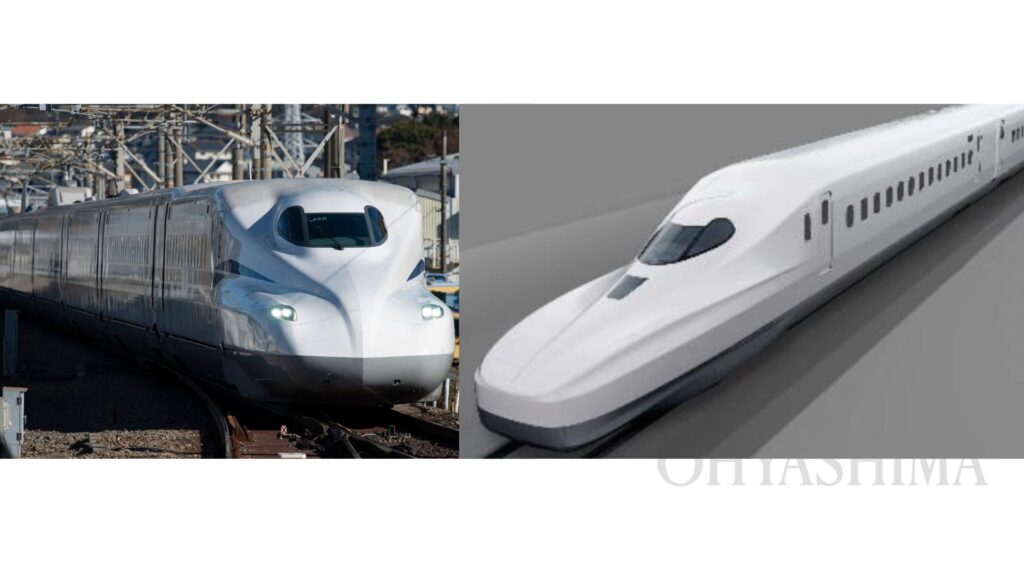
It is a little hard to make out, but in the comparison above the S0 Series has what looks like a notch or recess on the side of its lower body.
The share of recycled material in the trains will also rise. Recycled aluminium accounts for around 14% of the N700S, a figure JR Central has raised to around 20% for the S0 Series. Whereas the N700S uses recycled material in the roof and side panels, the S0 Series will also use it in the floor and end walls (the surfaces at the front and rear of each car).
Looking at the numbers alone, the share of recycled material may seem low. However, given how long it took the European Union to settle on a recycled plastic content requirement for cars (it eventually agreed on targets of 15% by around 2032 and 25% by around 2036), there is clearly still plenty of room to improve the quality of recycled materials, and this is likely a factor.
In addition, an early earthquake detection system will be introduced using the millimetre-wave train radio mentioned above, cutting the time from earthquake detection to braking to one-tenth of the current level, while improved brakes will shorten braking distance by 5%.
Service improvements on the S0 Series and modifications to existing trains
Among the service improvements, one shared by Green Cars (upper class) and ordinary cars is an increase in vestibule luggage spaces (areas where suitcases can be stowed) from the current six per trainset to nine on the S0 Series. This is likely a response to the number of inbound visitors to Japan, which has been rising since the 2010s and continues to grow. The overhead racks will also be able to hold slightly larger items than they do today.
In the Green Cars, standard seating, previously available in only one type, will come in two types, and legroom will be expanded, among other improvements.
JR Central will also modify its existing trains (the N700S and N700A) to bring S0 Series technologies and services to them. For example, the two types of Green Car seat will be rolled out on the N700S and N700A from April 2028 onwards. As the modifications will be carried out ‘progressively’, there will likely be a period from 2028 in which modified and unmodified trains run side by side.
The automatic operation system will also be fitted to the N700S, with modifications to begin progressively from October 2029.
The series name returns to ‘0’
Including the Japanese National Railways (JNR) era, JR Central and its predecessor have introduced the 0 Series, 100 Series, 300 Series, 700 Series and N700 Series on the Tokaido Shinkansen, followed by the current N700A and N700S.
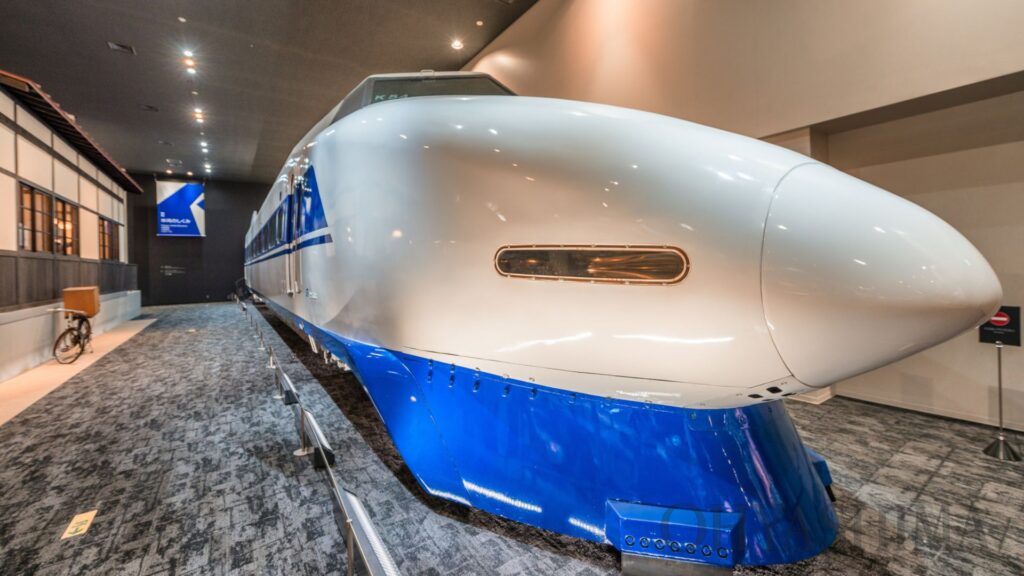
JR Central says the S0 Series takes its name by ‘prefixing “0”, representing a base point, with “S” for Shinkansen and Supreme’. The name can be read as signalling both a return to origins and the arrival of a new era.