Reading the full series? Browse all volumes here.
Before diving in — Vol. 2 sets out the author’s framing and caveats.
Buddhism was born in India, and yet in India today Buddhists are scarcely to be found. In absolute terms they number some 8.44m — less than 1% of a population of more than 1.4bn.*¹ That said, in recent years there have been people converting from Hinduism to Buddhism: those at the bottom of the caste system — outlawed in law but persisting in practice — seeking a way out of it.*² There is also Shurei Sasai, a Japanese monk engaged in the movement to revive Indian Buddhism, who is said to put India’s Buddhist population at somewhere between 50m and 100m.
Even if that were so, Buddhism’s presence in India is faint, in numbers and in influence alike. It has spread further in north-east Asia, Japan included, and in South-East Asia than it has in India itself. In Thailand, for example, more than 90% of the population is Buddhist.*³ In Thailand and elsewhere in South-East Asia, the Buddhism most commonly found is Theravada, which places weight on the teachings of Shakyamuni himself and applies itself to ascetic practice. In Japan, on the Korean peninsula and in China, by contrast, the mainstream is Mahayana Buddhism, which seeks enlightenment without undertaking austerities as severe as Shakyamuni’s*⁴. Mahayana is found chiefly in countries that came under Chinese influence; in South-East Asia, Vietnam is the case in point.*⁵
In this series I want to keep the Ohmi Shonin at the centre of the discussion, Buddhism included. That means taking up Japanese Buddhism — and to do so I must first turn back to ancient history, some 1,500 years ago. I shall begin, in other words, at the point where Buddhism was introduced to ancient Japan.
Firm One Moment, Deferential the Next: Sui and Prince Shotoku
The author, now 43, was taught in school history lessons that Buddhism was transmitted to Japan in 538. Alongside 538, the academic world also holds to a date of 552.*⁶ Either way, it remains the case that it arrived in the sixth century, in the course of relations with Baekje on the Korean peninsula.
A little later, in 607, Prince Shotoku, a member of Japan’s imperial family and a statesman, dispatched the official Imoko Ono to Sui, the Chinese dynasty of the day. The letter of state that Prince Shotoku sent on this occasion to Sui’s Emperor Yang is well known among Japanese.
“From the Son of Heaven in the land where the sun rises to the Son of Heaven in the land where the sun sets. I trust you are well.”
This is recorded in Chinese sources, which also note that Emperor Yang was displeased on reading it.*⁷ China’s rulers, from well before this period through to today’s Communist government, are said to hold to Sinocentrism: the idea that China is the centre of the world, and that everything beyond it ought to learn from China. It follows that there can be only one Son of Heaven governing the world — and so, from Emperor Yang’s point of view, what Prince Shotoku had written was an impertinence. There is also a reading of the letter from the Japanese side that takes it to mean Japan was a country on the rise and China one in decline.
In any event, the letter amounted to a declaration that Japan stood on equal terms with China and was an independent state.
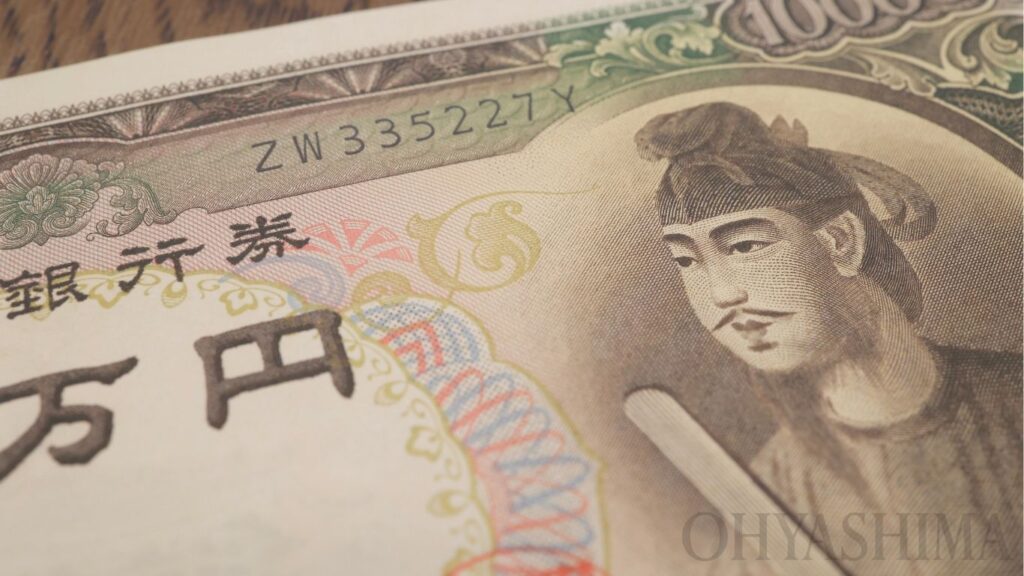
That said, in modern parlance, what Prince Shotoku did here was merely to put the frighteners on Sui — kamashi, a word for saying or doing something calculated to make the other party flinch. If anything, he held Sui in respect as well. For Japan at the time, China was the most advanced country in politics and in learning, and Japan sent to Sui not only Imoko Ono but a great many envoys and students besides. These missions are known as the kenzuishi. Prince Shotoku, in other words, had every intention of learning from Sui.
Prince Shotoku laid down a law known as the Seventeen-Article Constitution. Constitution though it is called, it differs from a modern constitution and is closer in character to administrative law, or to a code governing public officials. Prince Shotoku made its second article read: “Sincerely revere the Three Treasures. The Three Treasures are the Buddha, the Dharma and the Sangha”*⁸ From this one may say that Prince Shotoku became the standard-bearer for establishing Buddhism in Japan. The missions to Sui accordingly included a great many student monks.
The Nanto Rokushu, the Earliest Group of Schools in Japanese Buddhism
Much as Japanese who have studied cutting-edge technology and startup ecosystems in Silicon Valley today set about bringing them home, the envoys to Sui brought back to Japan what they had learnt in China.
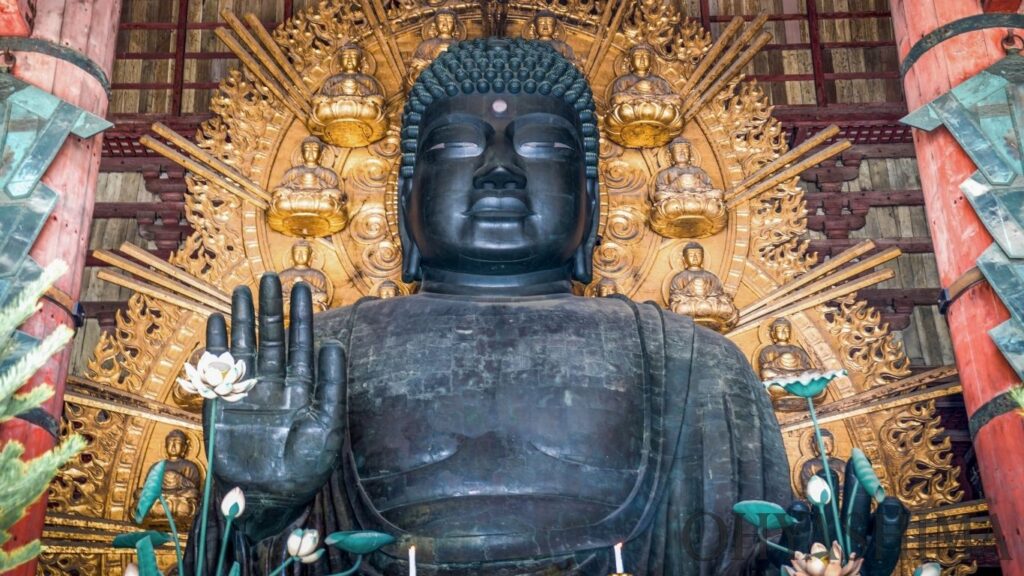
Then, in the Nara period (the eighth century), after Prince Shotoku’s lifetime, six Buddhist schools known as the Nanto Rokushu, or Six Schools of the Southern Capital, came into being; these may be called Japan’s first Buddhist schools. However, Hiromi Shimada, a well-known scholar of religion in Japan, holds that they were less schools of religion than schools of thought.*⁹ The Nanto Rokushu were an import of several ways of thinking about Buddhism that the student monks had learnt in China, and a single monk might study the teachings of all six. This is known as rokushu kengaku; kengaku means studying the teachings of more than one school.
In Christianity, one imagines a Catholic priest would never formally study at a Protestant church. The same holds for the schools of Japanese Buddhism today: an individual priest may study another school for his own edification or out of general interest, but one seldom hears of anyone studying another school’s teachings in any formal capacity.
Seen in that light, Mr Shimada’s point — that the Nanto Rokushu were schools of thought rather than schools of religion — becomes easier to picture. A priest would surely feel some resistance to studying another school’s teachings; but where schools of thought are concerned, it is common enough for one person to study various ways of thinking within a single field of learning.
What a Buddhist School Means to the Japanese
In the next instalment I intend to take up the Buddhism that emerged in the Heian period (the eighth to the twelfth century), and Heian Pure Land Buddhism. After that will come Jodo Shinshu.
Since the subject of schools has come up, I should like to touch on how Japanese today regard the schools of Buddhism.
Vol. 21 took up the charge that modern Japanese Buddhism has become a Buddhism of funerals; and perhaps partly for that reason, a good many Japanese do not know which school’s rites were used at funerals held in their own family. My wife is one of them. Her paternal grandparents had Buddhist funerals, she says, but she does not know the school (her maternal grandfather, by contrast, had a Shinto funeral. Shinto is Japan’s own religion, but Shinto funerals are unusual). She is by no means an unusual case. Mr Shimada, cited above, writes as follows in his book (the same one as before*⁹):
“Someone who has come from the provinces to the city, and who has no close day-to-day relationship with the family temple, gives almost no thought whatever to which school it belongs to.
[…]
But when the time comes to hold a Buddhist funeral, the family’s denomination suddenly becomes a concern, because one thinks a priest of that school must be called to officiate.
So one telephones the family home or relatives back in the countryside in a hurry, to find out what the family’s denomination is.
‘Ah, so my family belongs to such-and-such a school’ — and only then does one learn what it is.”
Adherents of other religions — or of Buddhism outside Japan, for that matter — may find this surprising.
To the author, a modern Japanese, it feels only to be expected. The danka system, which persists to this day, began in the Edo period (the seventeenth to the nineteenth century) as a means for the Tokugawa shogunate to suppress Christians (modern Japan, of course, has freedom of religion). To root out Christians, and to prevent new ones from appearing, people were required to register as parishioners of some temple or other. To put it the other way round, so long as one belonged to a temple, whichever school it was, the authorities took no interest. From this point on, one may think, Japanese Buddhism came to have a side to it that placed less weight on differences between schools than other religions do.
Doctrinal disputes between schools are not unknown, but even where they occur, anyone who is not a devout believer may take little interest in them. Mr Shimada notes, moreover, that tracing the history of a single temple can turn up cases where it belonged to various schools over time — that is, where it changed school altogether.
The Japanese are said to be a people without principle in matters of religion; even at the level of schools within Buddhism, they mind the differences very little. But that does not mean they lack faith, in the author’s view.
That is a point I hope to make clear as the series goes on.
OHYASHIMA is seeking information about the Ohmi Shonin
In connection with this series, OHYASHIMA welcomes information about the Ohmi Shonin. The author would be particularly grateful to hear from:
- Museum curators and archivists — in Japan or elsewhere — who hold collections related to the Ohmi Shonin
- Those who work for companies with ties to the Ohmi Shonin, or whose own ancestors were Ohmi Shonin
- Those who know of Ohmi Shonin merchants who conducted business outside Japan
OHYASHIMAは近江商人に関する情報を求めています
本連載にあたり、近江商人に関する情報を募集しています。たとえば、下記に該当する方はぜひご存じの情報をお寄せください。
- 日本国内外を問わず、近江商人に関する所蔵品がある博物館などの学芸員の方
- 近江商人と関連のある企業にお勤めの方、先祖などに近江商人がいらっしゃる方
- 日本国外でビジネスをした近江商人についてご存じの方
*¹Indian Society and Religion Seen through Buddhism, Kenta Funahashi
*²India’s Lowest Caste Abandons Hinduism for Buddhism, Spurred On by a Monk from Japan, Takeshi Narabe, The Asahi Shimbun GLOBE+
*³Kingdom of Thailand, Ministry of Foreign Affairs of Japan
*⁴ Yoku Wakaru Jodo Shinshu (Jodo Shinshu Made Clear), Naka Uryu, Kadokawa Sophia Bunko
*⁵Religion in Vietnam: Mahayana Buddhism Has Deep Historical Roots, but Are Vietnamese Today ‘Part-Time Buddhists’?, Ryo Takano, Wedge
*⁶The Transmission of Buddhism in Silla and Ancient Japan, Part 2: Friction over Its Reception and the Role of Women, Hyojin Kim
*⁷The Son of Heaven Where the Sun Rises and the Son of Heaven Where the Sun Sets: On the Letter of State of the King of Wa, Hiroshi Masumura
*⁸OVol. 22 of The Jodo Ethic and the Spirit of the Ohmi Shonin traces Buddhism’s arrival in Japan, Prince Shotoku’s letter to Sui China, and the Nanto Rokushu — the six schools that first took root in Nara.
n the Year Marking the 1,400th Anniversary of the Promulgation of Prince Shotoku’s Seventeen-Article Constitution, Haruki Shimada, Joukyouji
*⁹ Why Is Jodo Shinshu the Largest School in Japan? The Riddle of Buddhist Schools, Hiromi Shimada, Gentosha Shinsho