Reading the full series? Browse all volumes here.
Before diving in — Vol. 2 sets out the author’s framing and caveats.
From the 2000s through to the 2010s, the Ohmi Shonin concept of Sanpo Yoshi enjoyed a renewed moment in the spotlight in Japan. Behind this revival lay the wider spread of the concept of corporate social responsibility, or CSR.
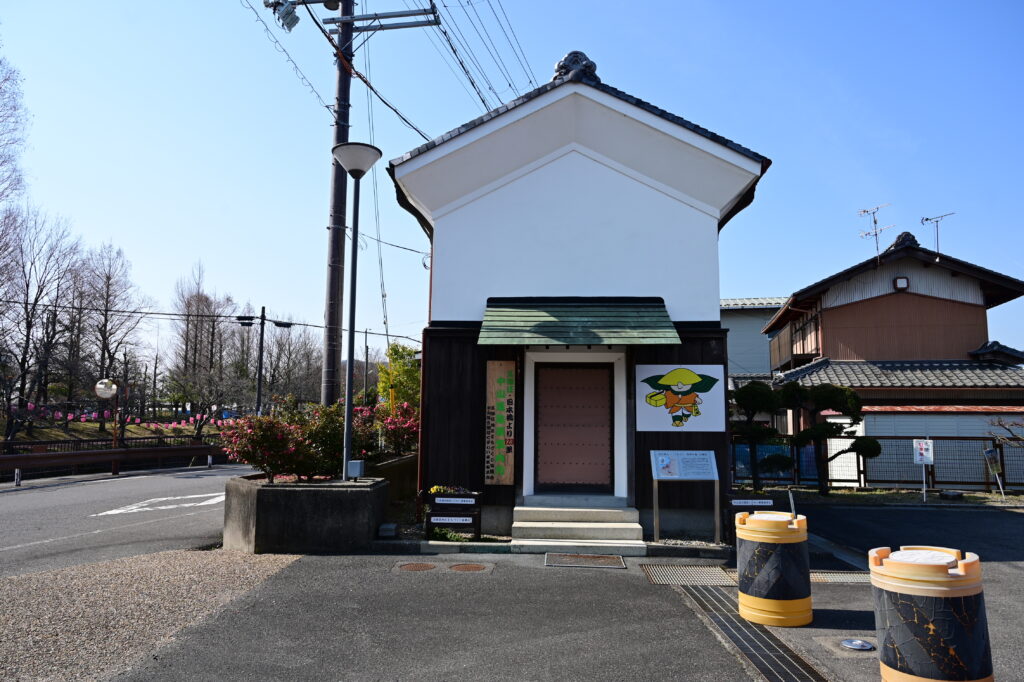
One example is the title of a book by Kunitoshi Suenaga, Professor Emeritus at Doshisha University and one of the leading scholars of the Ohmi Shonin: Ohmi Shonin-gaku Nyumon: CSR no Genryu “Sanpo Yoshi” (Introduction to Ohmi Shonin Studies: Sanpo Yoshi, the Origin of CSR), first published in 2004 and revised in 2017. Another example can be found in Higashi-Ohmi City’s Gokasho district, where a signboard standing in front of the Nakasendo Strolling Information Centre explains the Ohmi Shonin and Sanpo Yoshi. One line reads: “Sanpo Yoshi has become the origin of modern corporate social responsibility (CSR), and is now a term shared the world over.” Whether Sanpo Yoshi has truly become a universal term is open to debate, but the author does agree that what CSR demands and what Sanpo Yoshi embodies have much in common.
Yet when Sanpo Yoshi and CSR are discussed together, the author has the impression that the conversation tends to focus mainly on the “yoshi for the world” dimension. But is what the Ohmi Shonin prized, and what business leaders and practitioners around the world aspire to, really limited to “good for the world” alone? Is “good for the seller” and “good for the buyer” of lesser importance than “good for the world”?
The author’s answer is no. The author would go further: the Sanpo Yoshi embedded in the Ohmi Shonin tradition is, in the author’s view, closer to Stakeholder Capitalism than it is to CSR. To put it another way, Stakeholder Capitalism is the English term that can best help people outside Japan form a picture of what Sanpo Yoshi means.
What is Stakeholder Capitalism?
Some readers may not be familiar with Stakeholder Capitalism, so a brief explanation is in order. Before that, one note: the author has reservations about the word “Capitalism” and prefers to use the term Economic Liberalism. Here, however, out of respect for the person who coined the term, the author uses Stakeholder Capitalism as originally formulated.
Stakeholder Capitalism was a central theme of the 2020 World Economic Forum in Davos.*¹ The concept holds that companies must consider the interests of all stakeholders — not only shareholders, but also customers, employees, local communities, consumers at large, and the natural environment. It can be understood as a counterpoint to the “Shareholder Primacy” doctrine associated with Milton Friedman.
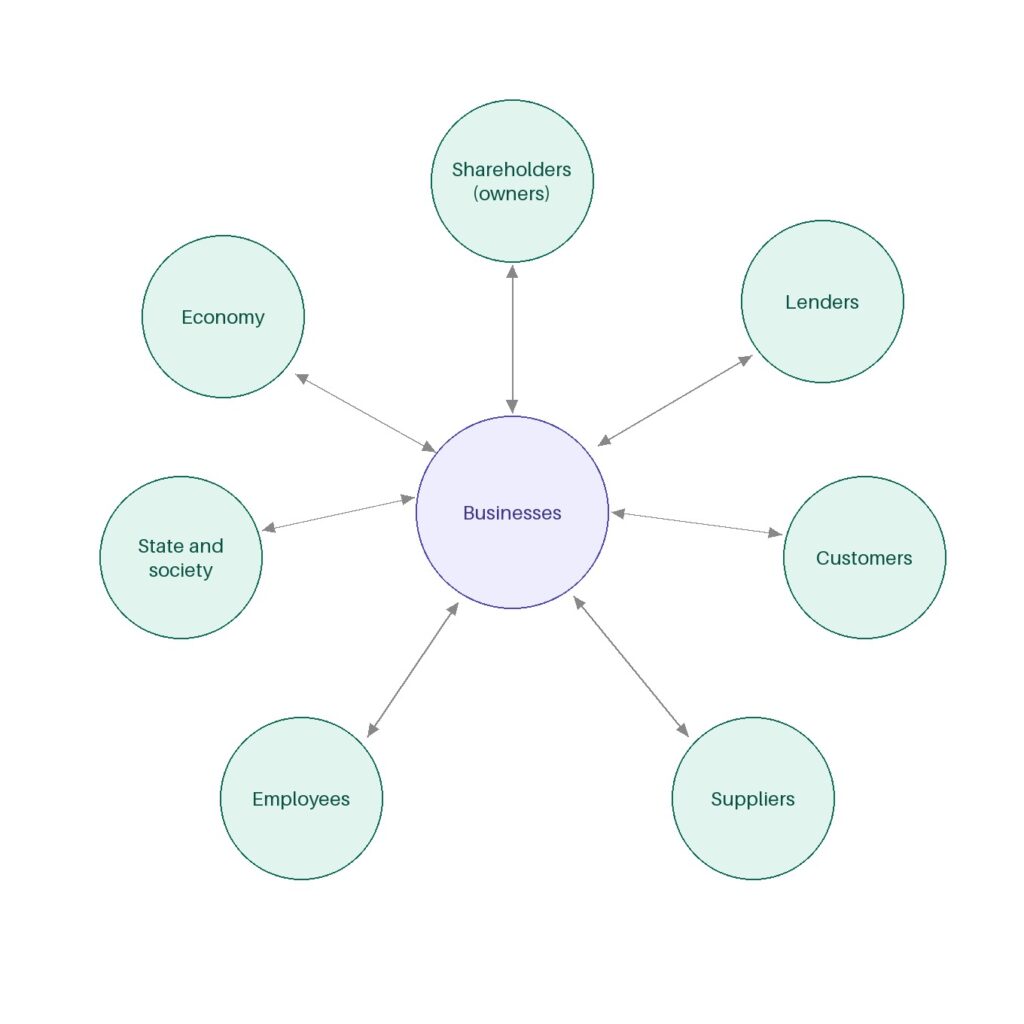
Readers who have worked through the previous instalment should by now feel the resonance with Sanpo Yoshi.
If one were to map Sanpo Yoshi’s “good for the seller,” “good for the buyer,” and “good for the world” onto Stakeholder Capitalism, the correspondence would look something like this:
- Seller: the company, shareholders, employees
- Buyer: customers (who may also be general consumers)
- World: business partners (manufacturers and the like), general consumers, society, the natural environment
Who does the company belong to, and for whom does it exist?
For a period beginning in 2005, Japan saw a vigorous debate over the question: “Who does the company belong to?” That year, livedoor — then one of Japan’s most prominent IT companies — launched a hostile takeover bid for Nippon Broadcasting System (NBS), with the aim of gaining effective control of Fuji Television, which was technically a subsidiary of NBS but had grown far larger than its parent.
The episode prompted debate over whether a company is something that shareholders alone can do with as they please, and whether employees have no say whatsoever in decisions affecting the company they work for.
In this debate, the author takes the position that “the company belongs to its shareholders.” A note in advance: what follows touches on some fundamentals of corporate governance. Shareholders bear liability within the limits of their investment, and in return are granted the right to determine the direction of the company. When the plans of shareholders and the company go well, they receive dividends and other returns. Such is the relationship between shareholders and the company.
The relationship between employees and the company, by contrast, works as follows: employees receive fair compensation from the company, and in return provide their labour. Should either party — the employee or the company — fail to fulfil obligations such as providing compensation or labour, the result is a breach of contract. A company that refuses to pay its employees on the grounds that it is running a loss is, of course, equally in breach of contract.
The author’s view, therefore, is that the company belongs to its shareholders, in the sense that shareholders hold the right to determine the company’s future course.
That said, the author does not adopt the position of Shareholder Primacy.
In Japanese, the word for “corporation” is houjin (法人). The jin (人) element means “person.” The fiction theory of legal personality in law and commercial codes has its origins in the West.*² In Japan, the same equivalence is built into the language: the word houjin literally contains the character for “person.”
In Japan as in many other countries, companies, as legal persons, are held to duties and responsibilities analogous to those of natural persons. Paying taxes is not enough: companies are expected, for example, to provide their employees with a proper working environment. In Japan in particular, where labour shortages are becoming increasingly severe, a company that fails to do so risks losing its human capital and cannot rule out the possibility of operational collapse. Environmental stewardship, too, must be counted among corporate obligations.
As noted in the previous instalment, the Ohmi Shonin counted among their number Shojiemon Nakai, who funded the reconstruction of Seta-no-Karahashi bridge, and Tetsujiro Furukawa, who made a substantial donation toward the construction of a new Toyosato Elementary School. Companies and business leaders today — in Japan and beyond — can be found engaged in similar endeavours. Of course, social contribution alone does not guarantee acclaim: what is required of business leaders is a genuine commitment to all stakeholders — their own employees and families, their own families, business partners, and more. (In other words, the “good for the seller” and “good for the buyer” dimensions — which the author will explore in greater detail in a future instalment.)
Thinking along these lines, one is tempted to conclude that ideas such as Stakeholder Capitalism and Sanpo Yoshi have been sought across both East and West since ancient times — and that Shareholder Primacy, by contrast, was perhaps no more than a passing trend in the history of management thought.
OHYASHIMA is seeking information about the Ohmi Shonin
In connection with this series, OHYASHIMA welcomes information about the Ohmi Shonin. The author would be particularly grateful to hear from:
- Museum curators and archivists — in Japan or elsewhere — who hold collections related to the Ohmi Shonin
- Those who work for companies with ties to the Ohmi Shonin, or whose own ancestors were Ohmi Shonin
- Those who know of Ohmi Shonin merchants who conducted business outside Japan
OHYASHIMAは近江商人に関する情報を求めています
本連載にあたり、近江商人に関する情報を募集しています。たとえば、下記に該当する方はぜひご存じの情報をお寄せください。
- 日本国内外を問わず、近江商人に関する所蔵品がある博物館などの学芸員の方
- 近江商人と関連のある企業にお勤めの方、先祖などに近江商人がいらっしゃる方
- 日本国外でビジネスをした近江商人についてご存じの方
*¹ “What is stakeholder capitalism?” World Economic Forum official website
*²“The Historic Background of Corporate Legal Personality” John Dewey