
Japanese construction company Matsui Construction announced on April 10 that President and Representative Director Takahiro Matsui had assumed the name “17th-generation Kakuhei Matsui”. Each successive president of the company has taken the Kakuhei Matsui name.
Shumei is a Japanese term meaning to assume a particular hereditary name or title. It is most commonly associated with successors in traditional performing arts such as kabuki, or with craftsmen who adopt the name of a master or family forebearer. Some long-established Japanese companies, however, follow a similar practice: their leaders take the name of the company’s founder or another pivotal figure in its history.
In this article, the author examines the practice of shumei in Japanese business.
What Shumei Means—and What the Kakuhei MatsuiName Represents
To begin, the author looks at the precise meaning of shumei. Shogakukan’s Japanese-language dictionary, Daijisen (iOS edition), defines the term as follows.
“To inherit and assume as one’s own the name of a parent, master, or similar figure.”
The dictionary also offers two illustrative phrases: “to succeed to the name of the sixth-generation Kikugoro” and “shumei hirō [name-succession ceremony].” Kikugoro refers to Kikugoro Onoe, one of the most celebrated names in kabuki, Japan’s classical theatre. Last year, Kikugoro Onoe—previously known as Kikunosuke Onoe—became the eighth holder of the Kikugoro name. As an aside, the seventh-generation Kikugoro, his father, remains active and continues to use the Kikugoro name, making this a rare instance in the kabuki world of two performers simultaneously bearing the same prestigious title.
With that, the reader may now have a clearer sense of shumei as a practice rooted in Japan’s traditional arts. What, then, does it mean when a modern company does the same?
The author returns to the case of Matsui Construction in greater detail.
The company traces its founding to 1586, when its first leader, Kakuemon Matsui, was commissioned by Toshinaga Maedato carry out construction work on Ecchu Moriyama Castle. That era corresponds to Japan’s Azuchi-Momoyama period. The Maeda clan went on to become the most economically powerful domain lord under the Tokugawa shogunate, and remains one of the most celebrated warrior houses in Japanese history.
After Japan’s modernisation, the Great Kanto Earthquake of 1923 proved a turning point. It was then that the grandfather of the current 17th-generation holder—the 15th-generation Kakuhei Matsui—expanded operations from Toyama (former Maeda territory) to Tokyo. That the 15th-generation Kakuhei existed at that time suggests the Matsui family likely began using the Kakuhei name sometime in the early Edo period.
In 1939, the family business was incorporated. In 1989, Taiji Matsui assumed the name of the 16th-generation Kakuhei, leading in turn to the investiture of the 17th generation now announced.
No explicit reason for the shumei was stated in Matsui Construction’s official announcement. Yet the company’s 440-year history speaks for itself: it is regarded as the oldest listed company on the Tokyo Stock Exchange. A deep respect for that legacy is, in the author’s view, one likely reason behind the practice.
Moreover, Matsui Construction specialises not only in modern construction but also in the building of Shinto shrines and Buddhist temples. This suggests that each successive leader is seen as embodying a spirit deeply embedded in the company’s identity since its earliest days.
Other Japanese Companies Where Leaders Inherit a Hereditary mei
The practice of shumei among company leaders is not unique to Matsui Construction. The author presents several further examples.
Among Japanese consumers, one of the better-known examples of a presidential hereditary name is the Matazaemon Nakano title associated with Mizkan Holdings. Mizkan is the maker of seasoned ponzu and mentsuyu noodle dipping sauce, products that can be found in virtually any supermarket in Japan. The company dates its founding to 1804, when the first Matazaemon Nakano. Mizkan is the maker of seasoned ponzu and mentsuyu noodle dipping sauce, products that can be found in virtually any supermarket in Japan. The company dates its founding to 1804, when the first Matazaemon Nakano was granted permission to establish a branch family from the Hanzaemon Nakano was granted permission to establish a branch family from the Hanzaemon Nakano household. Not every president has taken the Matazaemon name: the current president and deputy CEO of Mizkan Holdings, Yuko Nakano, goes by her given name and has not publicly presented herself as Matazaemon. The most recent holder of that name was her father Holdings Nakano Holdings, Yuko Nakano, goes by her given name and has not publicly presented herself as Matazaemon. The most recent holder of that name was her father, Kazuhide.
The Nakano family has in recent years been caught up in what the Japanese press would call an oie sōdō—a family feud over succession. Daisuke Nakano, who married into the family, alleges that after the birth of his son he was separated from the child and subjected to an unjust reassignment within the company. Daisuke brought the matter before a Japanese court, but a 2023 ruling upheld Mizkan’s position that the reassignment had been a legitimate personnel decision.
The next example is Nakagawa Masashichi Shoten, a maker and retailer of Japanese craft goods. Jun Nakagawa, who became president of the company in 2008 and chairman in 2018, assumed the name of the 13th-generation Masashichi Nakagawa in 2017 Shumei. Neither his immediate predecessor nor the one before had used the Masashichi Nakagawa name, making 2017 the first such investiture in some time. Nakagawa stepped down from the board of Nakagawa Masashichi Shoten in 2025 and simultaneously relinquished the Masashichi Nakagawa name.
The author once had occasion to interview Nakagawa—though in practice the interviewing itself was left to a writer, with the author observing from behind. What remained with the author was an impression of someone who had brought modern management thinking to a traditional world, and of Nakagawa himself: slim and tall, projecting an air of vigour.
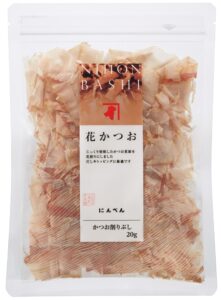
One further example: Ninben, a specialist retailer of katsuobushi—the dried bonito used as a stock base and topping in Japanese cuisine. Each successive head of the company has taken the name Ihei Takatsu Takatsu, and the current president is the 13th-generation Ihei.
Each Company Featured Here Has a History of More Than 300 Years
Matsui Construction, MizkanNakagawa Masashichi Shoten, and Ninben—each company examined here that practises shumei has a long history.Matsui Construction was founded in 1586, as noted above; Mizkan in 1804Nakagawa Masashichi Shoten in 1716; and Ninben in 1705.
In terms of Japanese historical periodisation, every one of these companies was founded before the mid-Edo period.
Another common characteristic of companies that practise shumei is that leadership has been passed down within the founding family. Among the companies examined here, Nakagawa Masashichi Shoten is currently led by Aya Sengoku Sengoku, who was appointed from outside the founding family and does not bear the Masashichi name.
It should be noted that the companies featured here are among the better-known examples in Japan. Long-established companies also exist in regional areas and elsewhere, meaning there may well be other firms where successive leaders have long observed the same tradition.