Reading the full series? Browse all volumes here.
Before diving in — Vol. 2 sets out the author’s framing and caveats.
In Vol. 5, the author examined real-world examples of Seken-yoshi within the framework of Sanpo Yoshi: Shojiemon Nakai’s rebuilding of the Seta-no-Karahashi bridge, and the reconstruction of Toyosato Elementary School by Tetsujiro Furukawa, the de facto head of Marubeni Shoten (now Marubeni Corporation).
In Vol. 6, the author presented the view held by many in Japan that Sanpo Yoshi resonates with CSR, and offered the further argument that while it is primarily the Seken-yoshi dimension of Sanpo Yoshi that aligns with CSR, Sanpo Yoshi as a whole finds its closest parallel in Stakeholder Capitalism.
A great deal has already been written about Seken-yoshi in this series, but there is one point that has not yet been addressed: what exactly does the seken in Seken-yoshi refer to? As the author has already noted, there is no record of the Ohmi Shonin themselves using the terms Sanpo Yoshi or Seken-yoshi — yet the word seken itself predates Japan’s modernisation. If the Ohmi Shonin had asked themselves the question “what does Seken-yoshi actually mean?”, what would seken have referred to for them?
The word seken remains in common use in Japanese today. For example, one might say, “At the time, watashi wa sekenshirazu deshite… (meaning: I was young and ignorant of the ways of the world),” or “Kono shittai wa sekentai ga warui (meaning: This blunder will reflect badly on me in the eyes of the world).”
Let us turn to the dictionary. The Japanese-language dictionary Daijisen (iOS app edition) defines seken as follows:
《1. A place where people gather and live; the society in which one conducts daily life; also, the people within it. (Examples omitted)
2. Social intercourse with others; also, the range of such intercourse. (Ibid.)》
By this point, the reader may already have formed some sense of what seken refers to.
The dictionary entry for seken, however, continues. It reads as follows:
《3. Buddhist term. A collective designation for: living beings (shujo seken); the mountains, rivers, and earth that serve as their habitat (ki seken); and the constituent elements of living beings and the natural world alike (goin seken).》
The same dictionary notes, immediately after the seken entry, that “definition 3 is the original meaning.” In other words, seken was, at root, a Buddhist term.
What “Seken” Means
In Jodo Shinshu — the Buddhist tradition widely practised in Ohmi — there is a scholarly view that the meaning of seken was once rather different from any of the above.
Kin-ya Abe, a historian who served as president of Hitotsubashi University, drew on records from the Honpuku-ji temple in Ohmi — said to have been written in the sixteenth century — as well as materials from the era of Ren-nyo, the monk who spread Jodo Shinshu widely in the fifteenth century, to argue that seken in these contexts referred to bonds of place and kinship.*¹ Building on this, Kanji Tanimoto, professor emeritus at Hitotsubashi University and a scholar of management, has argued that the seken of Seken-yoshi is a term for situating oneself within relationships of local and family ties.*² If this interpretation is correct, it diverges from the meaning of seken given in the dictionary.
Other scholars, however, understand the seken of Seken-yoshi as roughly equivalent to the dictionary definitions. One such scholar is Seigo Tsujii. His paper*³ contains the following passage:
《Seken-yoshi is said to mean “that the world as a whole benefits,” and to carry the sense of jiri rita koshi ichinyo.》
“That the world as a whole benefits” could be rephrased as “the public good.” Jiri rita koshi ichinyo, meanwhile, means that both oneself and others may benefit together — and that what seems to belong to the public realm also connects to the private.*⁴
In a footnote on Sanpo Yoshi in Tsujii’s paper, it is also noted that “the meaning of Seken-yoshi in particular, for Ohmi Shonin who operated outside the sankin-kotai system, derived from the necessity of making an economic contribution in the marketplaces where they traded in order to justify their presence.” This is a theme the author has addressed throughout this series, and Tsujii’s argument — that the Ohmi Shonin understood Seken-yoshi as something to be practised not only in Ohmi but wherever they conducted business — is readily comprehensible in that light.
Both interpretations carry conviction.
It is true that the philanthropic activities attributed to Ohmi Shonin are recorded primarily in their home region of Ohmi — which lends support to the view held by Tanimoto and others. That said, it is also possible that similar activities carried out by merchants who had expanded beyond Ohmi were simply not recognised as “social contributions by the Ohmi Shonin.” Seen in that light, there is merit in the argument put forward by Tsujii and his colleagues as well.
The Seken We Should Have in Mind
This series, however, is not historical non-fiction. Its subject is what those of us living today can learn from the enterprises and activities of the Ohmi Shonin, and what remains applicable. Familiarity with the various scholarly arguments is necessary — but arriving at a definitive answer is not.
What matters more is to reflect on how the historically distinguished Ohmi Shonin might have regarded contemporary society.
In defining what seken means for people today, the author believes it is necessary to return to its original meaning — seken as a Buddhist term. In that sense, it encompasses: shujo seken (also known as ujo seken*⁵), the world of living beings, human and otherwise; ki seken, the mountains, rivers, and vegetation that constitute the habitat of those beings; and, encompassing both, goin seken.
And today, seken faces a crisis of collapse — namely, the destruction of the global environment. Shujo seken and ujo seken are eroding; beyond that lies a world in which neither humans nor other animals can survive. Ki seken, too, may eventually be destroyed. To avert this, humanity is now working to build a sustainable economy.
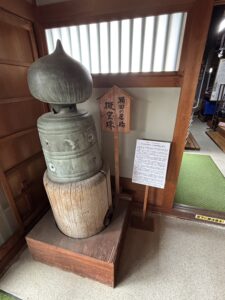
The author believes that had the Ohmi Shonin of the Edo period been aware of twenty-first-century society, they would have pursued an economy in which humans, animals, and the natural environment alike could “live.” As discussed in Vol. 9, Chogin layered discarded notes, letters, and other paper to make boxes (or box lids). And it was not only Chogin — many Ohmi Shonin placed great importance on the concept of shimatsu shite kibaru (make do, then press on). Shimatsu shite kibaru was practised with frugality as its aim, but Ohmi Shonin of the Edo period, had they known the twenty-first century, would surely have embedded within it not only thrift but the building of a sustainable economy as well.
OHYASHIMA is seeking information about the Ohmi Shonin
In connection with this series, OHYASHIMA welcomes information about the Ohmi Shonin. The author would be particularly grateful to hear from:
- Museum curators and archivists — in Japan or elsewhere — who hold collections related to the Ohmi Shonin
- Those who work for companies with ties to the Ohmi Shonin, or whose own ancestors were Ohmi Shonin
- Those who know of Ohmi Shonin merchants who conducted business outside Japan
OHYASHIMAは近江商人に関する情報を求めています
本連載にあたり、近江商人に関する情報を募集しています。たとえば、下記に該当する方はぜひご存じの情報をお寄せください。
- 日本国内外を問わず、近江商人に関する所蔵品がある博物館などの学芸員の方
- 近江商人と関連のある企業にお勤めの方、先祖などに近江商人がいらっしゃる方
- 日本国外でビジネスをした近江商人についてご存じの方
*¹ What is “Seken”?, Kin-ya Abe, Kodansha Gendai Shinsho
*² CSR Management in Japanese Companies, Kanji Tanimoto, Chikura Shobo
*³ “The Economic Ethics and Religious Significance of the Ohmi Merchants: Focusing on the Relationship between Matsui Yuken and Jodo Shinshu Monk Kojuin Tokuryū,” Seigo Tsujii
*⁴Jiri rita koshi ichinyo, Sumitomo Group Public Affairs Committee
*⁵Buddhist Glossary: Seken, Hongwanji