
Letara, a developer of next-generation rocket engines, announced on August 20 that it had secured approximately 2.6 billion yen (about $16 million) in a pre-Series A funding round.
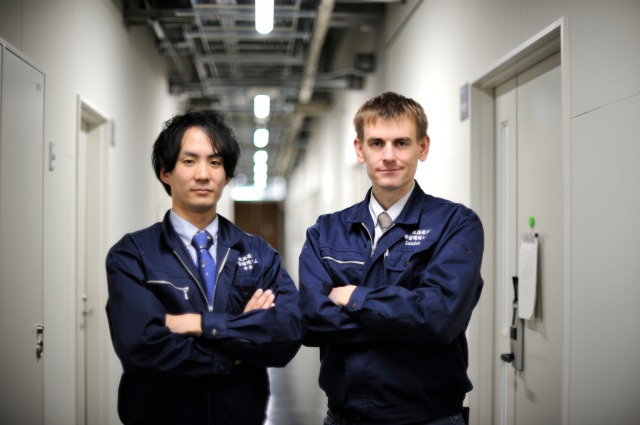
The company was founded in 2020 by Landon Thomas Kamps, then a specially appointed assistant professor at Hokkaido University; Shota Hirai, a graduate of the same university; and Harunori Nagata, a professor in the university’s Faculty of Engineering. Kamps and Hirai now serve as co-CEOs, with Nagata as CTO. The company is headquartered in Sapporo, Hokkaido.
How Plastic Fuel Produces High Thrust
Reaching space requires powerful thrust to break free of Earth’s gravity, and the rocket engine is what provides it. Conventional engines, though, come with drawbacks: solid propellants carry a comparatively high risk of explosion, while liquid propellants bring cost and leakage problems.
This is where Letara turns to what it calls hybrid solid fuel — plastic, to be specific. Methods of generating thrust by molding plastic into a cylinder and feeding liquid oxygen through the hollow core have been developed around the world. Nagata, a professor at the Graduate School of Engineering at Hokkaido University and the company’s CTO, took this a step further and developed a structure called the cascaded multistage impinging-jet method, in which combustion gas repeatedly strikes the fuel surface.
The design was named the CAMUI type, and Letara is the company working to mass-produce and commercialize it. As a rocket engine designation, CAMUI stands for Cascaded Multistage Impinging-jet, but it is also the word for god in the language of the Ainu, the indigenous people of Hokkaido.
Letara is likewise an Ainu word, meaning pure white. It evokes the snowscapes of Hokkaido, where snow falls heavily in winter, and expresses the company’s stance: “snowy landscapes can be beautiful and at times harsh, but we intend to leave our footprints, one step at a time, across a trackless field of snow.”

Three VCs Led the Pre-Series A
The round was led by the venture capital firm Headline Asia, Japan Investment Corporation subsidiary JIC Venture Growth Investments, and fellow VC Incubate Fund. A number of other investors also took part, including, on the corporate side, Toyoda Gosei, the Toyota group maker of resin and related products.
Letara co-CEOs Kamps and Hirai said in a joint comment that the money would be used to “further advance the practical implementation of our proprietary low-cost, mass-producible rocket engine technology, while recruiting outstanding talent from Japan and around the world to accelerate the pace of development.”