The summer of 2020. As the COVID-19 pandemic brought the world to a standstill, those working in Japanese finance and economic media were caught off guard.
The news broke that National Indemnity Company, a subsidiary of Berkshire Hathaway, had disclosed a substantial stake in five of Japan’s major general trading companies.*¹ At the time, there was a prevailing view that Warren Buffett, who led Berkshire Hathaway, and the late Charlie Munger had little interest in Japanese equities. Indeed, a blog post written in 2008 by a Japanese venture capital executive who had attended a Berkshire Hathaway shareholders’ meeting recounts asking Buffett whether he would consider hiring someone specializing in the Japanese market, only to be met with a “forceful” “No!”*²
In 2011, Buffett told the media that there were “a few large Japanese companies that have attracted my interest,”*³ yet nearly a decade passed without him making a move. Then he bought Japanese stocks — and that was why Japan’s financial and business world received the news with such surprise.
At the time, the five companies acquired by National Indemnity Company were Itochu Corporation, Marubeni Corporation, Mitsui & Co., Sumitomo Corporation, and Mitsubishi Corporation. Since then, National Indemnity Company has continued to increase its holdings, and the voting rights ratio for each company now stands at around 10 percent.*⁴ In Itochu’s case, National Indemnity Company has effectively become its largest shareholder.
At the 2025 Berkshire Hathaway shareholders’ meeting, Buffett said of these trading company shares that “in the next 50 years” he would “won’t give a thought to selling.”*⁵ I have not come across any instance of Buffett clearly stating the reason for his deep commitment to Japan’s general trading companies, and uncovering that reason is not the purpose of this series.
So what is the purpose of this series? Before getting to that, I would like to take a moment to engage with readers directly. While Japan’s economy shows signs of long-term decline, it still maintains a certain presence on the world stage — and yet Japanese companies are often said to have low name recognition globally. With that in mind, I want to ask: are the five companies listed above familiar to you, the reader?
Of the five, some readers may have heard of Mitsubishi as the manufacturer of the Zero Fighter during World War II. Others may know it as an automobile OEM. The aircraft is made by Mitsubishi Heavy Industries, the cars by Mitsubishi Motors — both separate companies from Mitsubishi Corporation — yet all are part of Mitsubishi Group.
As for Mitsui, how well-known is it to business professionals who have had little prior dealings with Japanese companies? Those who have visited Japan may have stopped by the Mitsukoshi department store. Tracing the history of Mitsui & Co., one finds that it shares the same origins as Mitsukoshi.
Sumitomo has a certain degree of name recognition in the world of finance and real estate — though the same could be said for Mitsubishi and Mitsui. Looking at these three companies, it becomes clear that all of them conduct business across a far wider range of sectors beyond general trading. They are also widely known in Japan for having formed zaibatsu — powerful industrial and financial conglomerates — before World War II, and Mitsubishi Corporation, Mitsui & Co., and Sumitomo Corporation are referred to in Japan as the “zaibatsu-affiliated general trading companies.”
What about the remaining two: Itochu and Marubeni? They enjoy name recognition in Japan on par with the other three, but are they familiar to the reader?
What sets Itochu and Marubeni apart from the other three is that within their respective groups, the general trading company itself sits at the core. Mitsubishi Group, for example, is anchored not only by Mitsubishi Corporation but also by Mitsubishi UFJ Financial Group and Mitsubishi Heavy Industries — the three companies known as the “Mitsubishi “Mitsubishi Gosanke” (the three main pillars of the Mitsubishi Group). Itochu and Marubeni, by contrast, are groups centered on the trading company itself. Nor were they regarded as zaibatsu on the scale of Mitsubishi, Mitsui, or Sumitomo before World War II. While both Itochu and Marubeni today have diverse companies within their groups, they did not build themselves as conglomerates over their long histories in the same way.
And both Itochu and Marubeni share the same founder: Chubei Ito. Both companies also designate 1858 as their founding year — the year Ito first embarked on peddling goods from Ohmi (present-day Shiga Prefecture) to Osaka and beyond.
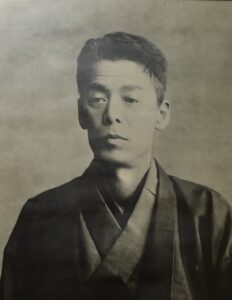
Two general trading companies of non-zaibatsu origins thus share their starting point in commerce from Ohmi.
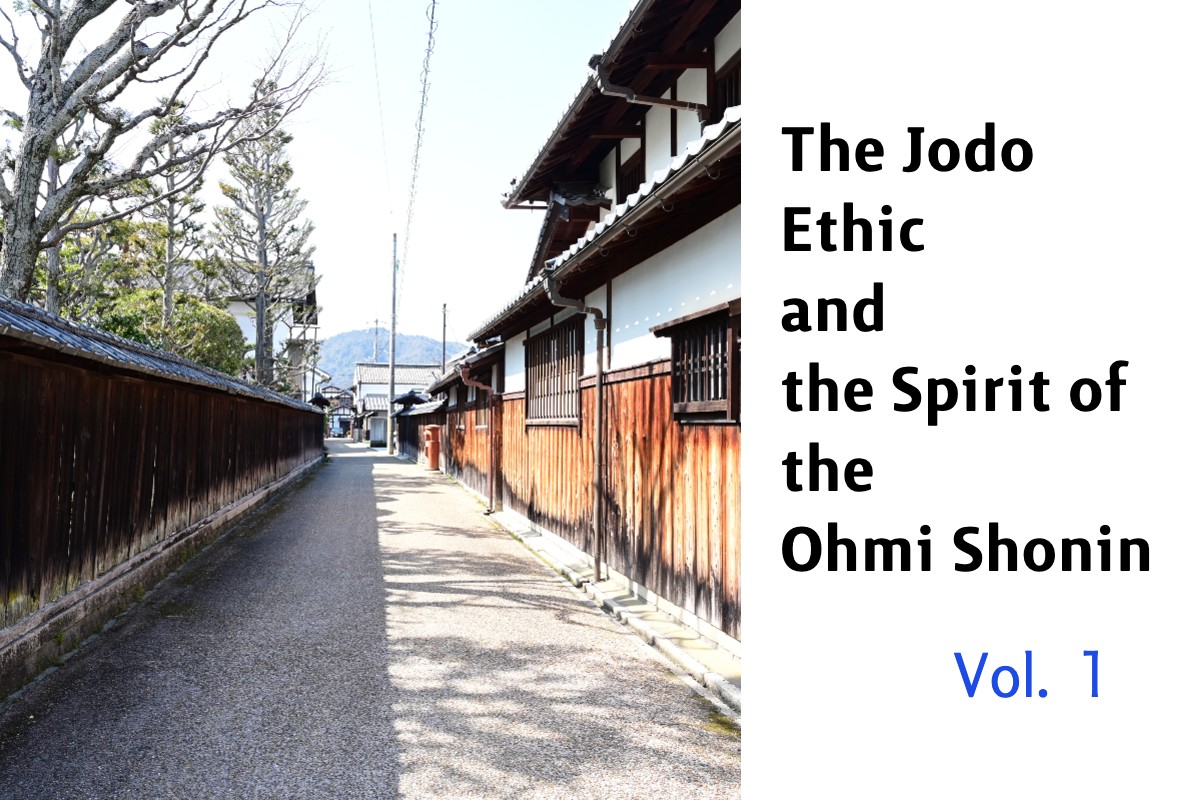
Ito was also born in Ohmi. And Ohmi was not only the birthplace of Ito — it produced many business figures. These individuals, who built their businesses with Ohmi as their base, are known in Japan as “Ohmi Shonin.” Shonin means merchant.
To reiterate: I do not know why Buffett has placed such confidence in Japan’s general trading companies, going so far as to become the largest shareholder of Itochu. But I do know the reason why Itochu and Marubeni survived long enough to be discovered by Buffett.
It is because both companies have kept the spirit of the Ohmi Shonin alive.
Among the Ohmi Shonin, not a few applied the teachings of Jodo Shinshu — a Buddhist sect that flourished in the region — to their business practices. Ito was one of them.
Writing this may give the impression that the Ohmi Shonin valued Jodo Shinshu exclusively, but that is not the case. I hope to explore this in greater detail as the series unfolds.
What spirit did the Ohmi Shonin bring to their business? What was the nature of the Pure Land Buddhism and Japanese religion that lay behind it? In this series, the author intends to explore these questions together with readers.
*1 Nikkei (electronic edition), Aug. 31, 2020, 9:34 a.m.
*2 Yuichiro Itakura Office, “Berkshire Hathaway Shareholders’ Meeting,” May 20, 2008
*3 Nikkei (electronic edition), Aug. 31, 2020, 1:09 p.m.
*4 Nikkei (electronic edition), Mar. 2, 2026, 1:29 p.m.
*5 Nikkei (electronic edition), Oct. 1, 2025, 2:00 a.m.