
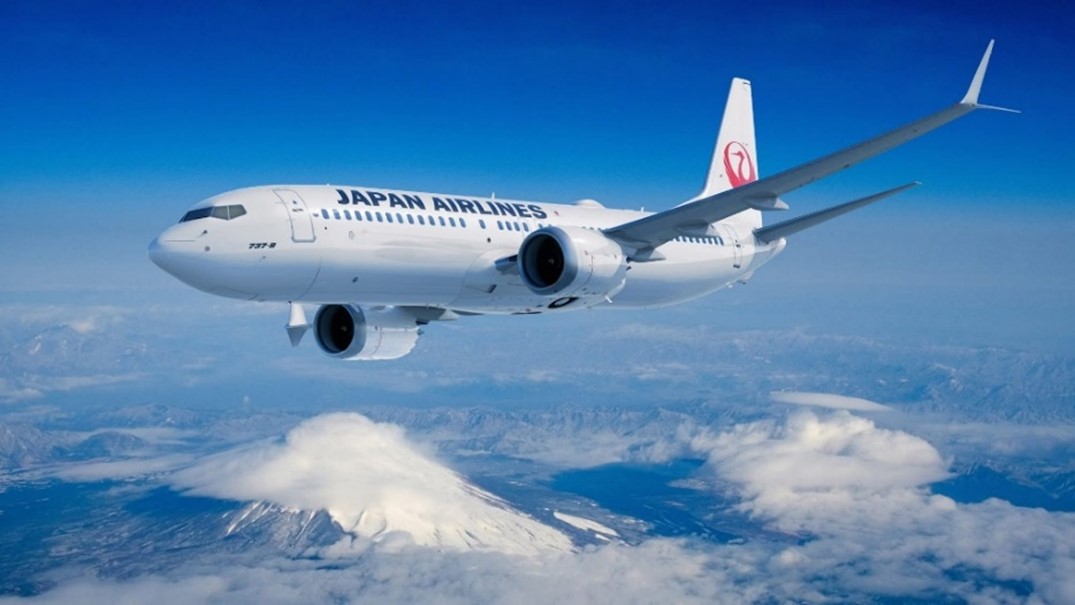
Japan Airlines (JAL) announced its medium-to-long-term management plan on March 2, announcing plans to introduce a fuel surcharge on domestic routes in Japan. The surcharge is under consideration for introduction in April 2027.
The current situation makes it difficult to secure profit on domestic routes, and the introduction of the fuel surcharge is part of an overhaul of the airline’s revenue structure.
Revenue Overhaul Targets Over $300 Million in Profit
According to the announcement, JAL’s domestic EBIT (earnings before interest and taxes) for fiscal year 2025 stood at ¥15 billion (approximately $96 million). However, this figure includes an almost equivalent amount in public subsidies, meaning profit would have been effectively zero without that support.
The Nikkei Shimbun’s print edition of March 4 reported on the background to this development, noting that the spread of online meetings during the COVID-19 pandemic led to a decline in high-fare business travelers. The paper also cited rising wages, a weaker yen, and higher prices as contributing factors.
Fellow full-service carrier All Nippon Airways (ANA) has not yet introduced a domestic fuel surcharge.
JAL has outlined three steps for restructuring its domestic operations in its medium-to-long-term management plan.
The first step, in addition to introducing the fuel surcharge, includes “capturing inbound demand” and “introducing new aircraft and services.” Specific measures and aircraft types have not yet been disclosed.
The second step covers “digital transformation and productivity improvement” and “collaboration with ANA.” This collaboration has already begun in some areas, including the joint operation of ground vehicles and staff at airports. This collaboration is expected to be expanded further.
The third step involves “reviewing supply-demand balance and public charges across the industry.” After completing all three steps, JAL aims to achieve domestic EBIT of ¥60 billion (approximately $384 million) or more from fiscal year 2028 onward.
Revenue Restructuring: A Challenge Facing Japanese Business as a Whole
The need to overhaul revenue structures is a challenge that extends well beyond JAL and confronts many Japanese companies. Japanese business culture has long embraced the notion that “the customer is god,” and its excesses have left many companies reluctant to raise prices in ways that might directly harm customers’ interests.
A particularly significant factor behind companies’ inability to reform their revenue structures is that the escape from what is sometimes called a “deflationary mindset” remains only half-complete. Consumers and corporate clients may understand in theory why price increases and wage hikes are necessary, but when confronted with new prices in practice, a degree of resistance is, in all honesty, difficult to avoid.
It should be noted that in writing of “customer-first thinking taken too far,” this author does not intend to reject the customer-first philosophy itself. The point is rather that when hesitation over price revisions leads to harm for a company’s own financial health, its employees, and its subcontractors, that is clearly a case where customer-first thinking has gone too far.
One can only hope for a future in which legitimate price revisions are implemented, their benefits flow to employees and stakeholders, and the broader economy continues to grow.