

Power Wave, a Japanese startup developing wireless power transfer technology for automated guided vehicles (AGVs) and autonomous mobile robots (AMRs), announced on January 30 that it has raised a total of ¥910 million (approximately $6 million) in a Series A funding round.
Founded in 2021 and originating from the Toyohashi University of Technology, a national university in Japan, Power Wave is based in Toyohashi City. The city lies between Toyota City—home to Toyota Motor Corporation—and Hamamatsu City, where Suzuki Motor Corporation is headquartered. In addition to hosting numerous automotive parts manufacturers, the area also features a port used for automobile exports and imports, reflecting its strong ties to manufacturing and logistics activities.

Wireless Charging Using Electric Field Coupling
Wireless power transfer has already begun to see practical adoption in applications such as smartphone charging.
One of the key factors driving demand for wireless charging for AGVs and AMRs is the population decline observed primarily in advanced economies. As labor shortages intensify, factories and warehouses are increasingly turning to automation, boosting demand for AGVs and AMRs as well as the need for more efficient and autonomous charging solutions.
Against this backdrop, Power Wave is developing a system that enables wireless charging for various forms of mobility, including AGVs. Rather than supplying power only at fixed charging stations, the company is also aiming to enable charging while vehicles are in motion.
At the core of this system is an “electric field coupling” method. In this approach, a high-frequency voltage is applied on the power transmission side, allowing energy to be transferred through electric field coupling. This method serves as a technological foundation well suited to in-motion wireless charging.
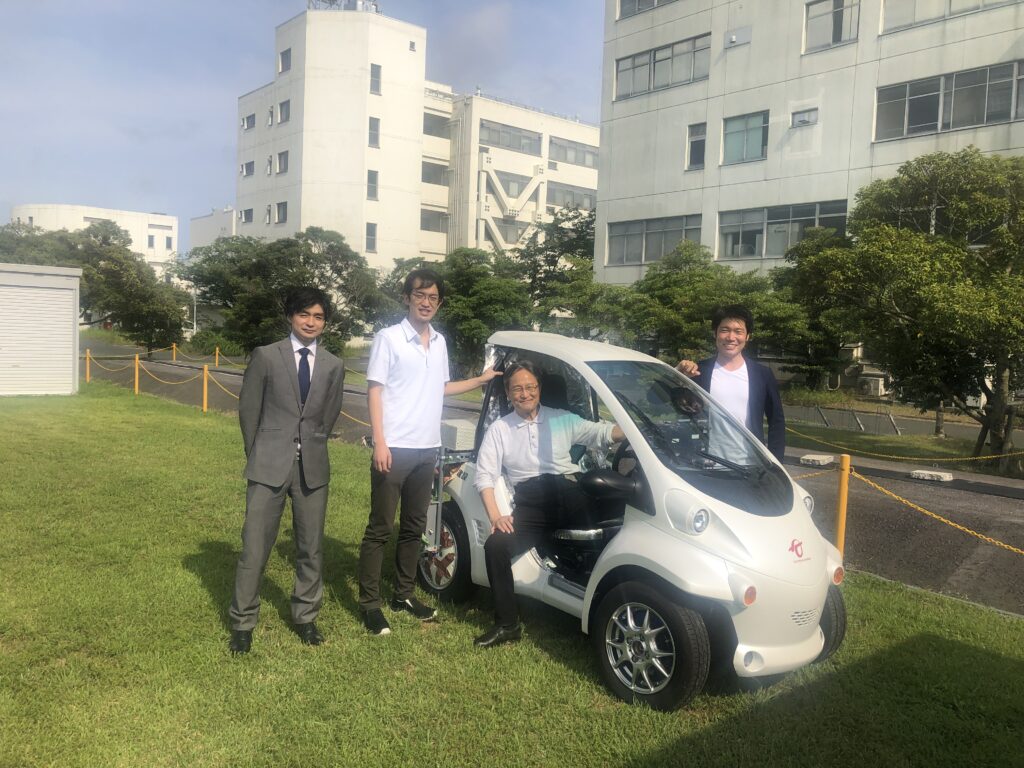
As part of its track record, Power Wave points to demonstrations of battery-less EV operation. By installing an electric field coupling–based charging system along the driving path, vehicles may be able to operate without onboard batteries. In addition, the company has conducted demonstrations of wireless charging for drones while parked, as well as for electric kick scooters.
Toward Mass Production of Charging Systems
The Series A round was joined by the following investors:
- The University of Tokyo Edge Capital Partners
- Energy & Environment Investment
- Archetype Ventures
- NOBUNAGA Capital Village
- Shinkin Capital
- SMBC Venture Capital
- Mitsubishi UFJ Capital
Among these, NOBUNAGA Capital Village is a venture capital firm affiliated with Juroku Bank, a regional bank in Japan. Shinkin Capital is affiliated with Shinkin Central Bank, a financial institution that serves Japan’s Shinkin Banks—community-based cooperative financial institutions.
The funds will be used to further develop charging systems for AGVs and AMRs, as well as to prepare for mass production.

Norito Oida, CEO of Power Wave, commented:
“As AGVs and AMRs become more widely adopted, the challenge of how to supply power automatically without stopping operations is becoming increasingly apparent. Our wireless power transfer technology—particularly its ability to enable in-motion charging—has extremely high compatibility with autonomous driving and automation. We believe it is precisely the kind of technology that society is demanding today.”