
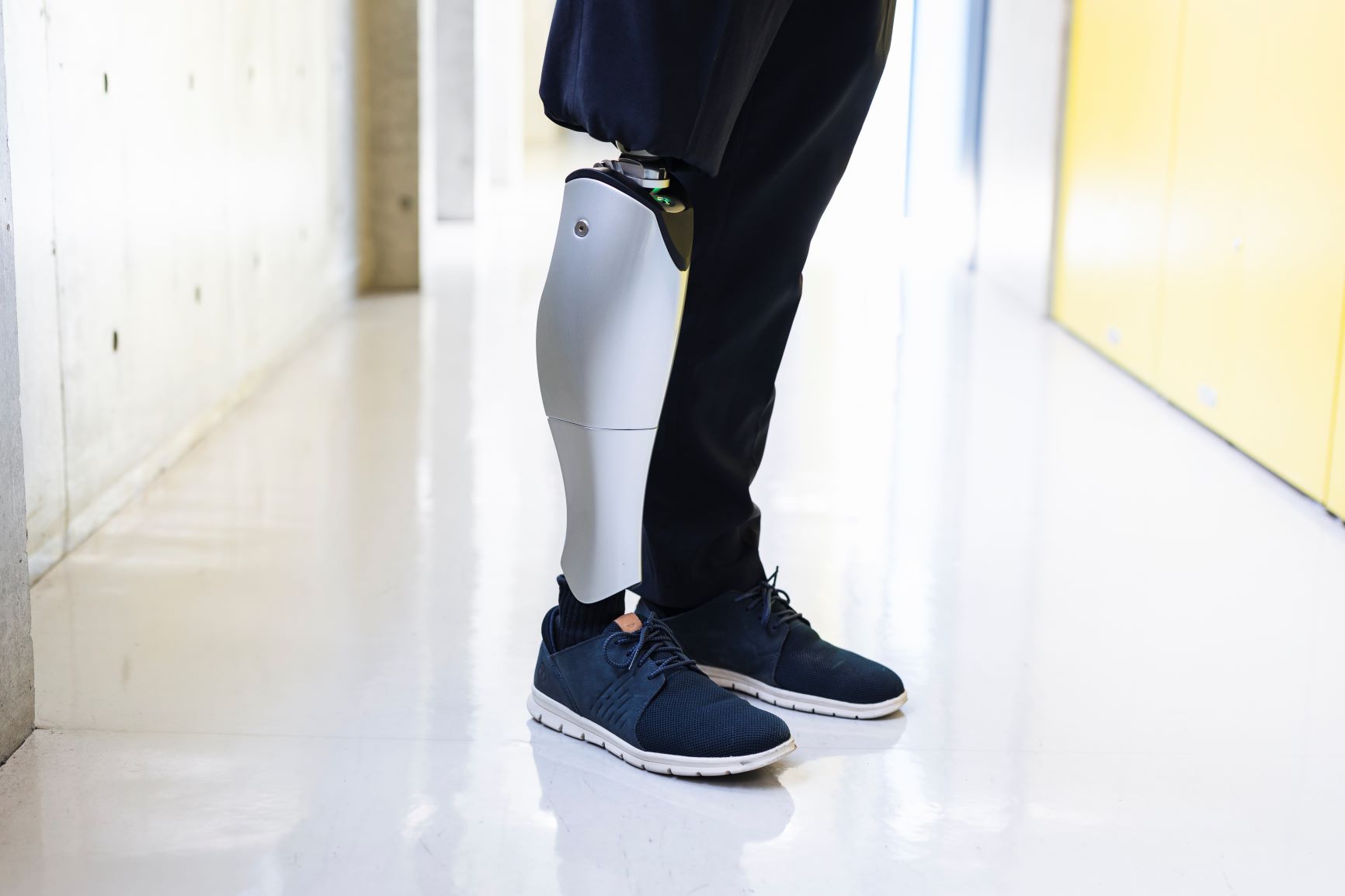
BionicM, a developer of powered prosthetic legs, announced on November 2 that it had completed the first close of its Series B funding round, securing ¥710 million (about $4.5 million).
Founded in 2018 as a startup spun out of The University of Tokyo, the company has offices at the UTokyo Entrepreneur Plaza in Tokyo and in Ashburn, Virginia.
A Founder Who Wears a Prosthesis Sets Out to Build a Better One
Most prosthetic legs in use today are what is known as passive prostheses. They are mechanically simple and need relatively little maintenance, but they offer limited capacity for active movement.
Xiaojun Sun, founder and CEO of BionicM, believed that advanced technology could make these conventional prostheses better. Sun lost his right leg to illness at age nine and wears a prosthesis himself. To pursue that idea, he began research on powered prostheses in 2015 in the laboratory of Masayuki Inaba at The University of Tokyo. Inaba is a robotics researcher, and BionicM’s powered prosthesis draws on humanoid robotics technology.
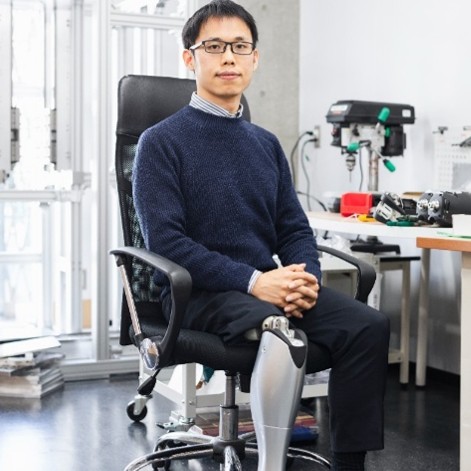
The company promotes three main features of Bio Leg, its powered prosthesis already on the market: balanced, symmetrical walking; power assist; and a smooth, intuitive gait. The power assist, for instance, works in concert with the muscles of the wearer’s residual limb, reducing the physical strain of walking with a prosthesis.
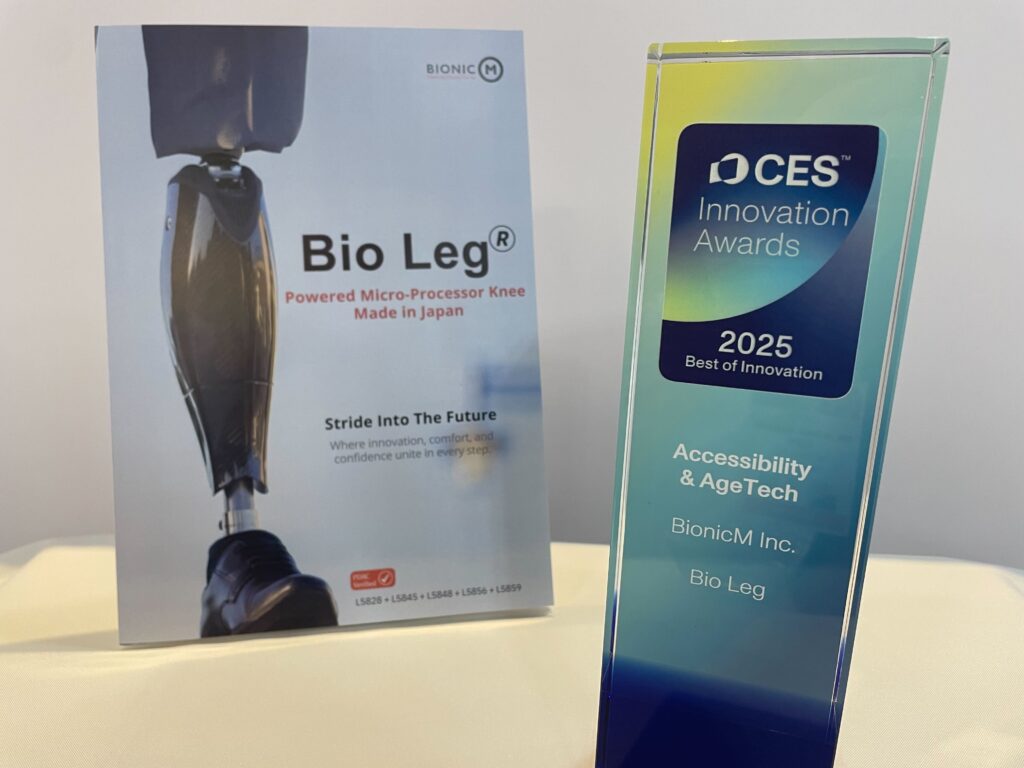
In 2024, BionicM established a U.S. subsidiary and opened its American office. In 2025, Bio Leg received a CES Best of Innovation award.
Funds Will Support Production and Marketing of a New Product
Investors in the Series B first close include the venture capital firms B Dash Ventures and Mitsubishi UFJ Capital.
BionicM plans to launch its next-generation product, ASISTA, in the U.S. in 2027, and will use the funds to build up production capacity and strengthen its marketing and sales operations.
Sun described ASISTA as “a strategic product that upends the conventional wisdom of the MPK market as the first product in the U.S. with an assist function. Through innovation rooted in humanoid robotics, we aim to transform the roughly ¥100 billion U.S. MPK (Micro Processor Knee) market.”