
Kinish, which develops rice-based alternatives to dairy products, announced on 20 October the first close of its Series A funding round, securing ¥490m ($3m).
Founded in 2023, the company is headquartered in Tokyo.
Developing its own rice variety for mass production
Of all the effects of climate change, summer heat has grown especially severe in recent years. In summer 2025 (June–August), Japan’s average temperature was the highest since records began in 1898. This has had knock-on effects, including soaring prices for agricultural produce.
Excessive heat affects dairy, too. Heat stress causes dairy cows to eat less feed, which in turn reduces milk yields and impairs reproductive function. It is also well known that cattle burps and manure are themselves a source of greenhouse gas emissions.
Kinish’s answer is to develop dairy alternatives made primarily from rice. It has already succeeded in expressing casein, a major milk protein, in rice.
Extreme heat, however, also harms the growth of rice. In 2024, Japan suffered a rice shortage caused by the previous year’s heatwave, and prices soared. The shortage came to be known as the “Reiwa rice crisis” (Reiwa being Japan’s current imperial era). The episode also underlined how strongly Japanese people favour rice as their staple food.
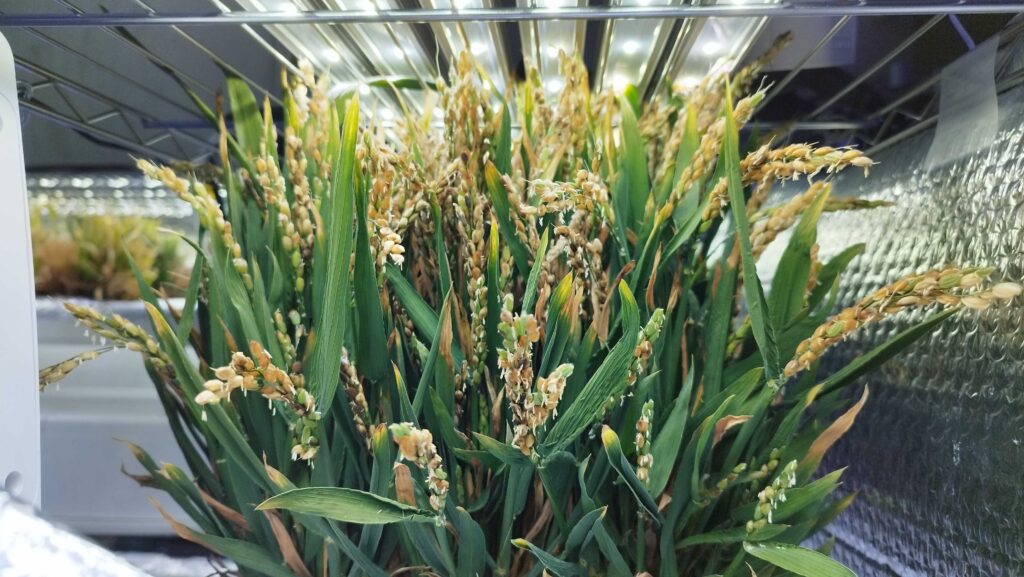
To secure a stable supply of rice as the heat persists, Kinish is developing its own variety. Ordinary rice plants stand roughly 1 metre (about 3 feet) tall, whereas those Kinish is developing reach only about 20 centimetres (about 8 inches). The compact size is intended for mass production in plant factories.
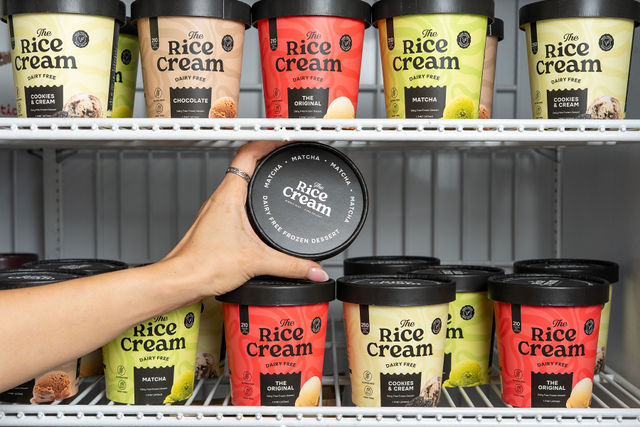
Kinish already has a product on the market. In August 2025, it launched a plant-based ice cream, “The Rice Creamery”. In October that year, it also went on sale in parts of the US, including retailers in Washington, DC, under the name “The Rice Cream”. However, this product uses rice grown in conventional paddy fields, not the proprietary variety described above.
Shimadzu Corporation’s CVC among the investors
Participants in the Series A first close were INSPiRE Mutualistic Symbiosis Fund 1; Shimadzu Future Innovation Fund, the corporate venture capital arm of Shimadzu Corporation; general contractor OBAYASHI CORPORATION; and Love Veggies Holding.
The funds will go towards expanding sales of the ice cream, research and development in plant factories and molecular farming, and recruitment.
The announcement also revealed that the company has opened an office in New York.