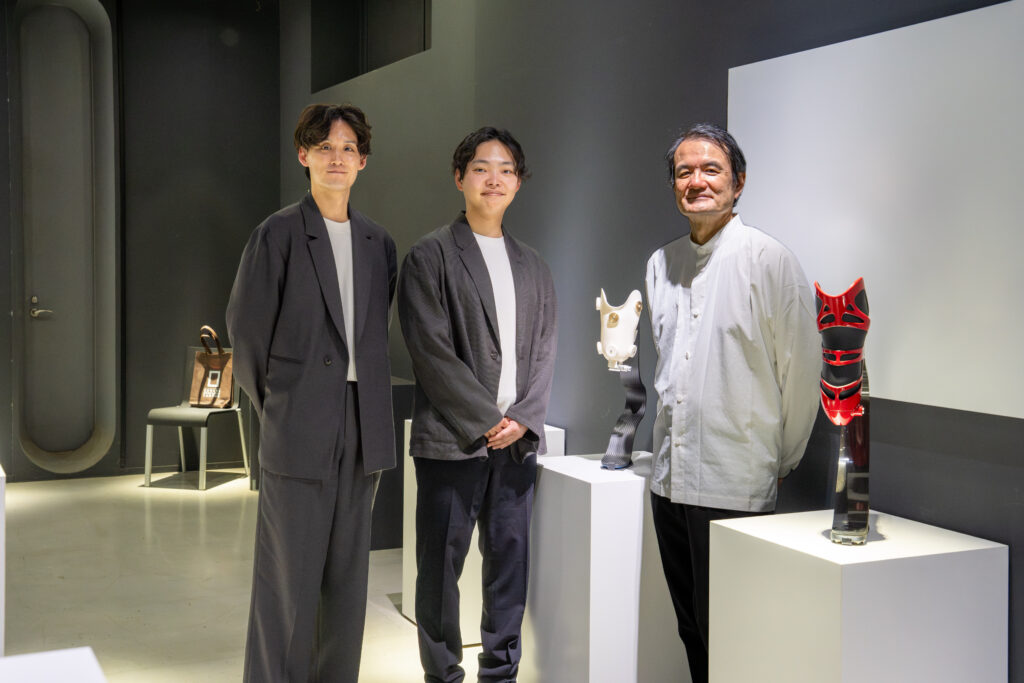

Sinumy, a developer of hands-free authentication technology, announced on 29 July that it had completed a pre-Series A funding round, securing ¥555m ($3m) in equity and debt combined.
The company was founded in 2018 under the name PaylessGate and adopted its present name in 2024. It is headquartered in Osaka.
Spreading hands-free authentication with people with disabilities in mind
The authentication system Sinumy is developing is intended for use at transport ticket gates, in payments, in smart locks and at event entrances. Communication between a smartphone’s Bluetooth function and the authenticating terminal allows a lock to be released or a payment to be made.
That much is already commonplace. What sets Sinumy’s approach apart from existing systems is that it is fully hands-free: the smartphone stays in the user’s pocket, and authentication takes place without it ever being taken out. The company claims the technology is the first of its kind in the world.
Building such a system has until now run up against a technical obstacle. In places such as shops or event venues, where large numbers of people are moving in different directions, identifying individual handsets is difficult. According to Sinumy, Wi-Fi positioning is accurate to within a few metres and Bluetooth beacons to within 1.5 metres (about 5 feet). At that level of precision, once several people are inside the target area, singling out one particular handset becomes hard.
Sinumy, by contrast, has sharpened positional accuracy to 10 centimetres (about 4 inches) using patented positioning and personal-authentication technologies. The company describes the ability to authenticate individuals in this way as a “human version of ETC” (hito-ban ETC). ETC is the name of the toll-collection system installed on Japan’s toll roads, and is the counterpart of E-ZPass in the United States or ERP in Singapore.
The press release announcing the funding suggests that one use case Sinumy regards as particularly valuable is authentication for people with disabilities. The company points to the advantage for those for whom taking an object out or entering details on a device is itself a barrier: authentication happens without any action on their part. Sinumy is also aiming at the “curb-cut effect”, whereby technology created in the name of accessibility ends up making life more convenient for everyone.
“From concept to real-world deployment”, says the CEO
The equity portion of the pre-Series A round drew participation from venture-capital firms including mint.
The proceeds will go towards preparing the company’s smart gate and smart spot products for commercialisation and volume production, expanding joint development work and proofs of concept, and hiring staff.
Announced alongside the funding was the appointment of Shunji Yamanaka, an industrial designer and University Professor at the University of Tokyo, as an adviser to Sinumy on UI/UX development. Ryoya Kurauchi, the company’s chief executive, said that Sinumy would make authenticating people a matter of “zero operations and zero waiting time”, and that the company would press on “conscious of our responsibility to turn this from a concept into real-world deployment”.