Mofuku Rescue, a service that lets customers try on and rent mourning wear around the clock, secured around ¥500m ($3m) in a Series A funding round on 8 July. The raise drew on both equity and debt.
The company was founded in 2022 by two graduates of Hitotsubashi University, a national university : Yusuke Goto and Yuma Nagae. It is headquartered in Tokyo.
Mourning wear, worn more often but harder to buy
Mofuku is the attire worn at funerals in Japan. The customary dress code at a Japanese funeral is, for men, a black suit with a white shirt and a black tie and, for women, a black dress or similar. Black kimono are also acceptable, as are school uniforms in the case of students. In some countries mourners wear dark colours other than black, but in Japan Western-style mourning wear is jet black.
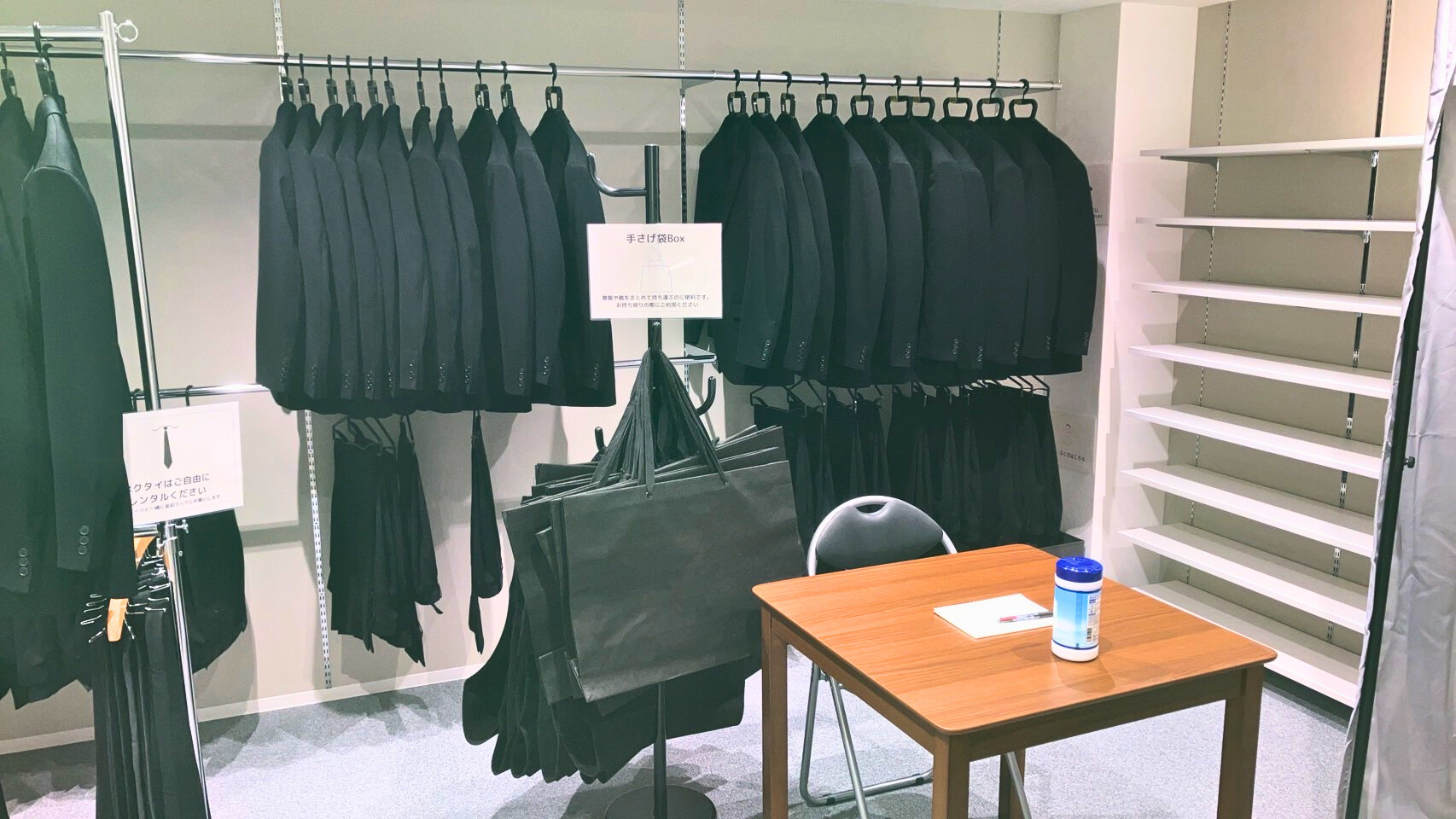
Mofuku Rescue operates stores in Japan’s Greater Tokyo area, Osaka and Fukuoka and, as noted above, offers the fitting and rental of mourning wear around the clock. Customers first book a visit and choose a plan online. The stores are unstaffed: after entering a passcode to unlock the door, customers select and rent mourning wear in their size. To return an item, they either visit an unstaffed store or send it by courier, then complete the return online.
As Japan’s population ages, the number of deaths is rising and, with it, the number of occasions on which people wear mourning wear. Mofuku Rescue’s own estimate puts the total number of occasions on which Japanese people wear mourning wear at just under 52m in 2026, rising to more than 56m by 2038.
Yet even as people wear mourning wear more often, the occasions to buy it have in fact become fewer than before. The reason is that the style of funerals is changing, driven by the wishes of the deceased, the spread of the nuclear family and efforts to cut costs. Formats such as chokusō, a direct cremation with no funeral service, and kazoku-sō, a funeral held only among close relatives, have become more common than before. As a result, there are fewer occasions to attend funerals connected to an employer’s business partners or to acquaintances, and the sense that one must buy mourning wear is thought to have grown weaker, especially among younger generations.
The author, too, lost his paternal grandmother, his wife’s grandfather and his maternal grandmother in quick succession over the past five years or so, and of these the paternal grandmother’s funeral was held as a family funeral. For that same funeral, the author’s wife, who did not own mourning wear, bought it at the time. This, too, may serve as one example of how the chances to buy mourning wear diminish once one has entered working life. Against this backdrop, Mofuku Rescue aims, through rental, to ease the pain consumers face when the need for mourning wear arises suddenly.
Mofuku Rescue announced in March 2026 a business partnership with major dry-cleaning company Hakuyosha. The rental mourning wear is cleaned by Hakuyosha to raise quality, and returns can now also be made at two Hakuyosha stores in the city of Fukuoka.
Hints at expansion beyond mourning-wear rental
The Series A round was led by venture-capital firm ALPHA and Money Forward’s corporate venture-capital arm (CVC) HIRAC FUND. Also taking part were Nankai Electric Railway Group’s CVC NANKAI NEXT Ventures and venture-capital firm Angel Round.
The proceeds will be used to expand across Japan, improve the user experience and upgrade store operations.
Mofuku Rescue, in its funding announcement, hinted at ambitions beyond mourning-wear rental, saying it would use Mofuku Rescue as a springboard to build a new business platform that harnesses the power of technology and systems to solve the many challenges people face at important junctures in life.