
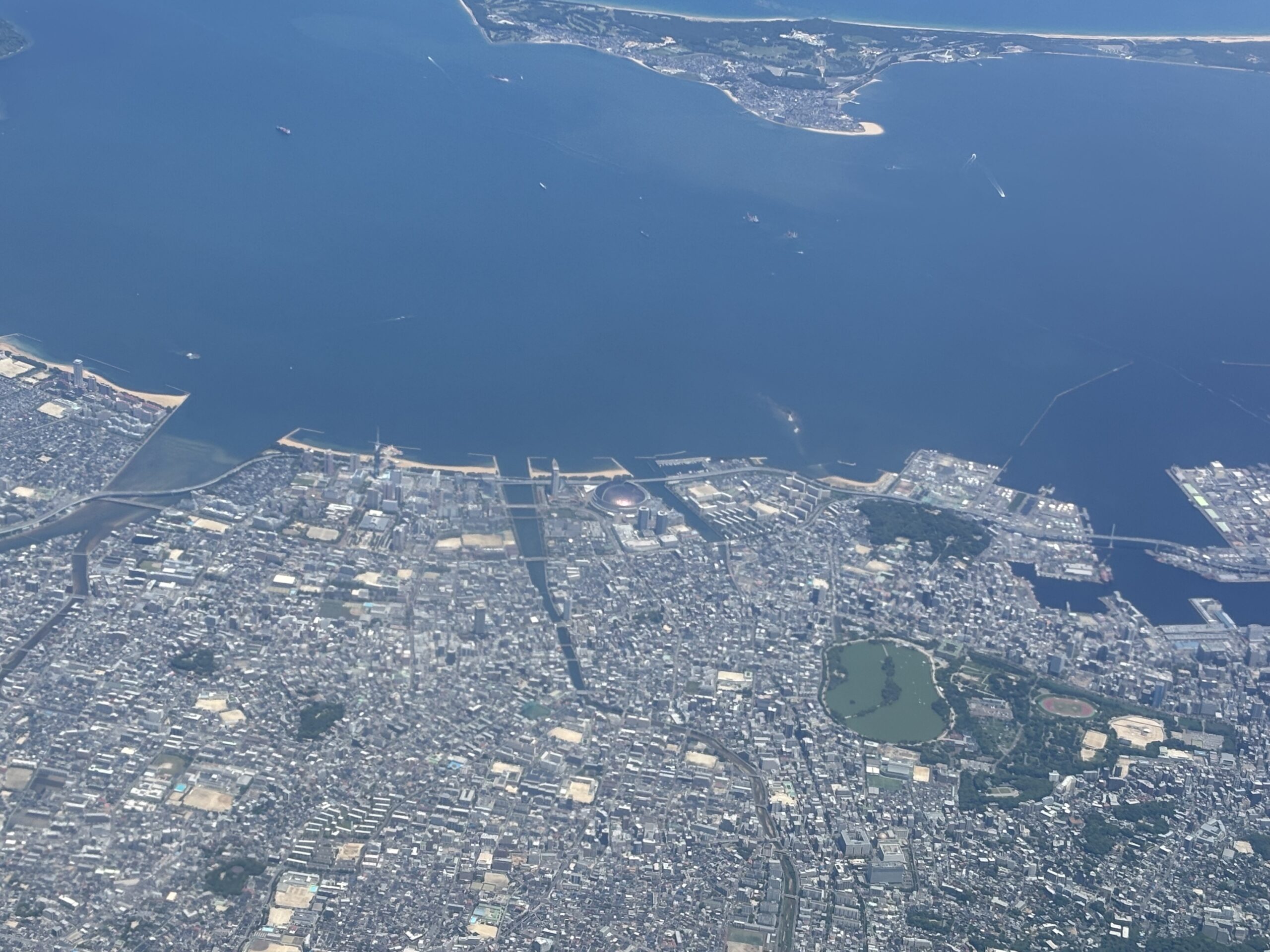
The author is writing this from Fukuoka, having come to Nagasaki and Fukuoka to gather material for the series “The Jodo Ethic and the Spirit of the Ohmi Shonin” and to take in some baseball. The return to Tokyo is about to begin.
Both Nagasaki and Fukuoka lie in the Kyushu region. Kyushu is the westernmost of the four largest islands that make up the Japanese archipelago.
The journey from Nagasaki to Fukuoka takes about an hour and a half, riding the Nishi-Kyushu Shinkansen—which partially opened in 2022—and changing to a connecting limited express. Stepping off at Hakata Station, the author was taken aback.
There were, quite simply, a great many people about.
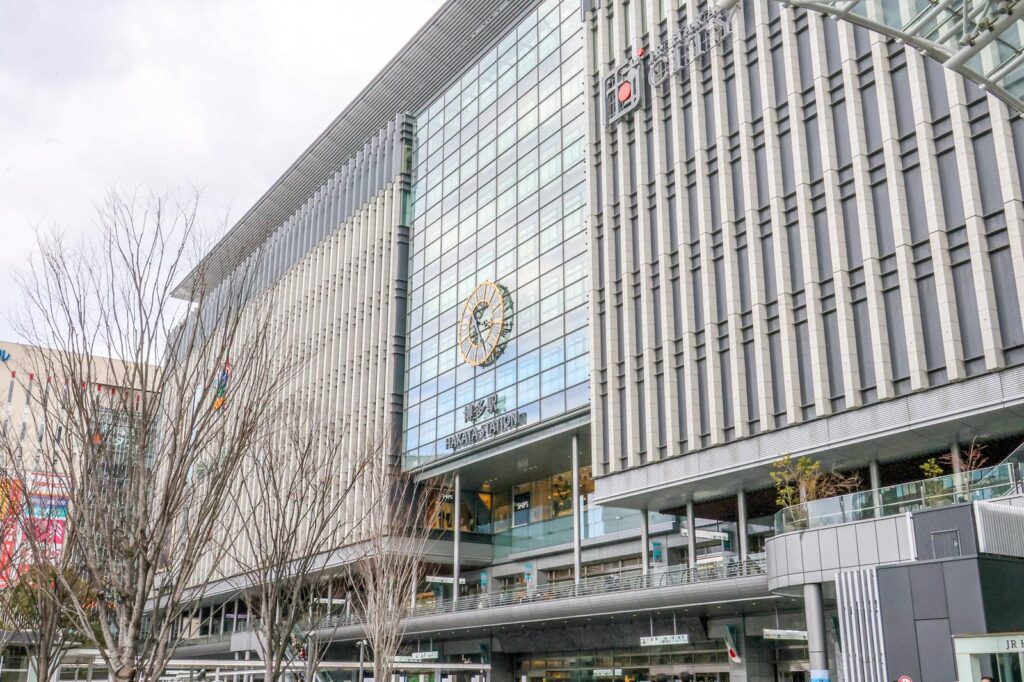
The author last visited Fukuoka in 2021, in the thick of the pandemic, so it would be no wonder if the streets had felt quiet then. But the author had also been to Fukuoka several times before COVID-19.
This is, admittedly, an impression rather than a measurement, but the streets of Hakata felt far busier than they had in the 2010s. In the station’s underground mall, the crowds were dense enough to bring the author to a halt more than once.
Fukuoka has two signature districts: Hakata and Tenjin. Whether the comparison will land with readers outside Japan is hard to say, but in Tokyo terms Hakata is something like Marunouchi—a district packed with corporate offices. Tenjin, by contrast, is more like Shibuya: a place that has offices but also shopping and other diversions. Perhaps that conveys the idea.
It was a Saturday when the author arrived at Hakata Station—a day when offices ought to be running at low capacity—and yet the place still felt crowded. Hakata is a Shinkansen terminus, so no doubt a fair number of those present had come from other regions. Even so, the foot traffic seemed markedly heavier than it had a decade or so ago.
Among Japan’s Regional Cities, a “Fukuoka Wins Alone” Pattern
Fukuoka, home to Hakata and Tenjin, is the largest city in Kyushu. As of October 2025 its population stood at 1.67 million. One might assume the crowds simply follow from a population that large.
True enough—but the pace of Fukuoka’s growth is remarkable. Consider the figures below.
| City | Population, Oct. 2005 | Population, Oct. 2025 | Growth (%) |
| Sapporo | 1,880,863 | 1,964,034 | 4.4 |
| Sendai | 1,025,098 | 1,096,951 | 7.0 |
| Hiroshima | 1,154,391 | 1,174,343 | 1.7 |
| Fukuoka | 1,401,279 | 1,670,636 | 19.2 |
*Each link leads to the official municipal website where the underlying statistics are published.
*Growth is calculated as (2025 population − 2005 population) / 2005 population.
In Japanese business circles, these four cities are grouped together under the label “Sa-Sen-Hiro-Fuku”—Sapporo, Sendai, Hiroshima and Fukuoka. Large companies headquartered in Tokyo tend to keep a branch in each of the four, and every one of them serves as a representative city for its region.
As the table shows, all four cities have grown over the past two decades, yet Fukuoka’s rate of increase stands well apart. Japan has already entered an era of population decline, and among these cities Hiroshima is projected to decline after peaking in 2020.
Fukuoka, by contrast, is projected to keep growing until around 2040.
Why is Fukuoka winning out among the regional cities? A leading factor is that the redevelopment of the Tenjin district is drawing still more companies into the city, while migration from other municipalities continues apace.
It is worth asking, though, why that should be possible in the first place. The author sees two factors behind it.
The first is that, in recent years, a growing number of companies have moved their base to Fukuoka. In the 2010s, for example, LINE drew attention with a plan for its Fukuoka-based operating company to build its own headquarters tower, only to abandon it as construction costs soared. Even so, that Fukuoka-headquartered LINE company later merged with the customer-support division of the former Yahoo Japan. The case is an unusual one, but because Yahoo’s own headquarters were in Tokyo, it can be read as a kind of relocation to Fukuoka.
The second factor is Fukuoka’s advantage of location. The city sits remarkably close to the Korean Peninsula and, within Japan, is also relatively near the Chinese mainland and Taiwan. It is, moreover, the closest of Japan’s cities of more than a million people to the nations of Southeast Asia.
In other words, when it comes to business with partners outside Japan, Fukuoka enjoys a certain advantage in access and the like.
Granted, set beside Tokyo—whose central 23 wards are home to roughly 9.8 million people—or the city of Osaka (about 2.8 million), Fukuoka’s market will still feel small for, say, business-to-business work. Yet in a Japanese economy where the gloomy stories tend to crowd out the rest, it is no less a fact that Fukuoka is posting clear growth.
Readers weighing business in Japan would do well to keep an eye on the movements of this great city of Kyushu, too.