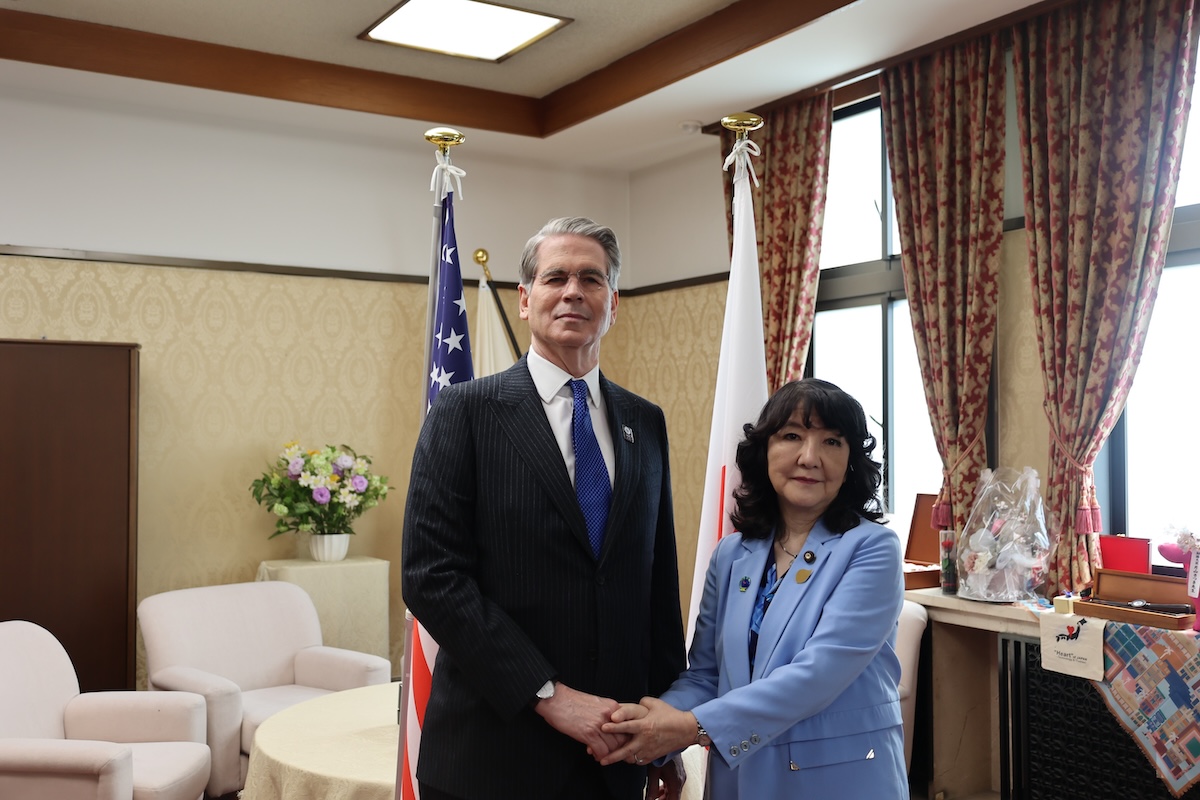
U.S. Treasury Secretary Scott Bessent visited Japan May 11–13, holding talks with Prime Minister Sanae Takaichi and several cabinet ministers.
This article focuses on the bilateral finance ministers’ meeting between Bessent and Finance Minister Satsuki Katayama, held on May 11 and 12.
Who Is Finance Minister Katayama?
Before turning to the meeting itself, here is a brief introduction to Katayama for readers outside Japan.
Katayama was born in 1959. She graduated from the University of Tokyo Faculty of Law in 1982 and entered the Ministry of Finance (then the Ministry of Finance and Economy, known as Okurashō). She has thus been involved in national fiscal administration from the very start of her career. In 2004, she became the first woman to serve as chief budget examiner (shukei-kan) in the Budget Bureau — the official responsible for drafting the national budget.
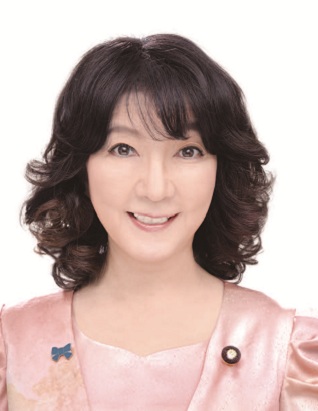
Katayama has been married twice. Her first husband was Yoichi Masuzoe — a political scientist who later served as a member of the House of Councillors and as Governor of Tokyo. Her current partner is Ryutaro Katayama, a businessman and investor; the two remain married.
In 2005, Katayama ran for a seat in the House of Representatives (the lower house, equivalent to a national parliament’s lower chamber) from Shizuoka’s 7th district and won. That election was a dramatic affair: Prime Minister Junichiro Koizumi rode a wave of popular support to lead the ruling Liberal Democratic Party (LDP) to a landslide victory. Some 83 first-time LDP lawmakers were elected, and Katayama was among them.
She lost her bid for a second term in the 2009 general election. The following year, in 2010, she ran in the national proportional-representation constituency for the House of Councillors (the upper house) and won. She has since served three terms.
In 2018, she joined the cabinet for the first time under Prime Minister Shinzo Abe, serving as minister in charge of women’s empowerment among other portfolios. She became finance minister when the Takaichi cabinet was formed in 2025.
Finance Ministry officials tend toward fiscal restraint, given their stewardship of the national budget and Japan’s government debt — which now exceeds ¥1,000 trillion (roughly $64 trillion). Katayama is a former finance official herself, yet she is a vocal advocate of expansionary fiscal policy, aligned with Prime Minister Takaichi on this front.
Reports of Japan’s Claude Mythos Access Request Emerged During Bessent’s Visit
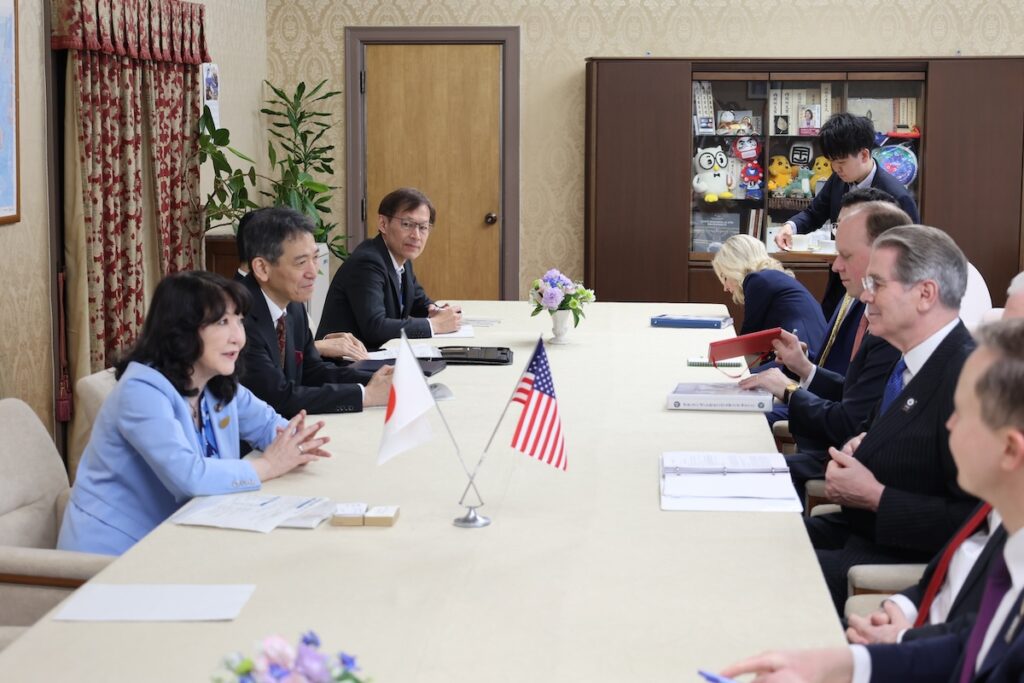
The bilateral finance ministers’ meeting between Bessent and Katayama took place over two sessions: a two-hour working dinner on May 11, followed by a roughly 30-minute morning meeting on May 12.
Two topics dominated the talks: exchange rates and cutting-edge AI.
On the currency side, Japan’s government and the Bank of Japan appear to have intervened in the foreign exchange market in early May. At her post-meeting press conference, Katayama declined to comment on Bessent’s specific remarks but noted that both sides had confirmed continued close coordination on the exchange rate — suggesting the U.S. raised no objections to Japan’s intervention.
Currency movements have been widely covered by other financial media, so this article will not dwell on them. Of greater interest here is the other topic: cutting-edge AI, including Claude Mythos, which Anthropic has released on a restricted basis.
In the early hours of May 12, during Bessent’s visit, Kyodo News reported that “Japan’s government has demanded access to the latest U.S. AI.” The report stated that Japan’s government had demanded the right to use Claude Mythos. The article did not identify the specific U.S. counterparty — whether the demand was directed at the U.S. government or at Anthropic directly. Given the timing, however — with Bessent still in Tokyo following the working dinner and meeting with the prime minister and ministers that same day — the most natural reading is that Japan is asking the U.S. government to facilitate its access to Claude Mythos through Anthropic.
Finance Minister Katayama confirmed at her press conference that cutting-edge AI was on the agenda in her talks with Bessent. This suggests that the Japanese side — through Katayama and the Ministry of Finance — asked Bessent and his delegation to help secure access to Claude Mythos.
Japan’s Ministry of Finance sits above the Financial Services Agency, the regulator overseeing financial institutions. Read together, the signals from Katayama and Bessent suggest that Japan’s government may be seeking Claude Mythos access to identify vulnerabilities in the systems and networks of Japanese financial institutions — much as U.S. financial institutions, which have received restricted access to Claude Mythos, are said to be doing.