In Japan, there is a category of publications known as general-interest magazines, among which Bungeishunju stands as a representative example. The publishing company that issues the magazine bears the same name, Bungeishunju, and it also serves as the de facto administrator of two of Japan’s most prominent literary prizes: the Akutagawa Prize, awarded primarily to outstanding mid-career and emerging authors of serious literature, and the Naoki Prize, awarded to authors of popular fiction. While these prizes are not defined by “authority” in a formal sense, they have, in practice, come to carry an exceptionally high level of prestige within Japan’s literary world. Formally, these prizes are administered by the Society for the Promotion of Japanese Literature, whose secretariat is housed within Bungeishunju, with the president of Bungeishunju serving concurrently as chairman of the society. In fact, the most recent issue—the March issue (released in February)—includes the full text of the latest Akutagawa Prize–winning work.
That same March issue also features the latter half of an essay co-authored by Peter Thiel and Sam Wolf, titled A Voyage to the End of the World. The first half appeared in the February issue. The piece appears to be one in which Wolf put Thiel’s ideas into written form.
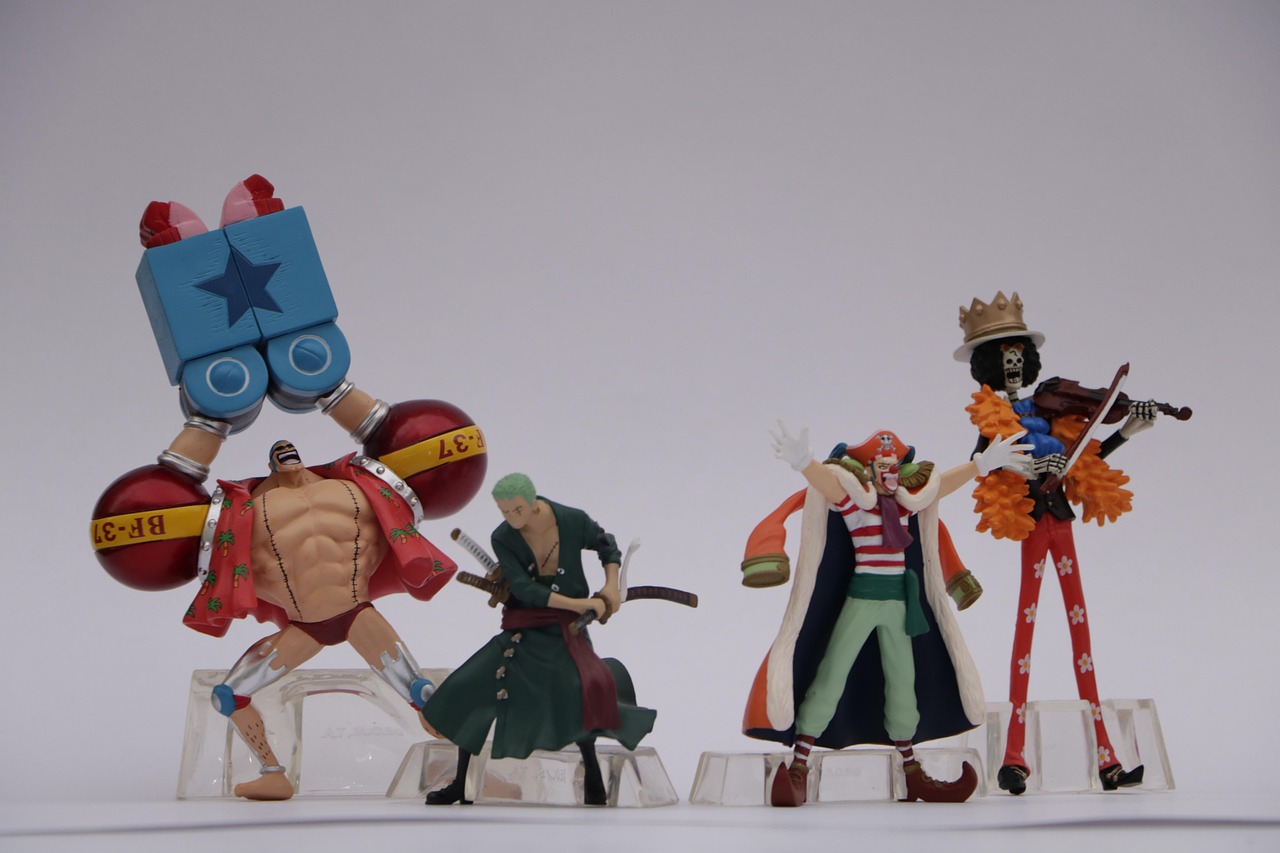
The conclusion of this contribution is that, in a world where anti-Christ–like ideas have spread, One Piece protagonist Luffy represents a Christ-like figure—one who seeks to present new possibilities and the promise of a better age to contemporary society.
Using Thiel’s essay as a starting point, I would like to explore the set of ideas that many Japanese readers of One Piece likely sense within the work itself.
Thiel’s Prediction That One Piece Will Depict a “Third Path” in Its Ending
To state this at the outset, I am not an especially devoted reader of One Piece. That said, I do watch the anime when I have time, so I am not unfamiliar with the story. I know the basic plot and the defining characteristics of the main characters.
Even so, I do not agree with Thiel’s interpretation. At the same time, I can understand why Thiel—living within a Christian society—would arrive at the perspective described above. Additionally, I would like to make clear that my position here should not be read as an attempt to pander to liberal audiences who oppose Thiel.
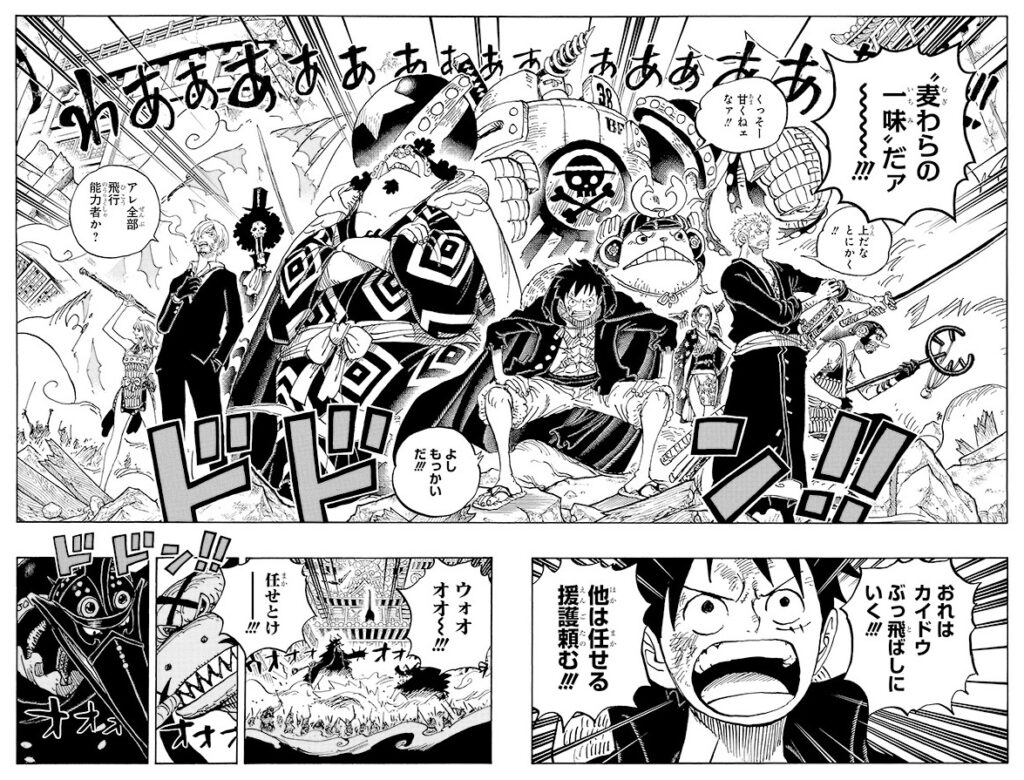
In his essay, Thiel argues that as One Piece moves toward its conclusion, author Eiichiro Oda will not depict either an apocalyptic ending or a rigid, frozen society, but will instead present a “third path.” In response, I would like to present my own version of that third path—one that differs both from Thiel’s view and from those who oppose him. It is not a novel idea, but rather one that has existed within Japanese subculture for a long time: a distinctly Japanese way of thinking.
What Is the Weekly Shonen Jump–Style Worldview?

The third path I propose is this: One Piece represents the culmination of the “Weekly Shonen Jump–style worldview,” defined by the themes of effort, friendship, and victory.
What, then, is this Weekly Shonen Jump–style worldview of effort, friendship, and victory?
It is said that this worldview was articulated by Tadasu Nagano, the first editor-in-chief of Weekly Shonen Jump. According to commonly told accounts, Nagano noticed that the words “effort,” “friendship,” and “victory” appeared with striking frequency in reader surveys, and he therefore adopted them as the magazine’s guiding themes.
As time went on, however, it is also said that Jump editors and creators no longer necessarily emphasized this worldview in such an explicit manner. It is also often said that, depending on how it is portrayed, an overt emphasis on “effort”—while necessary—can sometimes risk dampening a story’s sense of lightness or accessibility for readers.
Nevertheless, it is a historical fact that effort, friendship, and victory were established as core themes during Jump’s formative years. It is also true that, as will be discussed below, many Jump works continue to embody these themes even when they are not explicitly stated.
The Weekly Shonen Jump–Style Worldview in Japanese Hit Content
For example, in Dragon Ball, Son Goku trains under Master Roshi during the early part of the story. Later, as he travels the world and starts a family, he continues his training—an embodiment of “effort.” These training episodes are rarely depicted as solitary endeavors; rather, they unfold alongside companions such as Krillin, Yamcha, Piccolo—who was initially an enemy—and Vegeta, who likewise began as an adversary. This is friendship. Ultimately, Goku defeats powerful adversaries, including the final enemy Majin Buu, achieving victory. This is the narrative arc of Dragon Ball.
SLAM DUNK likewise fits this framework. Its protagonist, Hanamichi Sakuragi, learns the fundamentals of basketball and grows together with his teammates at Shohoku High School as they strive for a national championship. This progression clearly aligns with effort, friendship, and victory.
Moreover, the Weekly Shonen Jump–style worldview can be found outside of Jump itself.
For many years, the historical drama Mito Komon aired on Japanese terrestrial television and enjoyed long-term popularity. Although it is a serialized drama, each episode follows the same basic pattern: Mitsukuni Tokugawa—grandson of Tokugawa Ieyasu—travels across Japan with his retainers in disguise, punishing corrupt officials and villains wherever they appear. (In reality, the historical Mitsukuni Tokugawa did not travel around the country; the television series Mito Komon is a work of fiction.) In each episode, Mitsukuni endures injustice while concealing his identity until the final act, when he reveals himself as the Tokugawa shogunate’s vice shogun and sets things right. This structure, too, resonates with effort, friendship, and victory.
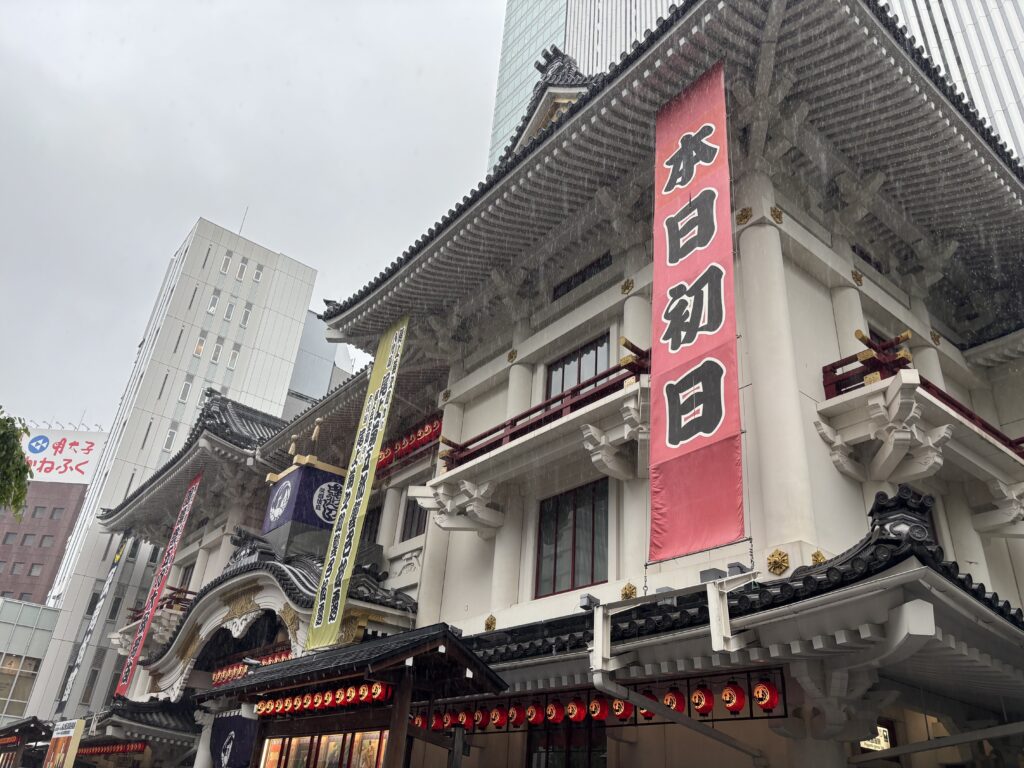
Another example is National Treasure, released last year and becoming the highest-grossing film in Japanese box-office history. The story follows Toichiro, the son of a yakuza, who enters the world of traditional kabuki theater and ultimately becomes a National Treasure. (In Japan, there exists a cultural preservation system for Important Intangible Cultural Properties, under which certain kabuki actors and master craftsmen who have received official designation are treated in a manner comparable to “National Treasures.”) While this interpretation is my own and not necessarily a widely held Japanese view, I believe that National Treasure also embodies the Weekly Shonen Jump–style worldview. Toichiro and the co-protagonist Hanya hone their skills through rivalry and mutual effort, clash with one another while gradually deepening their bond, and although Hanya dies before fulfilling his ambitions, Toichiro ultimately achieves recognition as a National Treasure. In this arc, I see the same worldview at work.
In this way, it is not uncommon for Japanese hit content to incorporate elements of the Weekly Shonen Jump–style worldview.
One Piece likewise began as a serialized work in Weekly Shonen Jump and has since grown into a global phenomenon, with more than 500 million copies of its collected volumes in circulation worldwide and an anime watched across the globe. One Piece belongs to readers everywhere, including Thiel.
This is why I believe the Weekly Shonen Jump–style worldview has reached a kind of culmination.
The Weekly Shonen Jump–Style Worldview Does Not Guarantee Success
As noted earlier, my intention in presenting a perspective different from Thiel’s here on OHYASHIMA is not to deny his argument. How one interprets the messages embedded in a work of content is ultimately up to the reader. It is entirely possible that if one were to ask Eiichiro Oda directly, he might say that Thiel’s view is closer to his own, and that my interpretation misses the mark.
Nor does incorporating a Weekly Shonen Jump–style worldview guarantee success in Japan or other Asian countries. At the very least, people who consume manga, novels, and films in Japan tend to seek elements that are distinctive to the cultures from which those works originate.
My point is simply that Japanese audiences tend to favor this worldview. My point is simply that many Japanese audiences tend to favor this worldview. While this observation may not directly translate into creating a product that sells, it may still prove useful in certain contexts—such as doing business in Japan or engaging more deeply with Japanese people and society.