On January 9, Japan’s Agency for Cultural Affairs convened a joint meeting of the Cultural Council’s Subcommittee on Copyright Policy and its Working Team on Legal Systems. At the meeting, the agency presented a proposal to incorporate so-called “record performance and communication rights” into Japan’s Copyright Act. Based on this proposal, the agency aims to compile a bill to amend the Copyright Act and submit it to this year’s ordinary session of the National Diet, scheduled to begin on January 23 and conclude on June 21.
Put simply, the proposal would mean that when retailers, restaurants, and other businesses play recorded music performed by Japanese artists as background music, a form of remuneration would arise under the record performance and communication right.
Today’s article focuses on this development, which would see record performance and communication rights incorporated into Japan’s copyright framework. While OHYASHIMA primarily targets readers considering entering the Japanese market or doing business with Japan, this issue is also relevant to readers who are not directly engaged in business in Japan. This is because the legal and institutional framework in question affects overseas businesses that use streaming services or physical recordings to play Japanese music in their own commercial spaces.
The Current Copyright Treatment of Playing Japanese Music Recordings
As noted above, playing Japanese pop music for business purposes is expected to give rise to usage fees under the proposed record performance and communication right. Conversely, this also means that until now, most cases of playing Japanese music have not involved payment of fees corresponding to this particular right.
Even under the current system, playing Japanese pop music as in-store background music does generate usage fees related to the rights of lyricists and composers. However, because Japan’s Copyright Act has not fully developed a framework for record performance and communication rights, there has been no clear domestic mechanism for distributing fees to performers and record producers, even if foreign copyright management organizations collected such fees. As a result, Japanese pop music has been played in commercial facilities around the world without corresponding remuneration reaching Japanese artists—this has been the practical reality.
Some readers may feel that when playing Japanese pop music, copyright management organizations have not raised objections or demands for payment. Indeed, until now, the use of Japanese music in this context has effectively existed in a gray zone from a copyright perspective. That situation, however, may change significantly within the next year or so.
Is Japanese Music Really Being Heard Around the World?
That said, is Japanese pop music actually being played globally to an extent that justifies concerns about “leakage” of copyright royalties? It is true that some Japanese artists—such as those producing anime songs, as well as acts like YOASOBI and ATARASHII GAKKO!—have gained a certain level of international recognition. Still, until writing this article, I was skeptical as to whether the scale of rights usage was large enough for the royalties collected to outweigh the cost of collection.

In reality, opportunities to hear Japanese pop music worldwide have increased. According to a 2023 study by Luminate, Japanese-language songs accounted for 2.1 percent of the top 10,000 most-streamed tracks globally that year, up from 1.3 percent in 2022—a substantial increase. Notably, non-English-language songs made up 45 percent of that top 10,000.
From the Japanese government’s perspective, the objective is not only to sell Japanese content globally but also to help reduce Japan’s so-called “digital deficit.” This term refers to a situation in which Japan pays more to foreign providers of digital services than it earns from digital services sold abroad.
Given these factors, it is likely that Japanese pop music will be played more frequently around the world in the future—and that opportunities for artists to receive income from such usage will also expand.
Why Has Japan Not Introduced Record Performance and Communication Rights Until Now?
To clarify the core concept of this article, record performance and communication rights refer to the right of performers and record producers to receive remuneration—separate from composers’ and lyricists’ copyrights—when recorded music is played as background music in stores or other public spaces. In essence, this right treats music not merely as a product for personal listening, but as a commercial asset used to shape physical environments.
At present, 142 countries worldwide have introduced record performance and communication rights either partially or in full.
Why, then, has Japan not adopted such rights until now?
According to materials distributed at the Agency for Cultural Affairs meeting on January 9, when Japan’s current Copyright Act (enacted in 1970) was being drafted, lawmakers believed that the use of commercial sound recordings in businesses such as cafés was limited in scope and scale. As a result, record performance and communication rights were not introduced at that time.
By contrast, in broadcasting and wired broadcasting contexts, secondary usage fees related to recorded music were already being paid to artists. This may explain why, for a long period, there was relatively little pressure from within the music industry to revisit the system.
Here, “wired broadcasting” does not refer to cable television. Rather, it denotes multi-channel subscription services widely used by restaurants and retailers in Japan, offering access to current hit charts, oldies, traditional music, and more. Long before the internet became ubiquitous, such services were used by many customers in a manner closely resembling today’s subscription models. A well-known provider of such services is USEN, a subsidiary of U-NEXT HOLDINGS.
Supplement: How Legislation Is Debated in Japan
The legislative process mentioned above may be unfamiliar to readers from countries with presidential systems.
Japan operates under a parliamentary cabinet system, and both the government and legislators have the authority to introduce bills. Japan’s National Diet is bicameral, meaning that a bill becomes law if it is approved by a majority in both the House of Representatives (the lower house) and the House of Councillors (the upper house). If the lower house passes a bill but the upper house rejects it, the bill can still become law if two-thirds of the members present in the lower house vote in favor upon reconsideration.
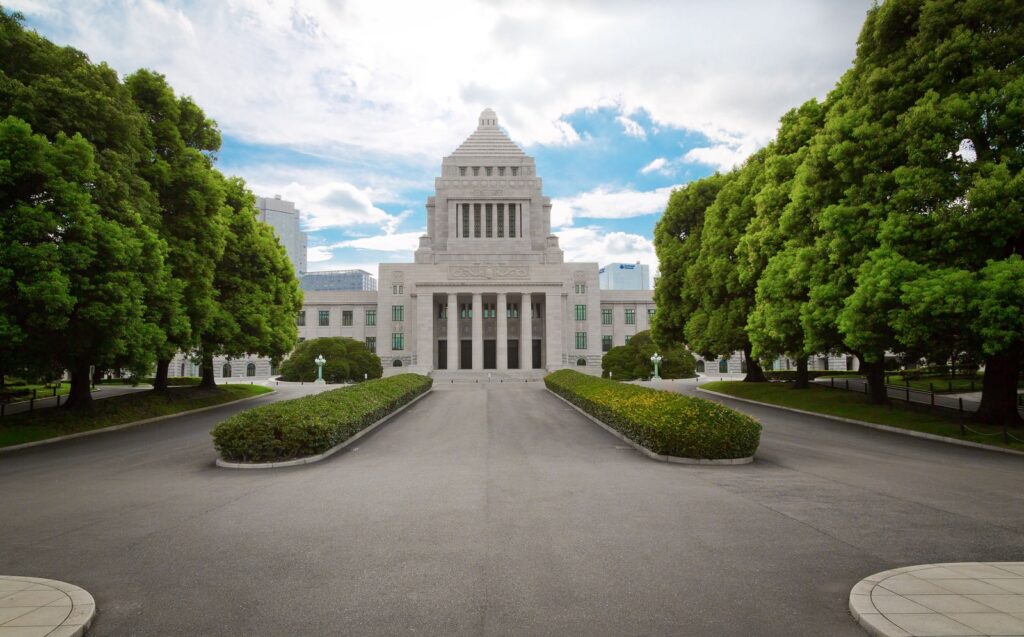
As noted earlier, this year’s ordinary session of the Diet is scheduled to run from January 23 to June 21. Under Japan’s Constitution, the ordinary session is convened each January and lasts 150 days. During this session, the Diet deliberates and votes on the national budget for the following fiscal year (for example, the April 2026–March 2027 budget in the January 2026 session), as well as on legislative bills. Typically, an extraordinary session is convened in the autumn to deliberate supplementary budgets as well as other legislative bills. Other types of sessions, such as special sessions and emergency sessions of the upper house, also exist, but they are largely irrelevant to the present topic and are therefore omitted here.
The Agency for Cultural Affairs intends to introduce record performance and communication rights into Japan’s copyright framework by submitting a bill to amend the Copyright Act during the ordinary session held from January through June. If such a bill were to be passed and promulgated in June, it would likely come into force several days to roughly one year later, at which point the law would begin to take effect. However, legislation establishes only the broad framework; detailed system design is determined through cabinet orders and ministerial regulations. Consequently, even after enactment and enforcement, a fully operational system for record performance and communication rights would not emerge immediately. According to reporting by The Nikkei, the Agency for Cultural Affairs is considering a preparation period of three years.
Complicating matters further is the possibility—reported by the media—that Prime Minister Sanae Takaichi may dissolve the lower house. If dissolution were to occur, a general election for the lower house would likely be held in February. In that scenario, the ordinary session would be cut short, and the amended Copyright Act might not be submitted at all, or deliberations could be suspended even if submission occurs. The bill would then likely need to be reintroduced in a subsequent extraordinary session. As a result, the introduction of record performance and communication rights could be delayed beyond current expectations.
In Place of a Conclusion: Expected Implementation and Market Reactions
If record performance and communication rights are introduced, Japan is expected to consider two main collection methods domestically: direct collection from stores and other venues that play music, and collection from service providers such as streaming platforms. Overseas, collection would likely be handled by local copyright management organizations, which would then remit payments to Japan’s copyright management bodies.
Notably, The Nikkei reported on January 9 that the introduction of record performance and communication rights appeared increasingly likely. Following this report, shares of NexTone, a Japanese music copyright management company, surged on the Tokyo Stock Exchange, briefly reaching ¥1,800 before closing at ¥1,730. The previous day’s closing price had been ¥1,655.