

On February 6, Toyota Motor Corporation announced a management reshuffle under which Koji Sato, Representative Director and President, will become Representative Director and Vice Chairman, while Kenta Kon, an operating officer, will assume the role of President. The changes will take effect on April 1.
This presidential succession has already been widely covered by the media, so it will not be discussed in detail here.
What is noteworthy, however, is Toyota’s corporate website. On the “Executives” page, Mitsuru Kawai is listed with the title “Oyaji,” while Koji Kobayashi is described as “Banto.”
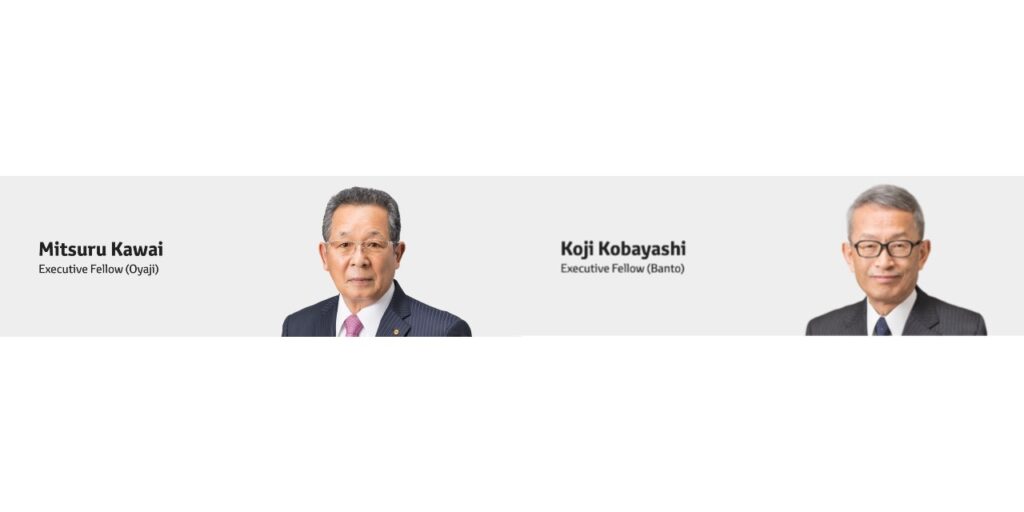
Both titles are Japanese words, and readers outside Japan may naturally wonder what they mean.
This article therefore examines the meanings of “Oyaji” and “Banto” as used on Toyota’s official website.
Oyaji Found Across Toyota Group Shop Floors
First, let us consider “Oyaji.”
In its original sense, oyaji means “father.” Written in Japanese, the word consists of two elements: oya, meaning parent, and ji, referring to father.
By extension from the image of a father, the term can also be used to refer to people outside one’s own family. Looking up oyaji in Daijisen, a leading Japanese dictionary published by Shogakukan, we find the following definitions:
- One’s own father, used affectionately or humbly when speaking to others.
- A middle-aged or elderly man, or someone else’s father (e.g., “the neighbor’s oyaji”).
- The owner of a shop (e.g., “the oyaji of the bar”).
- A term used affectionately by subordinates to refer to the leader of their group.
- A colloquial term for a brown bear (“mountain oyaji”).
- One’s father’s or mother’s father; grandfather.
Readers can likely infer that the “Oyaji” title held by Mr. Kawai corresponds to the fourth definition. In fact, at Toyota, Oyaji is not a title or honorific bestowed solely on Mr. Kawai. Across Toyota and its group companies, there are Oyaji figures present at individual worksites.
The meaning and role of Oyaji are described in the book Leader: Akio Toyoda by Hideki Fujii, who served as Akio Toyoda’s communications secretary during Toyoda’s presidency:
“At today’s Toyota, there are several people known as ‘Oyaji.’ When they speak up, the shop floor moves. That is what an ‘Oyaji’ is.”
Let us look at Mr. Kawai’s career. His biography states that he “graduated from Toyota Technical Skills Academy,” which is Toyota’s in-house vocational training institution and not a school under Japan’s formal education system. In Mr. Kawai’s case, after completing compulsory education through junior high school, he entered and graduated from the Toyota Technical Skills Academy. He then built his career as a forging craftsman within Toyota, eventually becoming responsible for forging operations in 2005. This appointment can be seen as marking the point at which Mr. Kawai became the Oyaji of the forging shop floor.
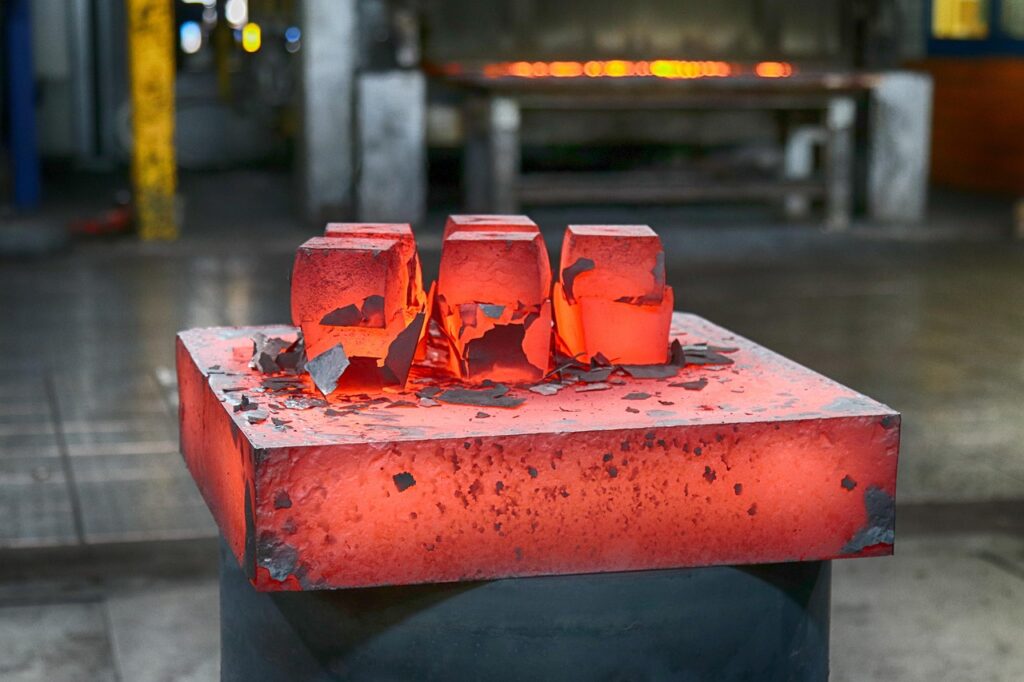
In 2015, Mr. Kawai was appointed Senior Managing Officer, and in 2017 he became Executive Vice President. He was the first person in Toyota’s history to rise from a skilled production role to an executive position. In this sense, Mr. Kawai became an Oyaji overseeing Toyota’s manufacturing as a whole. Behind this appointment lay Akio Toyoda’s belief that “once you enter Toyota, academic background does not matter,” and his intention that “Mr. Kawai should become an executive so that people in skilled production roles can have someone to aspire to.”
Although Mr. Kawai has since stepped back from frontline management, he continues to watch over the shop floor in his current role as “Executive Fellow (Oyaji).”
It should be noted that the custom of affectionately and respectfully referring to a leader as Oyaji is not unique to Toyota. At Honda, a rival automaker, founder Soichiro Honda was also known internally as Oyaji or Oyaji-san (san being a Japanese honorific). In other fields, including Japanese politics, secretaries sometimes refer to their supervising legislators as Oyaji.
Returning to Toyota, technical skill alone is not sufficient for someone to be recognized as an Oyaji. As suggested by the earlier quotation from Leader: Akio Toyoda, the role also requires the human qualities necessary to mobilize people on the shop floor.
An episode illustrating this point is described in the same book. In the winter of 2018, a social gathering was held for Oyaji figures from across the Toyota Group. Footage from this gathering was later shown during Akio Toyoda’s New Year address in 2019. In his speech, Toyoda revealed the following behind-the-scenes exchange:
“Before the gathering began, Mr. Kawai reportedly told the organizers: ‘Many of these people are meeting for the first time. But watch closely. They share the same scent, so they’ll become close within five minutes. From tomorrow on, they’ll be able to help each other with a single phone call. If you speak to the Oyaji gathered here, the shop floor will move.’”
This episode shows that Toyota is shaped not only by elite managers skilled in numbers and economic trends, but also by Oyaji figures who know the shop floor and understand manufacturing firsthand.
Banto, Familiar from Japanese Drama and Storytelling
The second theme, Banto, is a word encountered far less frequently than Oyaji. Because Oyaji can also mean one’s own father, it appears relatively often in everyday conversation. Banto, by contrast, tends to evoke a more traditional image.
That said, it is not an unfamiliar term to Japanese. In period dramas and traditional comic storytelling (rakugo), Banto often appears as the number-two figure who supports the head of a merchant household. Even in modern Japanese companies, while it is rare for Banto to be used as an official job title as it is at Toyota, there are executives and managers who are informally referred to as Banto. A typical example is in owner-managed companies, where the highest-ranking non-family executive may be described as the Banto.
As with Oyaji, let us consult Daijisen for the formal definition of Banto:
- The head servant in a merchant house, entrusted with all aspects of the business, including sales and accounting.
- Guarding or standing watch, or the person who performs that role.
- A person who sits at the bathhouse counter; later also used for bathhouse attendants.
- An abbreviation of banto-shinzo.
When referring to Banto in Toyota or in modern Japanese companies, it is reasonable to interpret the term according to the first definition.
Looking back at Toyota’s history, we find Taizo Ishida, who was known as O-Banto—the chief among Banto—during the company’s formative years. Ishida supported Kiichiro Toyoda, the founder of Toyota as an automobile manufacturer and the grandfather of Akio Toyoda. When Kiichiro took responsibility for labor disputes and resigned as president, Ishida succeeded him and guided the company through the crisis.
Compared with Oyaji, who oversee operations on the shop floor, the role of Banto is somewhat less immediately visible. Examining the career of Koji Kobayashi, who serves as Banto at today’s Toyota, we see experience spanning both the sales and finance divisions. In this respect, he resembles Ishida, the O-Banto of Toyota’s early days, in keeping watch over all aspects of the organization.
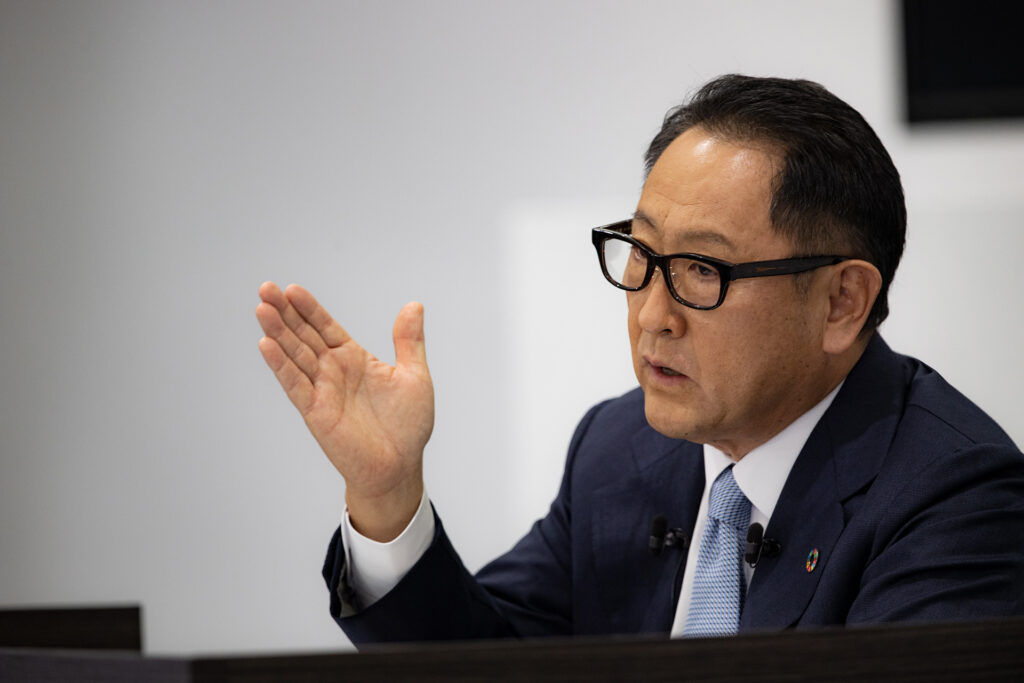
Mr. Kobayashi also once served as a superior to Akio Toyoda early in Toyoda’s career, suggesting that he may occupy a trusted advisory position. Taken together, these facts suggest that Mr. Kobayashi’s role resembles that of the Banto of the Edo period: a figure who takes a comprehensive view of sales, manufacturing, and back-office functions in support of the organization’s leader.