
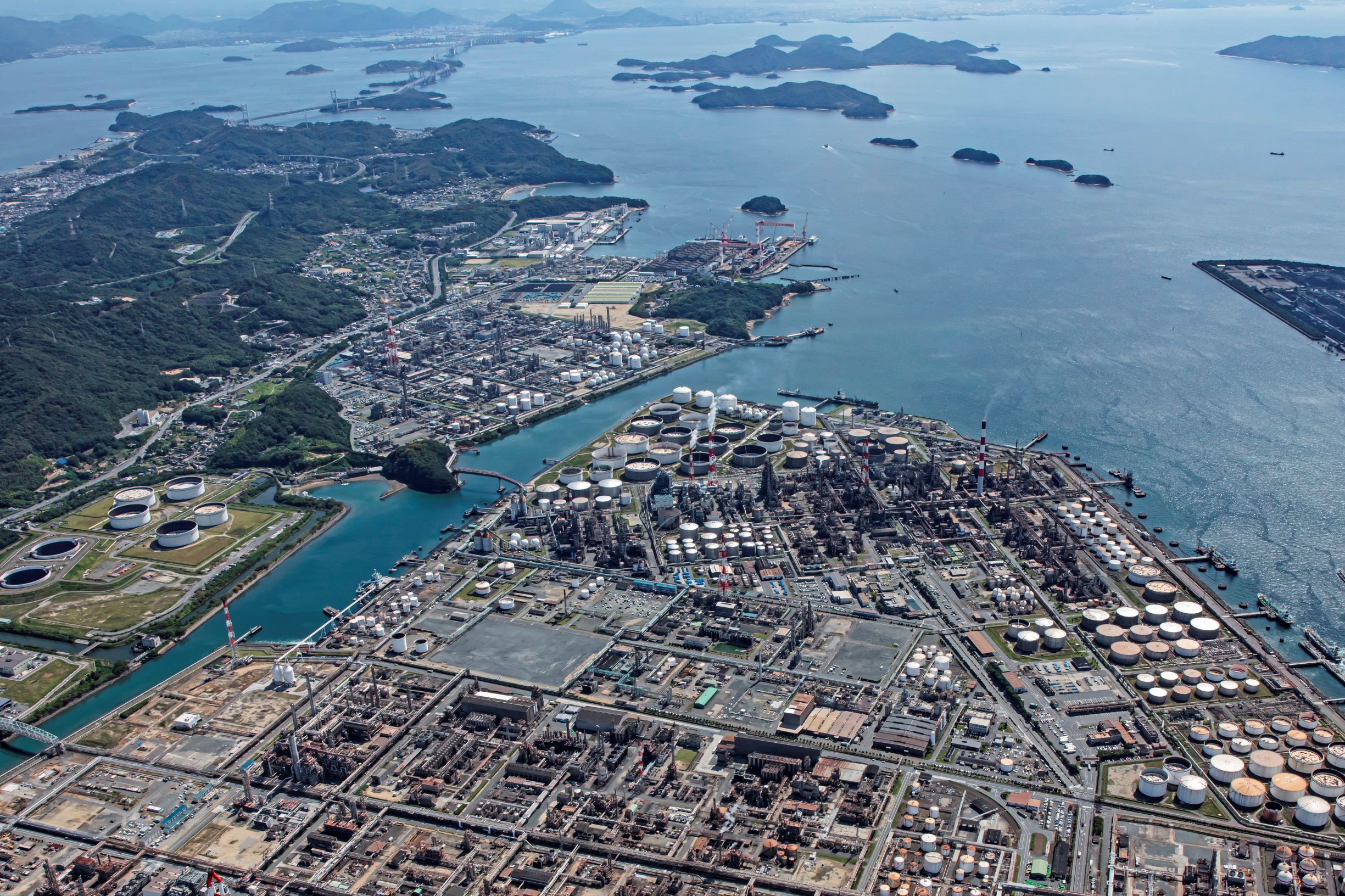
On January 27, three Japanese chemical manufacturers—Asahi Kasei, Mitsui Chemicals, and Mitsubishi Chemical—announced plans to consolidate ethylene production in western Japan. Under the plan, ethylene production at the Mizushima petrochemical complex in Kurashiki, Okayama Prefecture—jointly operated by Asahi Kasei and Mitsubishi Chemical—will be suspended by fiscal year 2030. Production will instead be consolidated at Mitsui Chemicals–affiliated facilities on the Osaka side, specifically in the Senboku and Takaishi areas of Osaka Prefecture.
Ethylene produced in Osaka will then be supplied to each company’s respective customers.
Consolidation of Production Sites to Cut More Than 500,000 Tons of CO₂
First, let us review the key points of the announcement.
In the press release, the companies explained that “as individual firms face limits in reducing greenhouse gas (GHG) emissions and greening their facilities on their own, the importance is increasing for neighboring petrochemical manufacturers to collaborate through mutual technological support and the joint implementation of measures contributing to carbon neutrality.” Against this backdrop, the consolidation of production sites is positioned as an initiative to “promote the greening of ethylene manufacturing facilities and the optimization of production systems in western Japan.”
This language suggests a clear intention to pursue production consolidation across corporate boundaries in response to environmental challenges. The press release also highlights that the initiative is expected to reduce carbon dioxide (CO₂) emissions by 506,000 tons annually—an amount equivalent to the yearly CO₂ emissions of approximately 100,000 to 120,000 households.
In addition, the companies stated that the Mizushima production facilities will be dismantled promptly after operations cease. At the former site, the three firms plan to jointly pursue initiatives contributing to environmental conservation.
Overall, the announcement underscores cooperation driven by environmental considerations. At the same time, it also appears to reflect the harsh realities currently facing the chemical industry—a point that will be discussed later.

Mizushima: One of Western Japan’s Leading Petrochemical Complexes
A petrochemical complex is a cluster of related facilities designed to efficiently refine transported crude oil into petroleum products such as gasoline, as well as chemical products. To help readers better understand the significance of the Mizushima complex, it is worth briefly introducing the companies located there.
Crude oil refining at Mizushima is carried out by ENEOS, Japan’s largest petroleum refiner and marketer. While gasoline and other fuels are sold by ENEOS, refined naphtha is supplied to a joint venture between Asahi Kasei and Mitsubishi Chemical, where it is processed into ethylene and other products. From there, manufacturers including Kuraray further process these materials into higher-value products.
In addition to petrochemical companies, the Mizushima complex is also home to production sites operated by firms such as JFE Steel and Mitsubishi Motors.
Mizushima’s crude oil refining capacity stands at 320,200 barrels per day, making it the fourth-largest in Japan. Its ethylene production capacity is 496,000 tons per year, ranking fifth nationwide. In western Japan, only the Yokkaichi complex exceeds Mizushima in scale when compared by oil refining capacity—underscoring Mizushima’s strategic importance.
What Is Ethylene?
The importance of ethylene becomes clear when examining its applications.
Ethylene is an upstream raw material for many resins. In particular, when combined with chlorine derived from saltwater electrolysis, it becomes vinyl chloride monomer (VCM), the raw material for polyvinyl chloride (PVC). PVC is widely used in applications such as construction materials, electrical cable coatings, and films. Another major use of ethylene is in the production of styrene monomer, which ultimately becomes expanded polystyrene.
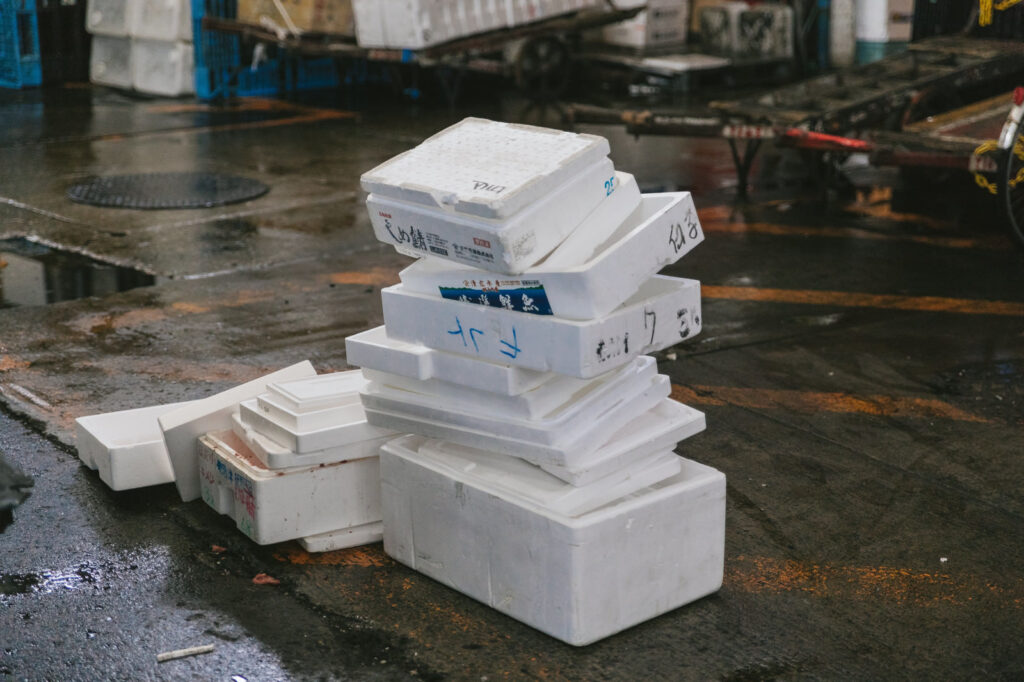
Of course, from the perspective of carbon neutrality, the use of such petrochemical products is expected to decline over the long term. In that sense, the collaboration among Japan’s three major chemical manufacturers can also be seen as a move that anticipates future demand contraction.
Consolidation in the Chemical Industry Will Not End with Japan
Earlier, we noted that this initiative appears to reflect not only environmental considerations but also the difficult conditions facing the chemical industry.
Readers working in or around Europe’s chemical sector are likely aware that Chinese chemical manufacturers, leveraging strong price competitiveness, have been making significant inroads into European markets. European manufacturers, by contrast, often struggle to compete on their own. Given the long history of Europe’s chemical industry, many facilities are aging, yet subdued profitability in recent years has made companies hesitant to commit to large-scale capital investments.
The situation is similar for Japanese chemical manufacturers. Japan’s chemical industry is also long-established, and like its European counterpart, faces aging infrastructure. Just as the United States and Europe saw the merger of Dow Chemical and DuPont, Japanese chemical companies have likewise pursued consolidation.
A clear example is the ethylene plant at Mizushima operated by Asahi Kasei and Mitsubishi Chemical, which is now slated for closure. These companies once produced ethylene independently, but in 2011 they consolidated operations in response to a challenging business environment.
In this sense, the current three-company collaboration reflects not only environmental objectives but also the persistence of difficult market conditions even after past consolidation efforts.
Last year, I interviewed Itaru Kudose of ICIS, an analyst who previously worked at Dow Chemical. In that interview, Kudose noted that Japanese chemical manufacturers have repeatedly turned to consolidation during times of crisis, supporting the view that harsh business conditions are a key factor behind the current initiative. He also suggested that, going forward, Japanese chemical companies may need to pursue cross-border consolidation, identifying South Korean chemical manufacturers as particularly promising candidates.
For readers outside Japan, the collaboration among Asahi Kasei, Mitsui Chemicals, and Mitsubishi Chemical should not be viewed as a distant issue. As noted above, European and U.S. manufacturers also face pressure to invest in new facilities while contending with competition from Chinese firms—making consolidation an increasingly attractive option. Kudose likewise explained in the interview that Europe’s chemical manufacturers continue to face difficult conditions.
In short, this development is not merely a domestic Japanese matter, but rather part of a broader, global trend shaping the chemical industry.