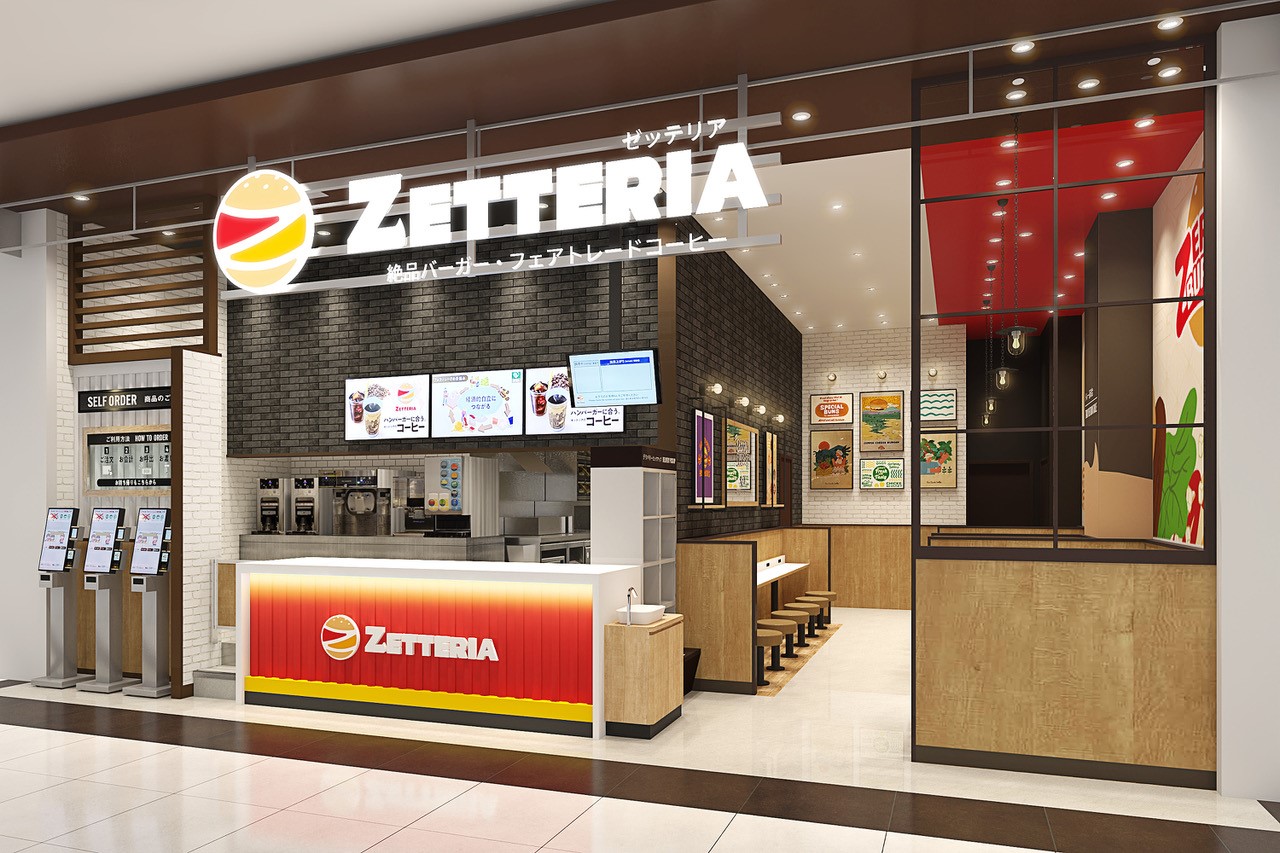
Japanese media have reported since January 21 that LOTTERIA, a Japanese hamburger restaurant chain, will rebrand all of its stores under the name ZETTERIA.
LOTTERIA is a fast-food chain that was originally launched in Japan by the conglomerate LOTTE. In 2023, LOTTERIA was acquired by ZENSHO HOLDINGS, one of Japan’s major food-service groups. At the time of the acquisition, ZENSHO stated that it would retain the LOTTERIA brand for the time being, while also beginning to roll out stores under the ZETTERIA brand.
The brand name change applies only to LOTTERIA operations in Japan, where ZENSHO holds management control. Stores in other countries will continue operating under the existing brand.
LOTTE, a Japan-Based Company with Korean Roots, and the Birth of LOTTERIA
LOTTE was founded in Japan in 1948 by Shin Kyuk-ho (Japanese name: Takeo Shigemitsu, deceased in 2020), an ethnic Korean resident of Japan. According to commonly cited accounts, Shin was inspired to enter the gum-manufacturing business after seeing chewing gum brought to Japan by soldiers of the Allied occupation forces, primarily the U.S. military.
Over time, LOTTE expanded its business not only in Japan but also internationally, including into South Korea, Shin’s country of origin. In Seoul, the company operates the Lotte World theme park, and it also owns professional baseball teams in both Japan and South Korea. Its business activities extend well beyond food.
Against this backdrop of corporate growth, LOTTERIA was launched in 1972. The brand name is a coined term combining “LOTTE” and “cafeteria.” Like its parent company, LOTTERIA pursued international expansion, primarily across Asia, and in 2002 opened its 1,500th store worldwide.
In Japan, however, LOTTERIA faced management difficulties around the year 2000. In 2005, it entered into a partnership with Revamp Corporation, a firm specializing in corporate turnaround support. Following these developments, LOTTERIA was acquired in 2023 by ZENSHO.
What Is ZENSHO?
It is also worth taking a closer look at ZENSHO, the company that acquired LOTTERIA.
ZENSHO was founded in 1982 by Kentaro Ogawa. Ogawa is known as an unconventional business leader: he became involved in student activism while studying at the University of Tokyo and later dropped out, after which he worked as a full-time employee at Yoshinoya before establishing ZENSHO.
With the beef bowl chain SUKIYA as its core business, ZENSHO expanded rapidly. At the same time, it pursued an aggressive M&A strategy, acquiring competitors such as NAKAU as well as Japanese-style family restaurant chains like HANAYA YOHEI.
In fact, LOTTERIA is not ZENSHO’s first foray into the hamburger business. In 2002, ZENSHO acquired the Wendy’s business in Japan from Daiei (now part of the AEON Group). However, the operation failed to generate sufficient synergy, and ZENSHO withdrew from the business in 2009 when the franchise agreement came up for renewal.
ZENSHO’s acquisition of LOTTERIA therefore marked its return to the hamburger market. The move likely reflects the company’s calculation that it can leverage its extensive food procurement and logistics network to gain a competitive edge. With the rebranding to ZETTERIA, it has been reported that the new brand will also be integrated into ZENSHO Group’s shared distribution network.
ZENSHO Currently Ranks Fourth Among Japan’s Hamburger Chains
Japan’s hamburger market is widely characterized as being dominated by McDonald’s. According to a report by The Nikkei on the ZETTERIA brand consolidation, McDonald’s operates 3,025 stores in Japan, followed by MOS BURGER, a Japan-originated chain, with 1,309 stores, and Burger King with 337 stores. ZENSHO, with a combined total of 278 ZETTERIA and LOTTERIA locations, ranks fourth.
The name “ZENSHO” can also be interpreted in Japanese as meaning “to win everything.” Given this background, it is not difficult to imagine that Ogawa aims to reverse the company’s position in the hamburger market.
For overseas readers, it is worth explaining Japan’s hamburger and fast-food market in more detail. The industry is marked by a pronounced polarization between low-priced chains and high-end establishments. One reason McDonald’s has maintained its dominance is its aggressive push into low-priced offerings following the collapse of Japan’s economic bubble in the 1990s. ZENSHO’s SUKIYA, as well as Yoshinoya—where Ogawa once trained—also experienced periods of growth driven by similar low-price strategies.
At the same time, in major metropolitan areas such as Tokyo, it is no longer unusual to find upscale hamburger restaurants selling burgers priced at over ¥2,000 each.
While similar trends can be observed in other countries with sizable economies, this strong market polarization is a particularly important point for non-Japanese restaurant operators considering Japan as a potential market.