OHYASHIMA regularly covers technologies developed with the low birth rates, ageing populations and labour shortages of Japan (and other countries) in mind.
Shortages are a particular concern in sectors such as manufacturing and logistics, but nurses on the front lines of healthcare may also be in short supply in future. Estimates compiled in 2019 by the Ministry of Health, Labour and Welfare (MHLW) projected that demand for nursing staff in 2025 would reach 1.88m to 2.02m, while supply would stand at only 1.75m to 1.82m. The future balance of supply and demand is now being examined by an MHLW expert panel, and specific figures may be published in due course.
Doctors, by contrast, are expected to be in oversupply in Japan in future. This projection, however, assumes that current medical school enrolment caps remain unchanged. And even if the numbers balance out or tip into oversupply, there may still be places where doctors are needed but absent.
As of the 2025 survey, there were 575 districts where a certain number of people live with no medical facility within a radius of about 4km, with a combined population of around 135,000. The population of these “doctorless districts” amounts to only about 0.1% of Japan’s total. Still, it is concerning that their number has risen slightly since the 2022 survey.
My first glimpse inside an ICU
The reason I have been writing about healthcare is that I recently set foot in an intensive care unit (ICU) for the first time in my life.
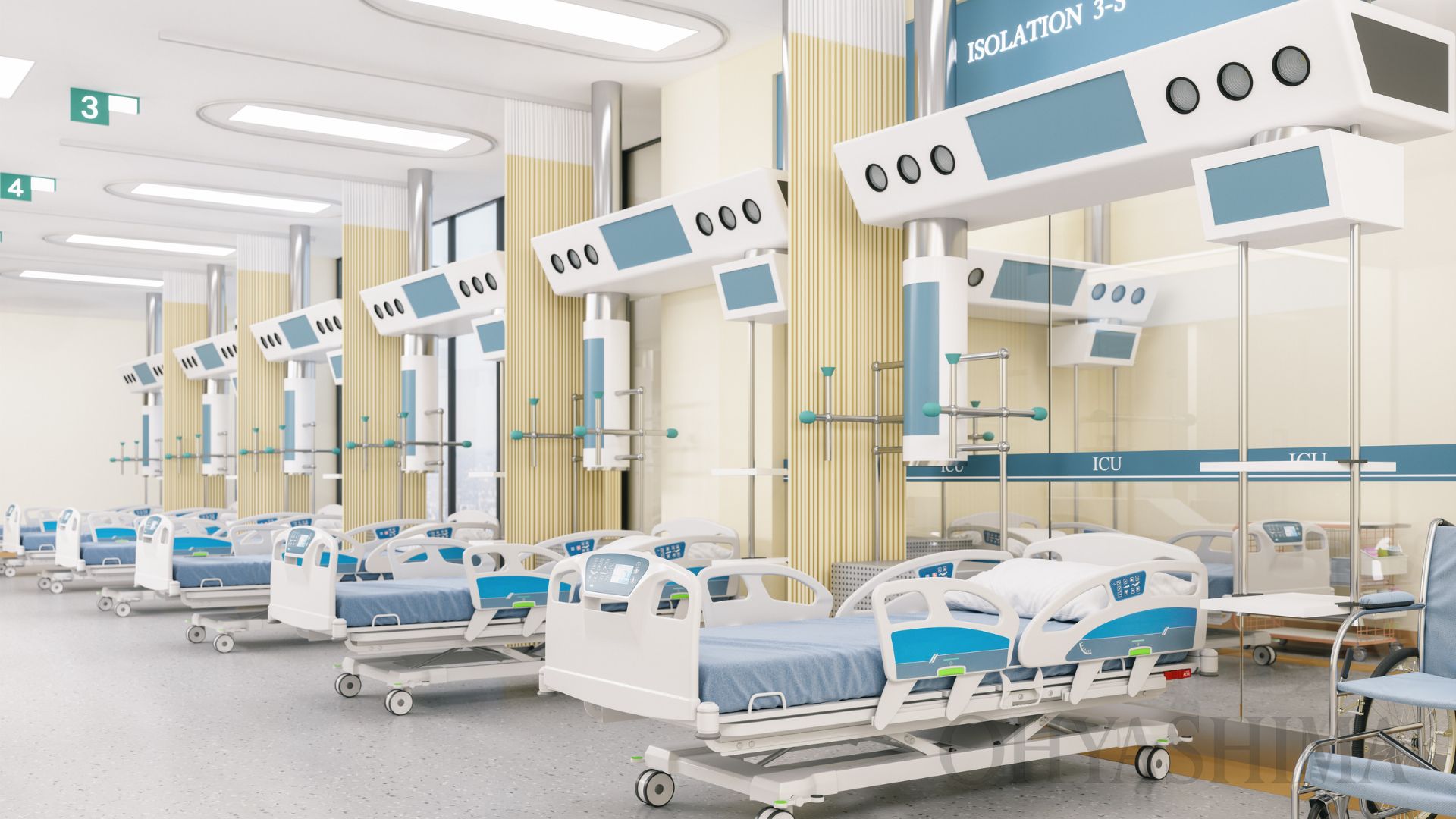
At the ICU entrance I pressed the intercom, and once the patient and I, as her family, had been identified, reception opened the automatic doors. The first thing I saw on entering was a row of computers and equipment on desks, with doctors seated in front of them, a scene reminiscent of the consoles at a police or fire dispatch centre. Beyond the doctors and the equipment, about ten beds were arranged with space between them.
My mother had been taken to the ICU. By then she was no longer able to communicate. When I spoke to her, she moved her hand several times, though I could not tell whether she did so consciously.
Inside the ICU, many nurses were bustling about, and there seemed to be several doctors as well. Presumably they all work in two- or three-shift rotations.
One of the doctors came over to me and another family member who had come to visit. After confirming our relationship to the patient, he explained her condition.
I stayed by my mother’s side for about an hour, then left the ICU, and the hospital, leaving the other family member behind. Only two family members are allowed to visit at a time.
My mother passed away the following day.
Alongside my grief, ever since leaving the ICU I have kept wondering how the doctor who explained her condition must have felt. Patients brought to the ICU are often in a critical condition. Even if it is part of the daily routine, I imagine that having to explain such situations must take a considerable mental toll on doctors.
After my mother died, I spoke with my father. With a wry smile, he told me it had been rather trying that “every time the doctor changed, each one explained her condition in exactly the same way.” He also speculated that this was so they would not be suspected of medical malpractice. (I would add that it is also likely because doctors have a duty to explain.)
Respecting both doctors’ burden and the feelings of patients and families
What I want to suggest is that there is room to consider what kind of distance there should be between people and machines in the future of healthcare, and what kinds of machines will be needed. By machines, I mean robots and AI.
ICUs today are already full of machines, from those that sustain vital functions to those that monitor patients’ condition. All of them looked very expensive. Such machines surrounded every bed, and just from listening to the explanation of her condition I could tell which one showed blood pressure.
So what if we went further and had an AI-powered robot give the doctor’s explanation? It would probably ease the doctor’s psychological burden. But I suspect there would also be drawbacks beyond the familiar problem that AI can make mistakes.
If a robot gave the explanation, it would not be surprising if some families felt they were being treated dismissively, even knowing full well that human doctors and nurses were providing the care. I cannot say what things will look like in 20 or 30 years, but for the next five to ten years or so, I believe there will be families who feel this way. Underlying this view is my sense that people tend to resist robots and AI until these technologies have become widespread and some time has passed.
I am by no means against reducing the burden on doctors and nurses, and I think it is good to advance mechanisation in ways that do not trouble patients, families or healthcare workers. After this experience in particular, I hope there will be some means, whether through machines or not, to ease the psychological burden on doctors who must explain the condition of critically ill patients.
That said, work in settings closely bound up with human emotion cannot simply be handed over to robots or AI. And while technology can give a major boost to solving problems, getting close to a complete solution will ultimately require human action and will.
These days, many media outlets highlight the dangers of AI. That certainly deserves close attention. At the same time, I have come to think that reflecting on the more fundamental question of the “distance between people and machines” could also be one way to further reduce those dangers.