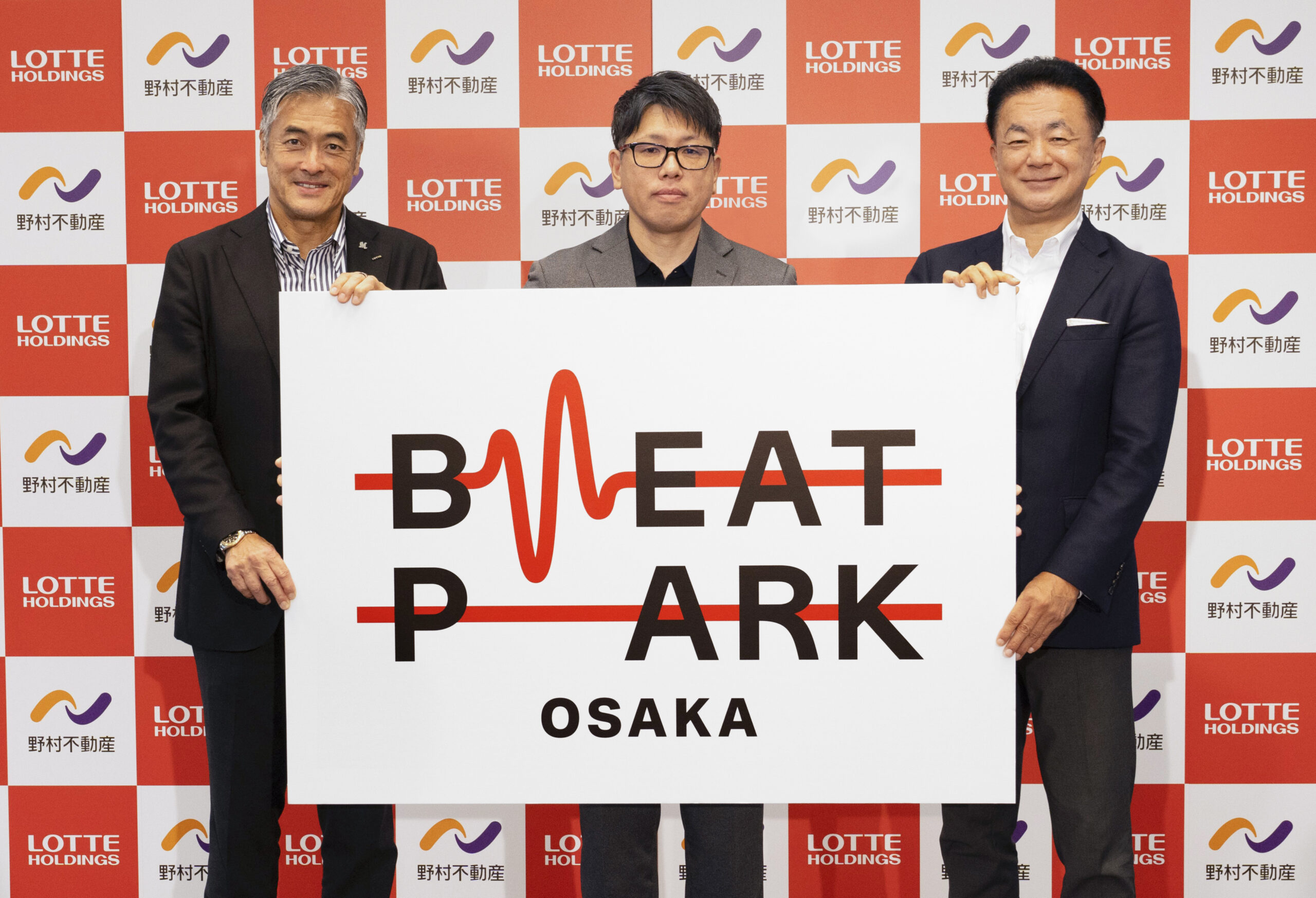
Lotte Holdings and Nomura Real Estate announced on 3 September that they had named the live music venue they are building near Shin-Osaka station, in Osaka, “BEAT PARK OSAKA”, and had established a joint venture to run it. The venue is due to open in March 2028; construction began in February.
Lotte’s founder, the late Takeo Shigemitsu, was born in Korea and built his business in Japan, and the group still treats both countries as its commercial centre of gravity. It also has interests in K-pop, and says it will “actively court” Korean artists for BEAT PARK OSAKA.
For Nomura Real Estate, which traces its origins to Nomura Securities, BEAT PARK OSAKA is an attempt to secure revenue beyond buying, selling and leasing property.
“A foothold in our future live entertainment business”, says Nomura Real Estate’s president
BEAT PARK OSAKA will stand three minutes’ walk from Shin-Osaka station, the only shinkansen stop in Osaka Prefecture and the city’s gateway by rail. The Tokaido and Sanyo Shinkansen both call there, and some Kyushu Shinkansen services start from Shin-Osaka. The station also serves JR West’s conventional lines and the Osaka Metro Midosuji line.
The building will be reinforced concrete, partly steel-framed, and four storeys high, with room for about 1,590 people standing or 660 seated. For comparison, Zepp Osaka Bayside, a large venue elsewhere in the city, holds 2,351 standing on its first floor and 450 on its second, where seating and standing room are combined, for a total of 2,801. Zepp Namba, which has a similar two-tier layout, holds 2,513.
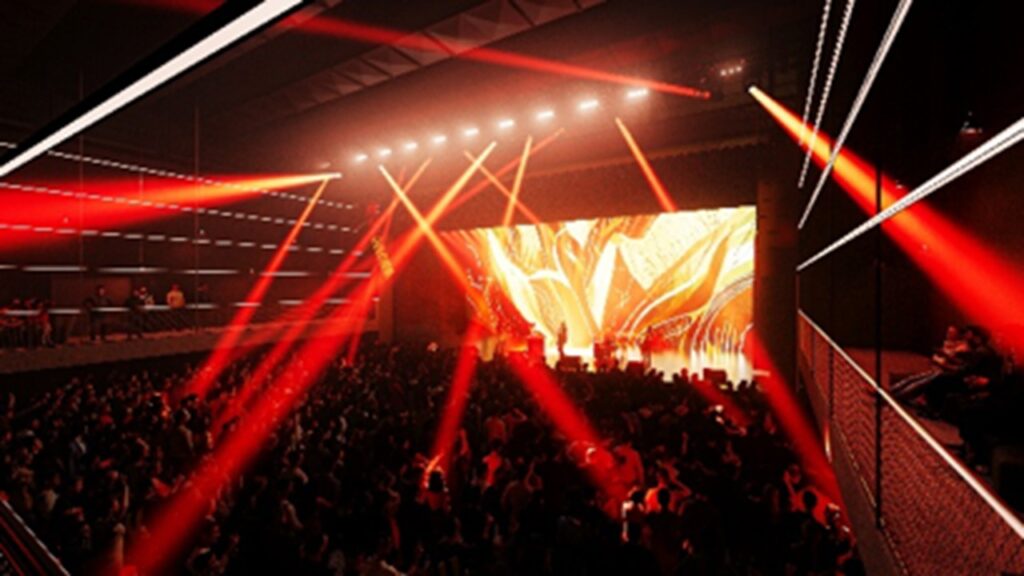
Lotte has a record in the music business, having promoted BTS concerts in South Korea and run concert halls there. Nomura Real Estate, for its part, is after revenue not only from property as hardware but from staging shows as software. According to the Nikkei, Lotte Holdings will hold the majority stake in BEAT PARK OSAKA as a company.
“With land we already own, and with a history that takes in professional baseball in both Japan and South Korea and our music business in South Korea, the Lotte group is now entering the live entertainment business in earnest, teaming up with Nomura Real Estate for the first time,” said Genichi Tamatsuka, chief executive of Lotte Holdings.
Daisaku Matsuo, president of Nomura Real Estate Development, added:
“BEAT PARK OSAKA is our first venture into the live music venue business, and we want to make it a foothold for our future live entertainment business. We will draw the greatest possible synergy from working with Lotte Holdings, creating new kinds of experience and contributing to the development of the Shin-Osaka area as a new hub for culture and entertainment.”
The joint venture will be led by Koji Takuma, who came up through Avex, one of Japan’s largest music companies, and now oversees Lotte Holdings’ entertainment business.
Development is expected to pick up around Shin-Osaka station
Readers who have visited Osaka may know that, for all the shinkansen services calling there, Shin-Osaka is not the centre of the city. The shops and offices are concentrated further south, around Osaka station (Umeda) and around Namba. The photograph below shows Shin-Osaka; it is perhaps hard to tell, but the station building feels small next to other terminals in Osaka and Tokyo — though the JR section is four storeys high — and the surrounding buildings are comparatively low-rise.
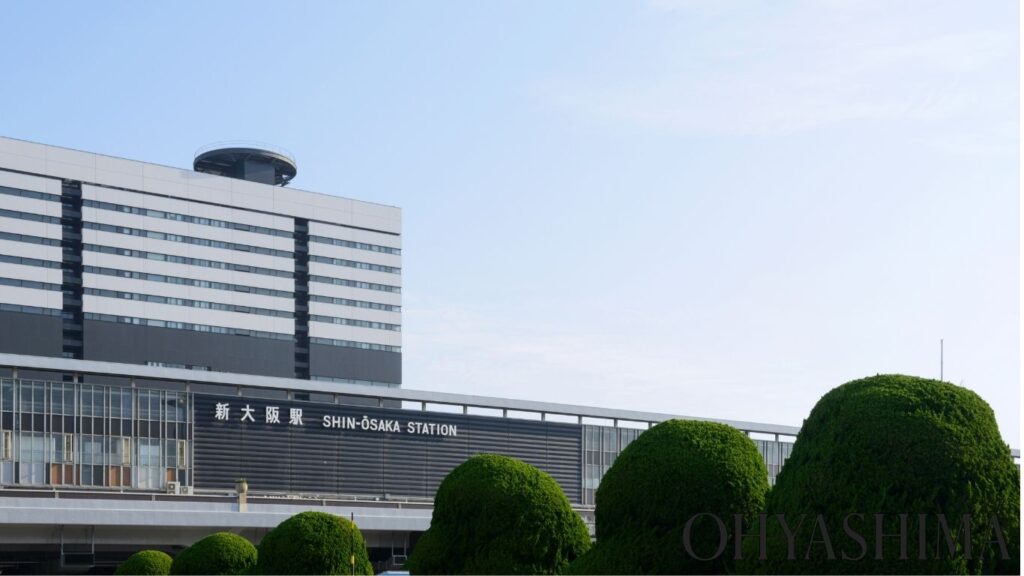
The station ended up outside the centre because routing the shinkansen into Osaka station would have meant crossing the Yodo river twice. By the time the Tokaido Shinkansen opened, the Sanyo Shinkansen towards Kobe, Hiroshima and Hakata was already planned, and if through services were to run over both lines, a station requiring two river crossings risked adding to journey times. Cost was weighed too, and Shin-Osaka opened as the shinkansen stop instead.
Today, however, the national government and Osaka Prefecture intend to build up the urban functions around Shin-Osaka station. The area was designated an urban renaissance emergency development area by the state in 2022, and the prefecture’s planning policy for the district calls for its conversion from an interchange into an urban hub for international exchange, business, tourism and culture. The two companies position BEAT PARK OSAKA as a new cultural and entertainment hub that will help turn Shin-Osaka “from a town people pass through when changing trains into a town where people stay”.
There is no guarantee that urban plans come off. But some residents of Osaka will at least be hoping BEAT PARK OSAKA becomes a cultural anchor. The decision to build something a size smaller than Zepp Namba is deliberate: the companies note that Osaka has plenty of live music venues but only a handful above 1,000 capacity, making the new one a natural next step for artists who have outgrown rooms of under 1,000. If K-pop acts — and promising younger performers from Japan and elsewhere who play mid-sized venues — get the chance to take this stage, it should turn out to be an enjoyable place.