
Hinoki, which buys the shares of Japanese small and medium-sized enterprises (SMEs) and takes over their businesses, announced on 21 August that it had raised roughly ¥3.1bn ($20m) in equity.
The company was founded in March this year and is headquartered in Tokyo.
Business succession, a Japanese problem
Business succession looms large in any discussion of the modern Japanese economy. Last month I edited a special feature for a business magazine on precisely that theme, drawing on interviews with the owner-families of large and mid-sized companies about handing the business on.
One reason the subject keeps returning, to my mind, is that Japanese businesspeople are inclined by temperament to seek permanence in their companies and their trades. Japan is home to 46,708 companies with more than a century of history — an unusually high number by international standards — which rather bears the point out.
In modern Japan, however, the birth rate began to fall and the population to age unusually early, and business owners simply have fewer children than they once did. In the past the notion that a child should take over a parent’s work commanded respect; today individual freedom takes precedence. Passing a business to someone outside the family is no easier, since a shrinking population means fewer candidates, and finding a suitable one is far from straightforward.
Hinoki’s answer is to acquire SMEs with EBITDA of between ¥100m and ¥1bn, and so to meet the wishes of owners who want their businesses to carry on.
The company commits, first of all, to holding what it buys permanently: there will be no resale. This addresses the worry, common among owners, that selling to a private-equity fund may mean the business is sold on again a few years later, leaving employees uneasy. Hinoki also undertakes to respect the independence of each company it takes on, keeping the corporate name and maintaining existing employment.
Beyond the EBITDA range, the businesses Hinoki looks to acquire — “transfers”, in the company’s own wording — have the following characteristics:
- They supply products or services essential to their customers’ operations: if they stop, their customers are in trouble.
- They are supported by continuous, repeat demand — inspection, maintenance, repair, the replacement of consumables.
- They have built up a record and a reputation over many years in a particular field.
Hinoki has adopted “serial business succession” as its watchword. It has examined several dozen prospects over the past few months and aims to acquire 20 companies within a decade. The purpose is that, by carrying out successions continuously and building a record after each one, it should earn the confidence of owners and of the intermediaries who bring it deals.
MIT’s investment arm among the backers
The August round drew Dual Bridge Capital, a venture-capital firm; MIT Investment Management Company, which manages the endowment of the Massachusetts Institute of Technology; and Kampo NEXT Partners, the corporate venture-capital arm of Japan Post Insurance, the life assurer within the Japan Post group; along with other institutional and individual investors.
The proceeds will fund the full launch of the business and its acquisitions. Hinoki said that the round gives it near-term investment capacity, including debt headroom, of ¥5bn–10bn ($31m–63m).
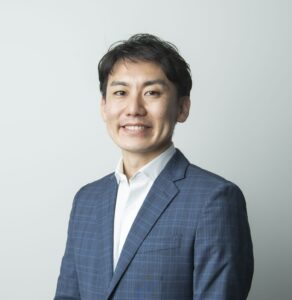
No comments from executives or investors accompanied the announcement, but the press release recounts that Ryota Kawamura, the chief executive and a former Mitsui & Co. employee, was moved to found the company after hearing, on visits to SMEs across Japan, that owners “want to change but face constraints of capital and people” and that “there is no successor to take over”.