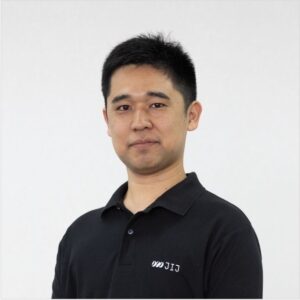

The company was founded in 2018 as a spin-out from the Nishimori Laboratory at the Tokyo Institute of Technology (Tokyo Tech, now the Institute of Science Tokyo). Yu Yamashiro, an alumnus of the laboratory, serves as chief executive, and Kohji Nishimura as chief technology officer. Its headquarters sit inside the Institute of Science Tokyo’s Campus Innovation Center in Tokyo.
JR Central already trialling JIJ’s technology
JIJ has released JijZept, a suite of AI platforms for mathematical optimisation and quantum computing. Among the trials in its mathematical optimisation business is work with Central Japan Railway Company (JR Central) on drawing up train crew duty rosters — the plan that sets out which trains a single crew member takes charge of from the start to the end of a shift, together with breaks and overnight stays. The task has traditionally depended on veteran planners, and the two are working to automate it.
The Nishimori Laboratory, where the management team studied, researched quantum mechanics, including quantum annealing technology. JIJ accordingly develops quantum computing software based on the quantum annealing approach, and is now looking towards integration with gate-based quantum computers.
In July this year the company signed a basic agreement with Kobe Steel (KOBELCO Group) to collaborate on the use of quantum computing technology. The two say they will work together on applying quantum computing to areas such as materials development, and on training personnel.
A chief executive who wants to “see the future through computation”
The August round was led by the venture capital firm Global Brain. Fujitsu Ventures also took part.
The proceeds will go towards technology development and global expansion.
“JIJ began with my desire to see the future through computation. I believe that making society’s complex challenges computable creates better choices and helps society move forward,” Yamashiro said. “By combining cutting-edge research with implementation expertise, bridging academia and industry, and spreading the real-world use of quantum technology and mathematical optimisation globally, we will fulfil our mission of making society computable to unlock humanity’s potential.”