Starlight Engine, a fusion power company, announced on 15 July that it had raised ¥6.06bn ($37m) in equity funding — its first external fundraising.
Starlight Engine was established in 2025 and is headquartered in Tokyo.
Overseeing the FAST fusion demonstration project
Kyoto Fusioneering, a home-grown Japanese fusion-technology start-up, serves as project leader for FAST, a privately led fusion power demonstration programme. Most of Japan’s former imperial universities — the elite national institutions, such as the University of Tokyo, that date from the country’s modernisation and remain among its most selective — are taking part, as are overseas players such as Britain’s Tokamak Energy and America’s Princeton Plasma Physics Laboratory. The project aims to demonstrate fusion power generation in the 2030s.
Within FAST, Starlight Engine is responsible for overall project management. Specifically, it handles technology and business development, fundraising, site selection for the demonstration plant and supply-chain construction. In time, it also plans to build commercial plants and export the technology.
In other words, it is the firm producing the fusion power demonstration and, should that succeed, the one that would carry it through to commercialisation.
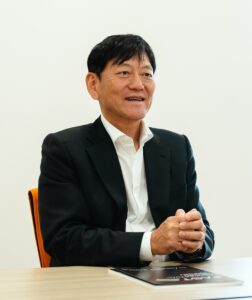
When Starlight Engine was founded in 2025, Kiyoshi Seko served as its representative. Seko remains president of Kyoto Fusioneering, so he was in effect heading both companies at once. Then, Starlight Engine announced that, effective 1 April this year, Kiyotaka Kikuchi — formerly of Mitsubishi Corporation — had become president and chief executive, while Shuhei Azuma, a former diplomat who once served as mayor of Shijonawate in Osaka Prefecture, had been appointed vice-president and chief strategy officer. Azuma may seem a figure from the worlds of politics and officialdom, yet he studied nuclear engineering at the graduate school of Kyoto University — the institution from which Kyoto Fusioneering itself sprang. Seko, for his part, remains on the board.
To backtrack a little, in November 2025 Starlight Engine announced that it had completed FAST’s conceptual design. Engineering design is due to be finished by 2028.
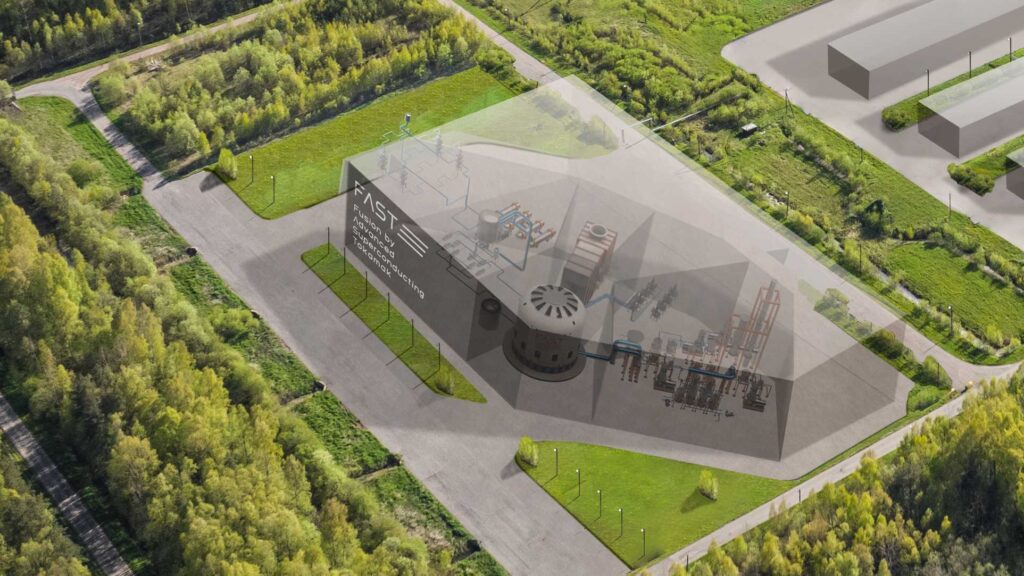
According to a 16 July report in the Nikkei, Starlight Engine also opened a public call for candidate sites to host FAST alongside the funding round. It is open to municipalities in Japan that can provide a plot of at least 60 hectares (about 150 acres) and have already settled the necessary arrangements with landowners and other parties.
Airbus’s corporate venture arm also takes part
The July round was led by Global Brain, a venture-capital firm. Other backers spanned a range of industries at home and abroad, including Mitsui Fudosan, Tokyu Construction, Fukoku Mutual Life Insurance and AV (formerly Airbus Ventures).
The proceeds will fund design work and technology development; the expansion and acceleration of joint research and partnerships; and recruitment.
Kikuchi, Starlight Engine’s president and chief executive, commented: “This is our first external fundraising, and to have been entrusted with such high expectations barely a year after our founding is striking. We take it both as a measure of the great hopes riding on fusion energy and as a strong vote of confidence in our vision and our ability to deliver.”