

ECOMMIT, a Japanese startup building resource circulation infrastructure centered on apparel, announced on April 20 that it had secured approximately ¥1.5 billion (around $9 million) in its Series B funding round.
The company was founded in 2007 and incorporated in 2008, with its headquarters in Satsumasendai, Kagoshima Prefecture.
98% of Collected Items Reused or Recycled
The core of ECOMMIT’s business is PASSTO. At first glance, PASSTO looks like a collection box that could be found anywhere in the world. In addition to clothing, the service accepts items such as toys and sunglasses. Collection takes place not only through the drop boxes themselves, but also at participating partner stores.
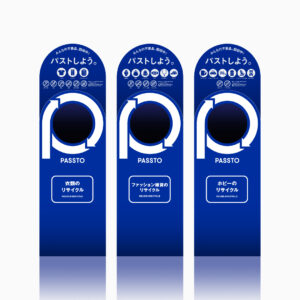
Collected items are brought to one of ECOMMIT’s seven “Circular Centers” located across Japan, where they are sorted and then channeled back into distribution.
While the nationwide network of facilities is a distinguishing feature, the underlying concept of resource circulation is not new in itself. What sets ECOMMIT apart is the claim that 98% of collected items are reused or recycled—and that 85% of those go back into circulation as-is through direct reuse.
The key to maintaining that high rate is manual sorting. The company employs specialist staff known as “Pro Pickers,” whose eye for quality has attracted demand for secondhand clothing not only from buyers across Asia, but from vintage and used-clothing retailers in Europe and North America as well.
Items that cannot be directly reused are fed into recycling through partnerships with Mitsuboshi Keito and Itochu Corporation and their respective recycled-materials brands and technologies.
Looking ahead, however, a structural challenge comes into view.
ECOMMIT’s current annual collection volume stands at 14,000 tonnes, with a target of reaching 45,000 tonnes within three years. Against that ambition, the company’s current sorting capacity of one tonne per day is clearly insufficient—a bottleneck that automation is intended to resolve.
Mercari Among Nine Investors in Series B
The Series B round saw participation from nine investors, including Mercari and NTT DOCOMO Ventures.
The proceeds will be directed toward service enhancements and the digitization and automation of the ECOMMIT Tokyo Circular Center—the solution to the sorting capacity gap described above.

CEO Teruyuki Kawano commented that the company would “advance the digitization and automation of the Circular Centers to drive large-scale social implementation of circular systems,” and that it ultimately aims to “realize a global supply chain for reuse and recycling.”