
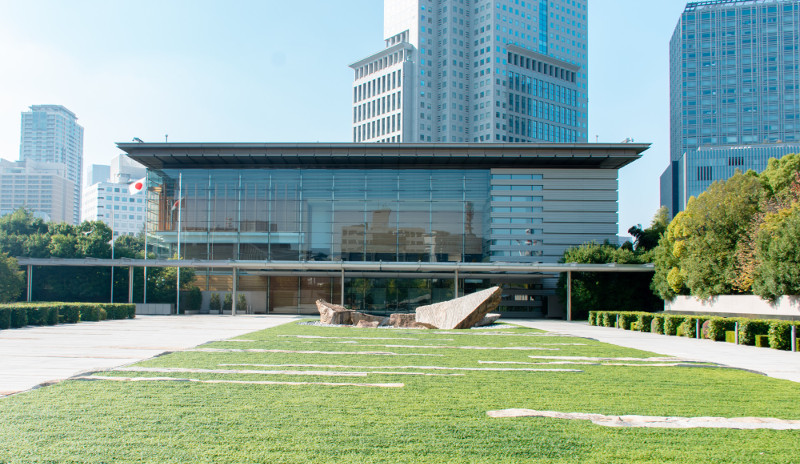
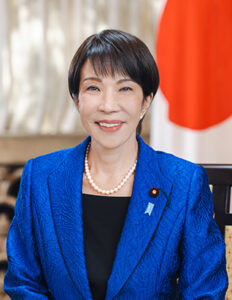
On February 18, Japan’s National Diet convened a special session following the general election (equivalent to a lower-house election in many countries). On the same day, a vote was held to designate the Prime Minister, resulting in Sanae Takaichi continuing in office. Prime Minister Takaichi reappointed all members of her Cabinet.
That same day, the Basic Policy of the Second Takaichi Cabinet—referred to here as the Prime Minister’s instructions to her Cabinet—was also released. This document is significant not only for Japan’s economy itself, but also for its impact on the global economy. In this article, I would like to highlight topics from the Cabinet instructions that are particularly relevant to readers considering doing business in Japan. The instructions cited in this article are drawn from the provisional English translation published on the Prime Minister’s Office website as of February 20.
Normally, Japan’s regular Diet session is convened at the beginning of the year and lasts for 150 days, during which debates and deliberations take place. However, in 2026, the regular session has already concluded because the First Takaichi Cabinet dissolved the House of Representatives. As a result, a special Diet session is scheduled to be held with a 150-day term. The deliberation of the FY2026 budget will be one of the central agenda items of this special session.
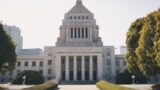
The Instructions Are Composed of Three Sections
The Cabinet instructions open with the following sentence:
“The Takaichi Cabinet, bolstered by a strong and unwavering belief in the latent power of Japan and the Japanese people, will make the Japanese archipelago stronger and more prosperous.”
From the outset, the Takaichi administration signals a strong emphasis on economic policy. In the long term, this stance reflects Japan’s prolonged period of low growth caused by persistent deflation, while in the short term it reflects the urgent need to overcome the current inflationary environment. The landslide victory of the Liberal Democratic Party (LDP), led by Prime Minister Takaichi, in the recent general election can also be seen as an expression of voters’ hopes that her administration will lead Japan out of these adverse conditions.
The instructions consist of three sections:
- Realizing a Strong Economy
- Supporting the Growth of Areas Outside Major Urban Centers While Safeguarding People’s Daily Lives
- Building Up Japan’s Diplomatic Capacity, Defense Capabilities, and Information Capabilities
Because the sections on regional policy and defense also have clear implications for business, I will examine them in order.
1. Realizing a Strong Economy
In the second paragraph of this section, the phrase “responsible and proactive public finances,” a formulation frequently used by Prime Minister Takaichi, is explicitly stated. The document indicates that strategic fiscal spending will be undertaken while giving due consideration to fiscal sustainability. From the perspective of financial markets, this approach may raise expectations of a positive impact on stock prices. On the other hand, currency depreciation resulting from fiscal expansion—namely, a weaker yen—cannot be ruled out. Over the longer term, if policies fail to deliver the intended results, there is also the possibility of adverse effects on Japan’s overall economy.
In this respect, Prime Minister Takaichi faces the difficult task of governing and designing policies in a way that increases the likelihood of policy success.
2. Regional Economies and the Preservation of Living Environments
Turning next to the second section, which addresses regional economies and the preservation of living environments, the instructions state:
“We will work to form regional industrial clusters, promote the digital transformation of areas outside our major urban centers, build up local industries, and maintain local public transportation, with the aim of safeguarding regional areas’ livelihoods and security.”
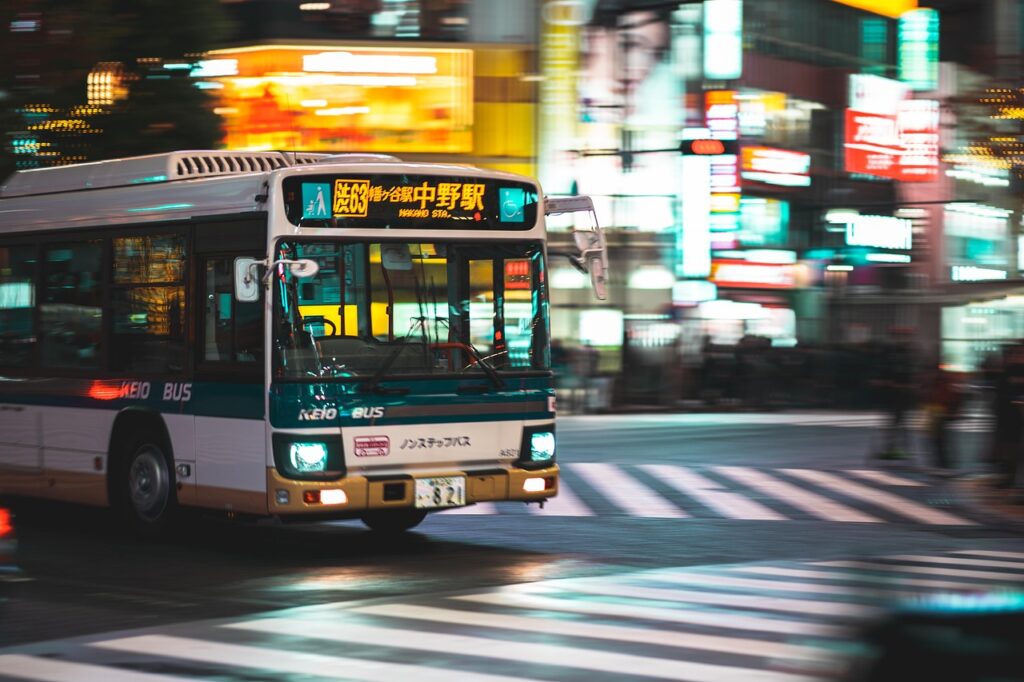
Among these measures, the maintenance of local public transportation stands out as an area where technological solutions are particularly needed. At present, even in the Kanto region (which includes Tokyo), it is not uncommon for bus services to be reduced or routes to be discontinued once one moves into suburban areas. In this context, the government’s role is less about direct investment and more about the “redesign of transportation systems.” As is well known outside Japan, narrow roads are common, and the boundaries between roadways and sidewalks are often ambiguous.
Another point in the second section that is likely to draw the attention of businesspeople from outside Japan is the following passage:
“We will promote relevant and broad-ranging measures toward the realization of a society of well-ordered and harmonious coexistence with foreign nationals.”
Taken on its own, this language may appear to signal a proactive stance toward accepting foreign nationals. At the same time, the rise of political parties such as SANSEITO, which take a negative view of accepting foreign nationals, has been covered by media outlets outside Japan.
That said, from the standpoint of an ordinary Japanese citizen, it is important to note that the majority of Japan’s political establishment does not categorically reject the acceptance of foreign nationals or business engagement with companies from abroad. What many politicians—and many citizens—fear is that an uncontrolled expansion in the acceptance of foreign nationals could lead to friction or conflict with local communities. What is needed is the formulation of acceptance plans that minimize potential problems, along with administrative efforts to understand numbers accurately and promote coexistence. This is a concern that citizens in other countries, including those in Western Europe where friction between local communities and migrants has already emerged, are also likely to share. Some readers may feel unable to take the wording of the Cabinet instructions entirely at face value, but it should be emphasized that there is no obvious falsehood in the language concerning coexistence with foreign nationals.
At the same time, I would ask readers from outside Japan who are considering living in the country for business purposes to respect the values, customs, and cultural practices held by Japanese society. One of the reasons I operate OHYASHIMA is precisely to foster such mutual understanding.
3. Building Up Japan’s Diplomatic Capacity, Defense Capabilities, and Information Capabilities
Finally, in the third section—“Building up Japan’s diplomatic capacity, defense capabilities, and information capabilities”—the second paragraph includes the following passage:
“We will broaden our multilateral coordination in diplomatic, defense, economic, and other realms with like-minded countries and countries in the Global South, taking the Japan–U.S. Alliance as the cornerstone. We will strategically advance and evolve the Free and Open Indo-Pacific so that countries can strengthen their autonomy and resilience.”
Although no specific countries are named, the language reveals Japan’s stance on how it intends to confront—and engage with—China.
From the perspective of the “Free and Open Indo-Pacific,” it is clear that the administration seeks to build stronger diplomatic and economic ties with Southeast Asia, South Asia, and the Middle East. The same can be said for relations with Europe and Africa beyond these regions.

From both defense and economic perspectives, overseas investment in Japan’s defense startups can be expected. Conversely, there is also room to hope for investment by Japan’s heavy industrial manufacturers—among whose customers is the Ministry of Defense—in overseas startups.
At the same time, Japan seeks to avoid a military confrontation with China. Chinese intervention in Taiwan could become a trigger for a serious deterioration of the situation not only in East Asia but globally. In response to such destabilizing developments, the international community—including Japan—is being called upon to demonstrate resolve and to employ a wide range of measures to prevent escalation.