
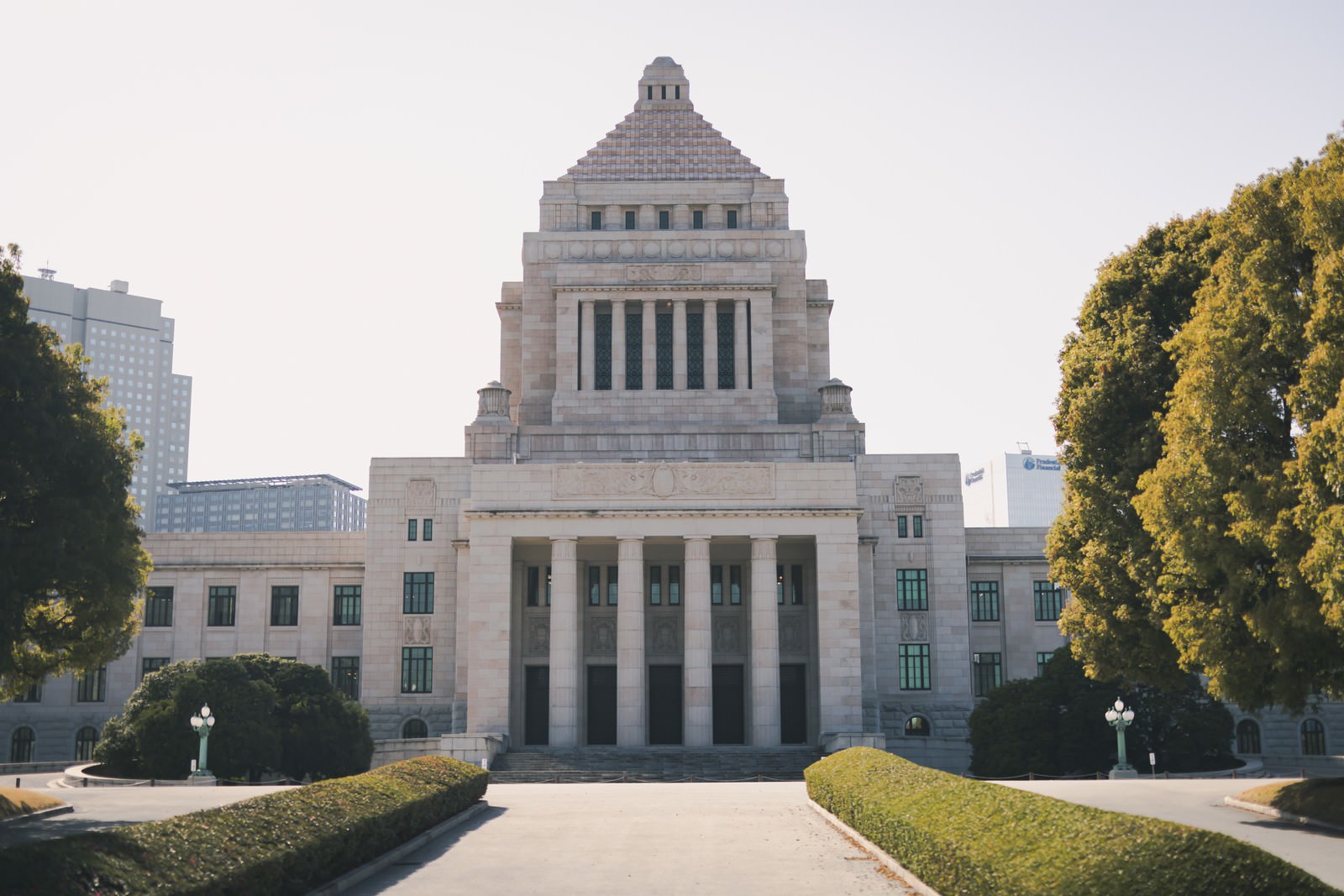
On February 8, Japan held a general election (equivalent to a lower-house election in many countries), in which the ruling coalition—Japan’s Liberal Democratic Party (LDP) and the Japan Innovation Party (JIP)—won. Out of 465 seats, the LDP secured two-thirds of the chamber.
In this article, I would like to highlight how Japan’s national newspapers, in their morning editions on February 9, discussed the election outcome from an economic perspective.
Frequent References to “Responsible, Proactive Fiscal Policy”
The Yomiuri Shimbun ran a front-page piece titled “Gather Wisdom and Meet Expectations,” written by Mieko Kawashima, Political Editor. Kawashima argued that what voters most demanded in this election was economic policy, such as measures to address rising prices, and that the administration must tackle the following tasks:
“The Takaichi administration’s ‘responsible, proactive fiscal policy’ aims to pursue economic growth by leveraging government fiscal spending. Growth improves corporate earnings, generates wage increases, and higher tax revenue supports measures to address the declining birthrate and aging population. The government must realize the virtuous cycle the Prime Minister seeks and meet voters’ expectations.”
In its editorial as well, Yomiuri referenced “responsible, proactive fiscal policy,” while noting that “it is difficult to say that the administration has explained the substance of its policies in concrete terms.” Domestically and internationally, concerns have been raised that Prime Minister Sanae Takaichi’s proactive fiscal stance could lead to a decline in Japanese government bond prices. It can be said that Prime Minister Takaichi is expected to steer policy in a way that does not increase the burden on households and businesses in the future.
Asahi Shimbun, like Yomiuri, carried a front-page piece by Political Editor Kyohei Matsuda. It stated that “the precariousness of remarks such as the ‘hokuhoku’ comment linked to yen depreciation may linger, and warnings from the market could grow stronger,” likewise urging governance that prevents financial-market anxieties from spreading. The “hokuhoku” remark refers to Prime Minister Takaichi’s statement during a campaign speech that “the Foreign Exchange Fund Special Account is currently in a hokuhoku state (a mimetic expression meaning ‘warm’ or, by extension, ‘making investment gains’).” Japan has the world’s second-largest foreign reserves, and the Prime Minister was pointing to the unrealized gains produced by the current weak yen on foreign currency accumulated when the yen was stronger. However, this remark also carries the risk of being interpreted as tacit acceptance of yen depreciation by the Prime Minister.
Next, the Mainichi Shimbun, in its editorial, analyzed that “the Prime Minister’s proactive fiscal line drew broad support from independents and the working-age population,” while spelling out concerns noted by other papers in more concrete terms:
“The administration’s flagship policy of ‘responsible, proactive fiscal policy’ remains vague in its specifics. Expanding expenditures without a clear funding basis risks shifting the burden to the future and undermining market confidence. The government must present measures that can simultaneously achieve a fundamental improvement in living standards and fiscal soundness.”
Meanwhile, the business daily Nikkei ran a front-page piece by Political Editor Osamu Sato. It argued that the reason voters embraced the Prime Minister’s call for a “strong economy” cannot be reduced to claims such as “a rightward shift in public opinion,” and that it is better understood as electoral realism—people wanting strong leadership amid a harsh international environment. Still, because Nikkei consistently advances the case for fiscal discipline, it set out the following request to the government:
“First, Japan must aim for strong public finances. Since late last year, Japan has been under market pressure, including yen depreciation and rising long-term interest rates.”
Finally, this article looks at the Sankei Shimbun. Among the five national papers, Sankei adopts the most positive stance toward the current administration, partly because Prime Minister Takaichi is known to have been close to the late former Prime Minister Shinzo Abe, whom she respects. In its editorial, its economic references focus mainly on tax cuts, urging Prime Minister Takaichi to keep campaign promises as follows—an argument that can be taken as endorsing her policies and pledges:
“In the House of Representatives election, measures to address rising prices—such as a consumption tax cut—were actively debated. In its manifesto, the LDP went as far as committing to a tax-cut measure that would, for a period of two years, exclude food and beverages from the consumption tax base. Promises to the public go to the credibility of the government.”
The Fading of Ideological Confrontation—and a Deepening Dilemma for the Media
This may seem like a sudden shift from “economics and elections,” but Japanese politics has long been described as having a “wall of fools on the right and the left.” Roughly speaking, this refers to a situation in which ideological confrontation between the right and the left stands out, while grounded policy debate fails to mature.
However, that situation may be ending—and perhaps turning into something more evolved. This is not to welcome the LDP’s victory unconditionally, but rather to interpret it as a sign that voters are thinking more than before in terms of policies when deciding how to vote.
Hirotada Ototake, who has pursued writing and political activities while living with a disability, posted an article on X titled, “Maybe It’s No Longer the Era of ‘Left and Right.’” In it, he begins by referring to last summer’s House of Councillors election (equivalent to an upper-house election in many countries), saying he saw several posts such as: “I’m torn between Reiwa Shinsengumi and SANSEITO,” and that he initially had to look twice—because, along the traditional “left–right” axis, those parties sit at opposite ends, so why would someone hesitate between them? Ototake argues that the main dividing line is shifting away from “left vs. right” and toward “old forces vs. new forces.”
Of course, there is always a risk of politics sliding into populism. Yet when we look at how ideological polarization appears to be intensifying in other advanced countries, Japan’s situation seems rather contrasting. At the same time, voters must remain vigilant so as not to invite darker times.
This piece has highlighted newspaper commentary, but it can also be inferred that the media itself feels a certain frustration. In Mainichi’s editorial—often characterized as liberal in tone—there was the phrase “a fundamental improvement in living standards.” Fiscal spending may be necessary to maintain living standards, yet the proactive fiscal approach advanced by Prime Minister Takaichi is not something the paper can readily endorse. That ambivalence likely produces a sense of frustration.
There is also another dilemma. Even within the media, Japanese newspaper companies benefit from the reduced consumption tax rate. Japan’s consumption tax rate is 10%, but a reduced rate of 8% applies to food and newspapers. It is said that one background factor behind the introduction of the reduced tax rate for newspapers was strong lobbying by Tsuneo Watanabe of the Yomiuri Shimbun.
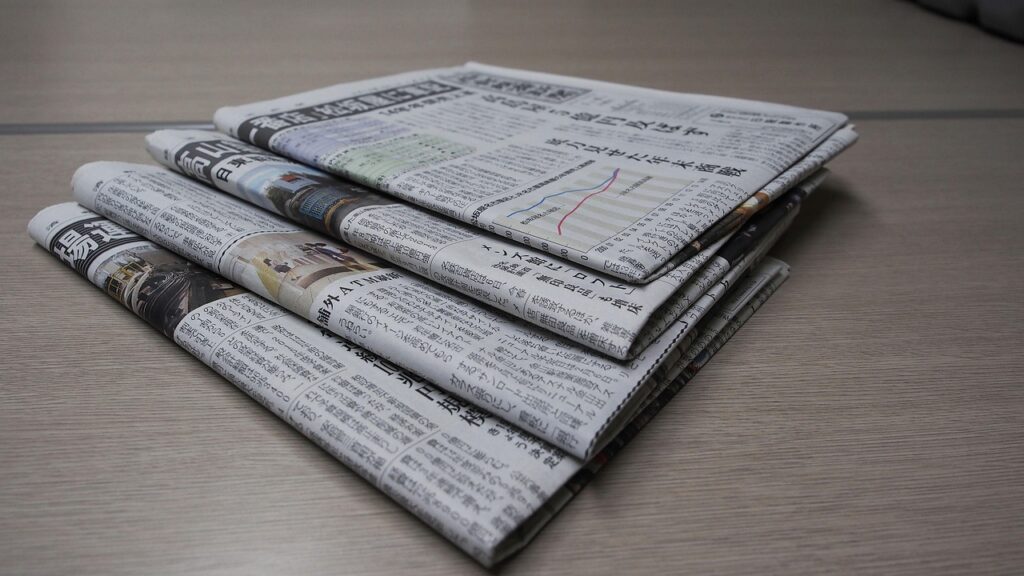
While newspapers call on the government to pursue sound public finances and avoid negative impacts on financial markets, it is not an especially admirable situation for them to benefit from the reduced tax rate themselves. This is not to argue that newspaper companies should renounce the benefit. However, they do have a responsibility to present the relevant facts fairly and to encourage public debate over the design and appropriateness of the reduced rate. That, in turn, connects to society thinking together about the country’s future.