
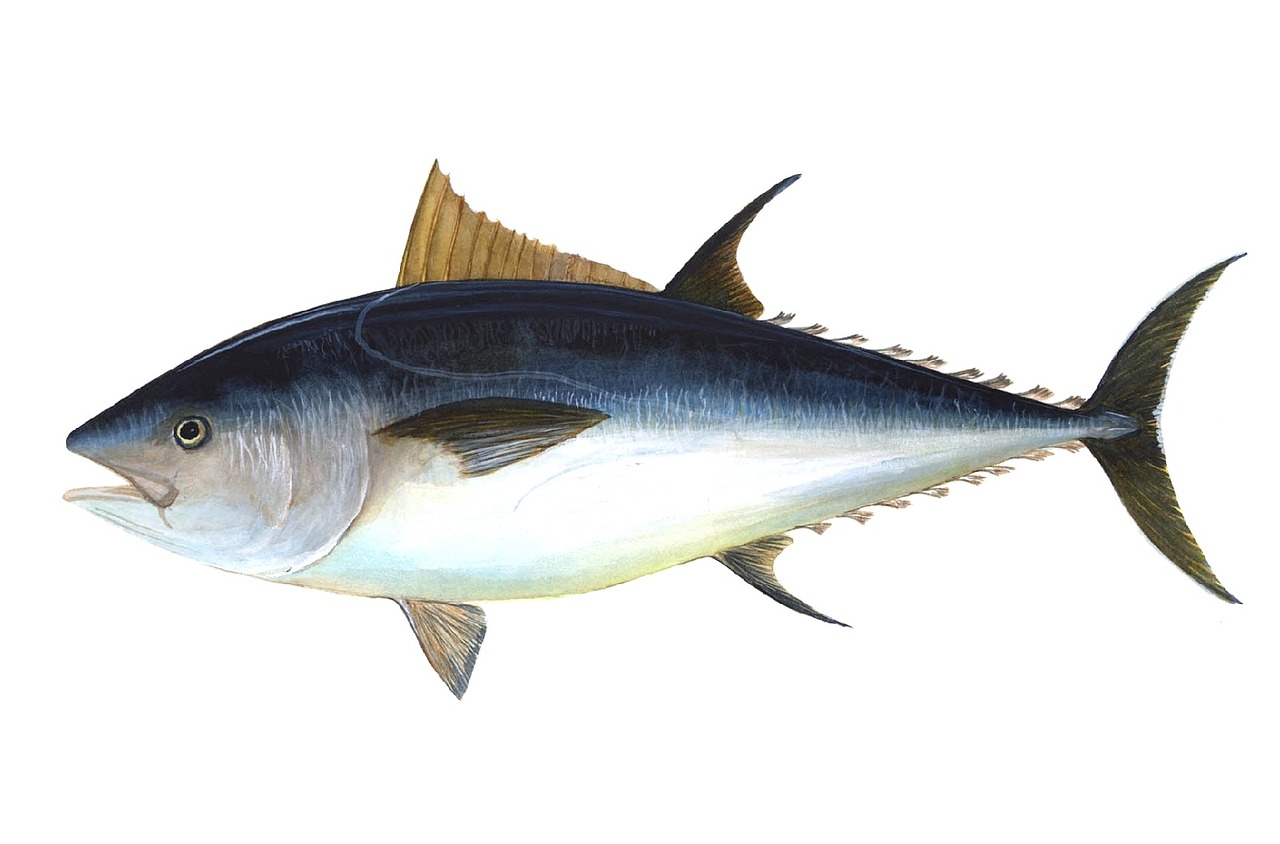
In the early hours of January 5, the Hatsuseri (the New Year’s first auction) was held at Tokyo’s Toyosu Market, where a bluefin tuna from Oma fetched ¥510.3 million (approximately $3.2 million). According to media reports, this marked the highest auction price ever recorded at the market.
The tuna weighed 243 kilograms, which translates to a price of about ¥2.1 million per kilogram. While a 250-kilogram-class Oma bluefin is considered the very top tier and direct comparisons are difficult, the usual transaction price for bluefin tuna at Toyosu Market is around ¥11,000 (about $70) per kilogram.
Why did the price soar to such an extraordinary level?
The answer lies in a distinctive Japanese preference for “Hatsumono”—a cultural fondness for items that are the first of their kind in a given season or year, such as the first catch of the year or the earliest harvest. Because this auction was the Hatsuseri, the tuna commanded a price far above normal market levels.
This article breaks down each element of the news and also explores why Hatsumono tend to be valued so highly in Japan.
Kiyomura, the Company That Won the Auction
Who, then, spent more than $3 million on a single tuna?
The buyer was Kiyomura, the company that operates the sushi restaurant chain Sushizanmai, which some readers may recognize from their visits to Japan. The company’s president, Kiyoshi Kimura, is known for a statue depicting him with his arms spread wide, placed in front of Sushizanmai restaurants—much like the Colonel Sanders statue outside KFC outlets.
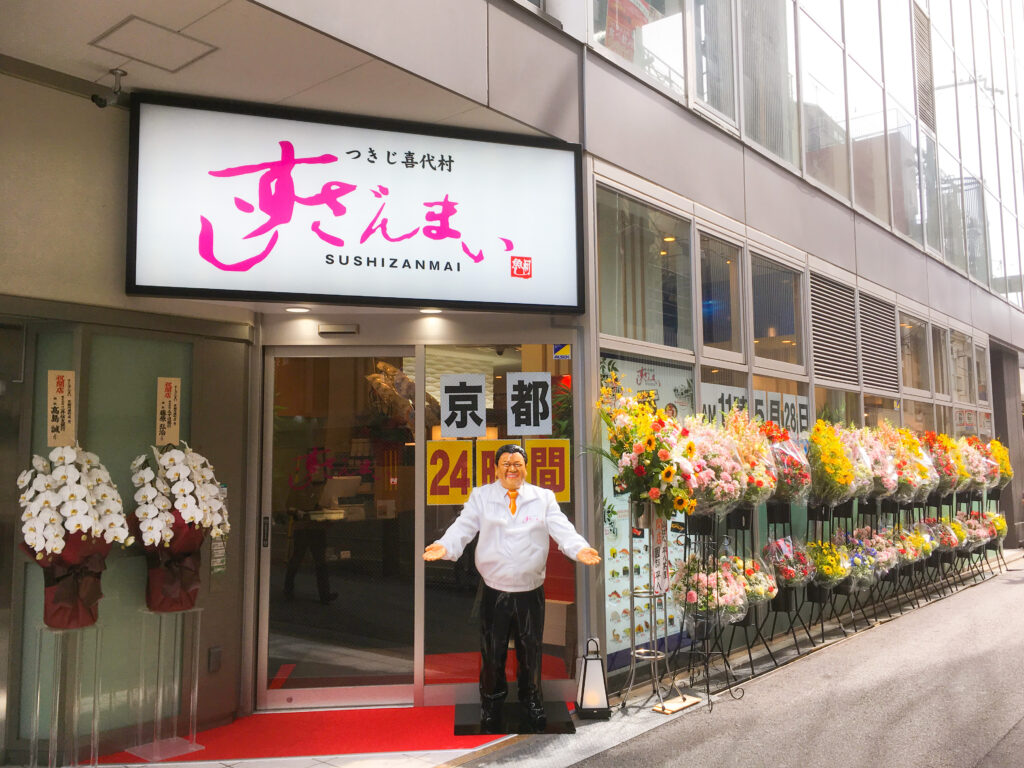
Sushizanmai positions itself as a non–conveyor-belt sushi restaurant that offers relatively affordable prices. In Japan, sushi restaurants are often broadly divided into two categories: “rotating” sushi restaurants (kaiten-zushi), where plates typically start at around ¥100, and “non-rotating” sushi restaurants, which are generally perceived as more expensive. Sushizanmai aims to make the latter category more accessible and currently operates 46 locations across Japan.
Kiyomura and Kimura have repeatedly placed winning bids at the Hatsuseri, both at Toyosu Market and, prior to 2018, at Tsukiji Market. In recent years, the company paid ¥333.6 million (about $3 million at the time) in 2019 and ¥193.2 million (about $1.8 million) in 2020 for the first tuna of the year.
Because Kiyomura is a privately held company, detailed financial statements are not publicly disclosed. However, based on data published in Japan’s Official Gazette, the company recorded net profits of approximately ¥650 million in the fiscal year ending September 2019. Assuming that its financial condition remains at a similar level today, the 2026 Hatsuseri purchase cannot be described as a trivial investment.
Why, then, does Kiyomura continue to bid aggressively at the first auction of the year? This point will be discussed in more detail later.
The Oma Fisherman Who Caught the Record-Breaking Tuna
The tuna that set the record was caught by Toyokazu Ito, a well-known fisherman in Oma, Aomori Prefecture. Ito runs Choho Suisan, operates the fishing vessel Choho-maru 11th, and also manages a restaurant called Maguro Choho-maru, which serves tuna dishes.
After the auction, Ito told the media:
“It doesn’t really sink in. Compared with normal market prices, it’s on a completely different scale.”
“The amount is so far removed from reality that my reaction was simply, ‘What?’”
These comments underscore just how far removed the Hatsuseri price was from everyday market levels.
Ito is a prominent figure in Oma, where amonument shaped like a 440-kilogram tuna—which he once caught—has been installed locally. This was also the second time that a tuna caught by Ito achieved the highest price as the so-called Ichiban Maguro, the top fish of the Hatsuseri.
Oma is famous as a tuna fishing port because the strong currents of the Tsugaru Strait tighten the flesh of the fish, producing exceptional texture and quality. In addition, local fishermen have established methods—such as single-line fishing—that help ensure freshness and consistent quality. As a result, “Oma tuna” has become firmly established as a premium brand.
What “New Rice” and Beaujolais Nouveau Reveal About Japanese Preferences
As noted earlier, Toyosu Market opened in 2018, taking over the role previously played by Tsukiji Market.
Tokyo operates several wholesale markets for fresh food, but Toyosu is among the largest in Japan in terms of seafood transaction volume and value, a position Tsukiji also held in the past. At one time, simply being described as “fish auctioned at Tsukiji” carried a kind of brand value, though some critics point out that large trading volumes do not necessarily guarantee superior quality. Toyosu handles not only seafood but also produce.
In other words, even outside the Hatsuseri, Tsukiji and Toyosu have long been central, nationally recognized hubs for seafood trading. This also means that Toyosu provides an environment in which exceptionally high prices are more likely to emerge during the first auction of the year.
Why, then, does a tuna fetch $3.2 million at the Hatsuseri?
Once again, the answer can be traced back to Japan’s fondness for Hatsumono.
Rice, Japan’s staple food, offers a clear example. Each autumn, “Shinmai” (newly harvested rice) appears on the market, and rice shops prominently advertise its arrival. A friend of mine who works as a chef in a public institution’s cafeteria once remarked that diners with particularly refined palates sometimes ask after a meal, “Did you switch to new rice?”—a question that only comes once the change has actually been made.
For readers outside Japan, Beaujolais Nouveau provides a more familiar comparison. Japan has long been one of the most enthusiastic markets for this young wine, in part because its time zone allows the release to be celebrated earlier than in Europe or North America. Trading companies and retailers have capitalized on this by actively marketing Beaujolais Nouveau in Japan. While the craze has cooled in recent years, shops and convenience stores still put up signs announcing its release each year.
By this point, it should be clear that Japanese consumers have a strong affinity for “firsts.” The reasons for this are debated. My own view is that the cultural importance of rice as a new harvest, combined with a Japanese sensibility that associates freshness with vitality and positive energy, has influenced attitudes toward many other products.
Regardless of the underlying reasons, the preference for “Hatsu”—the first—remains a fact. It is also a fact that can be leveraged in marketing.
This is precisely why Kiyomura continues to spend millions of dollars at the Hatsuseri. The first tuna auction at Toyosu attracts intense media attention, and securing the highest bid virtually guarantees nationwide—and often international—coverage.