
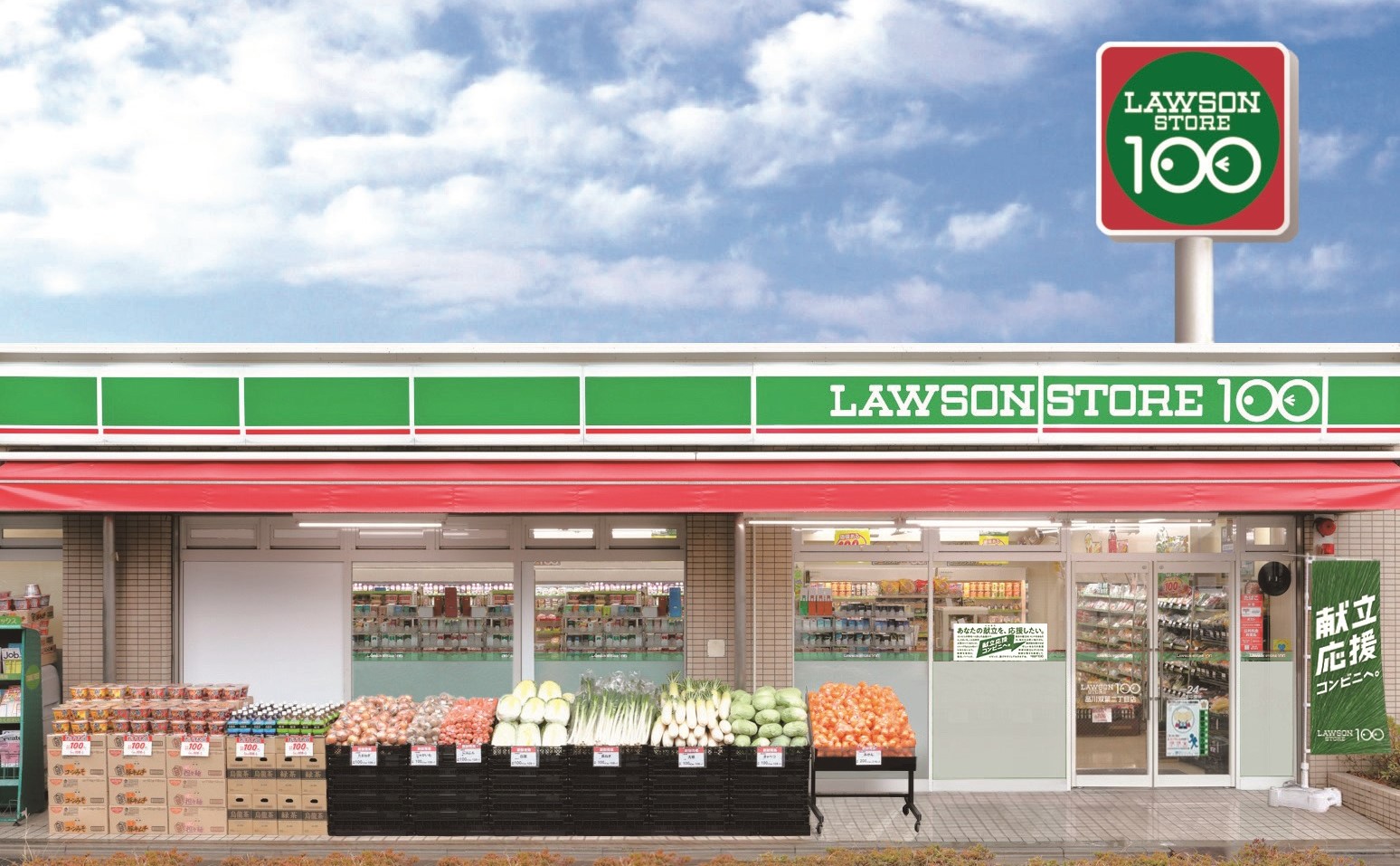
Multiple Japanese media outlets have reported that Lawson plans to reposition its Lawson Store 100 chain by shifting it toward a small-format supermarket model. The change will initially apply only to company-owned stores and will later be expanded to franchised locations. However, Lawson has indicated that not all stores will undergo the transformation.
Lawson Store 100 is commonly known as “100-yen Lawson.” When the chain was first launched, it primarily stocked products priced at 100 yen, in line with its name. While many items today are priced above 100 yen, the core concept remains unchanged: offering low-priced food products as its main focus.
The Current State of GMS in Japan’s Major Cities
Globally, the general merchandise store (GMS) sector has been experiencing sluggish growth in terms of expansion potential. Nevertheless, demand has not disappeared, and the format continues to maintain a certain presence. Japan reflects this same pattern.
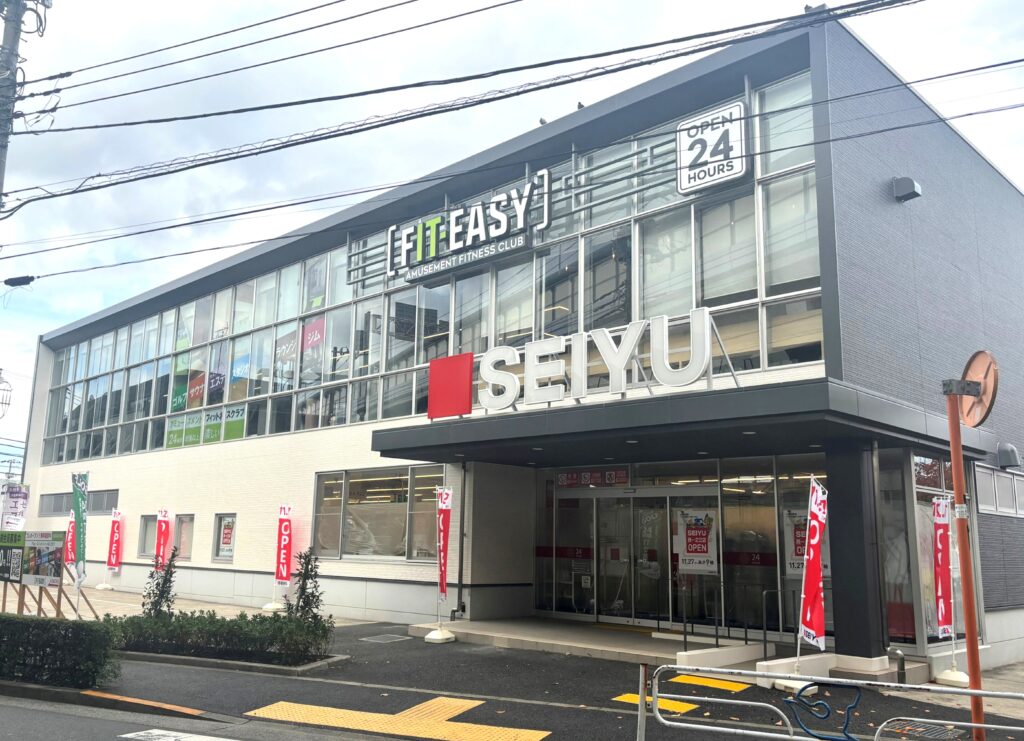
For example, Seven & i Holdings is downsizing its GMS business under the Ito Yokado brand, yet it has announced plans to continue operating roughly 90 stores nationwide for the time being. Similarly, SEIYU, another GMS operator, has changed hands multiple times and was acquired this year by TRIAL Holdings, a retailer based in Fukuoka. SEIYU is also expected to continue operating under its existing brand name for the foreseeable future.
Against this backdrop, one of the major challenges facing GMS operators and large supermarkets seeking to survive is expansion into major urban areas. Urban residents, like those in suburban residential areas, naturally value the ability to purchase a wide range of products at affordable prices from GMS operators and large supermarkets. However, securing sufficiently large plots of land in Japan’s densely subdivided urban areas is extremely difficult for large retail operators.
This is precisely why SEIYU’s extensive network of stores in the Tokyo metropolitan area was so attractive to TRIAL, whose traditional stronghold lies in Kyushu.
Small-Format Supermarkets as an Urban Strategy
In response, one strategy increasingly adopted by Japan’s GMS operators is the aggressive rollout of small-format supermarkets in urban areas. A prominent example is AEON’s “My Basket.” In materials provided to property owners, My Basket describes its typical store layout as occupying a single floor with a minimum floor space of around 120 square meters—roughly equivalent to that of a convenience store.
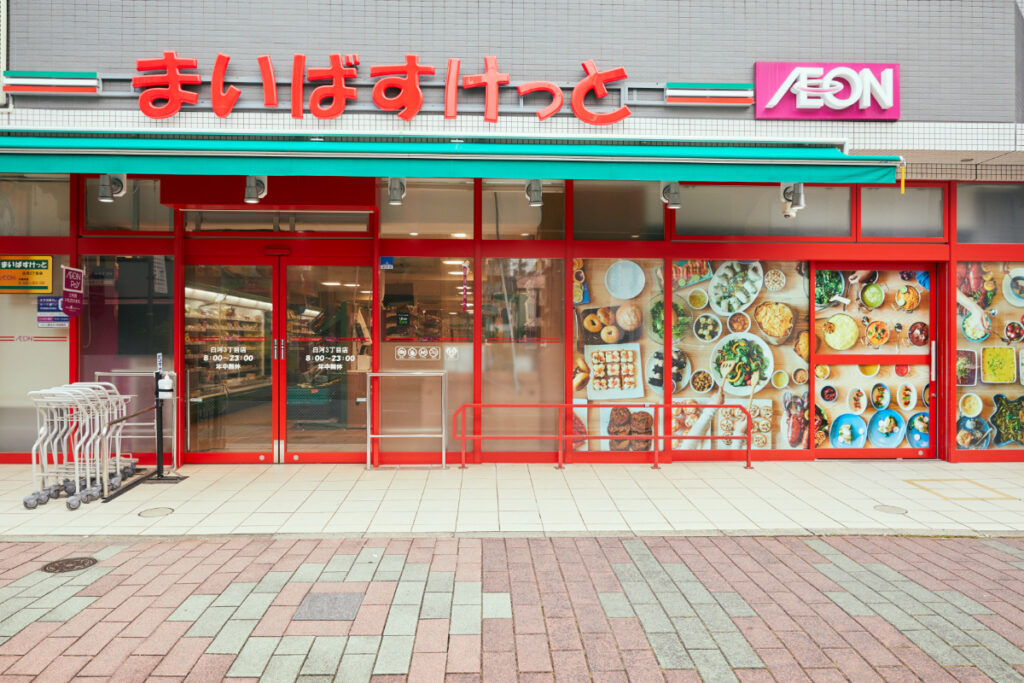
Another representative player in this urban small-store segment is Maruetsu Petit, a brand operated by United Super Markets Holdings (USMH). Since AEON Group holds a majority stake in USMH, both My Basket and Maruetsu Petit can ultimately be regarded as part of the AEON retail ecosystem.
Not Only AEON: Don Quijote’s Growing Presence
How, then, should we interpret Lawson Store 100’s shift in this retail environment?
Clearly, the move can be seen as an attempt to leverage Lawson’s strengths while competing with AEON Group, which has been steadily expanding into urban areas through formats such as My Basket. TRIAL, too, has entered the fray, opening a small-format supermarket called “TRIAL Go” in Tokyo in November.
In addition, while its core business remains large-scale stores, Don Quijote—operated by Pan Pacific International Holdings (PPIH)—also commands a strong presence. PPIH acquired the GMS operator Nagasakiya in 2007 and Uny in 2009. Through these acquisitions, Don Quijote, which originally started as a discount store, gained expertise in food and prepared-meal sales. Today, Don Quijote succeeds in attracting customers in both major metropolitan areas and regional cities.

Don Quijote stores sell not only food but also daily necessities and clothing. Although store sizes vary, Lawson Store 100—originally rooted in the convenience-store model and now shifting its format—and Don Quijote are likely to compete head-on.
In short, amid Japan’s population decline, retailers including GMS operators are concentrating their efforts on major urban areas, where growth potential still remains. Lawson Store 100’s format shift highlights a unique strength: offering prices lower than convenience stores while still carrying items typically unavailable at GMS operators but commonly found in convenience stores.
Retail competition in Japan’s major cities is set to intensify further.