
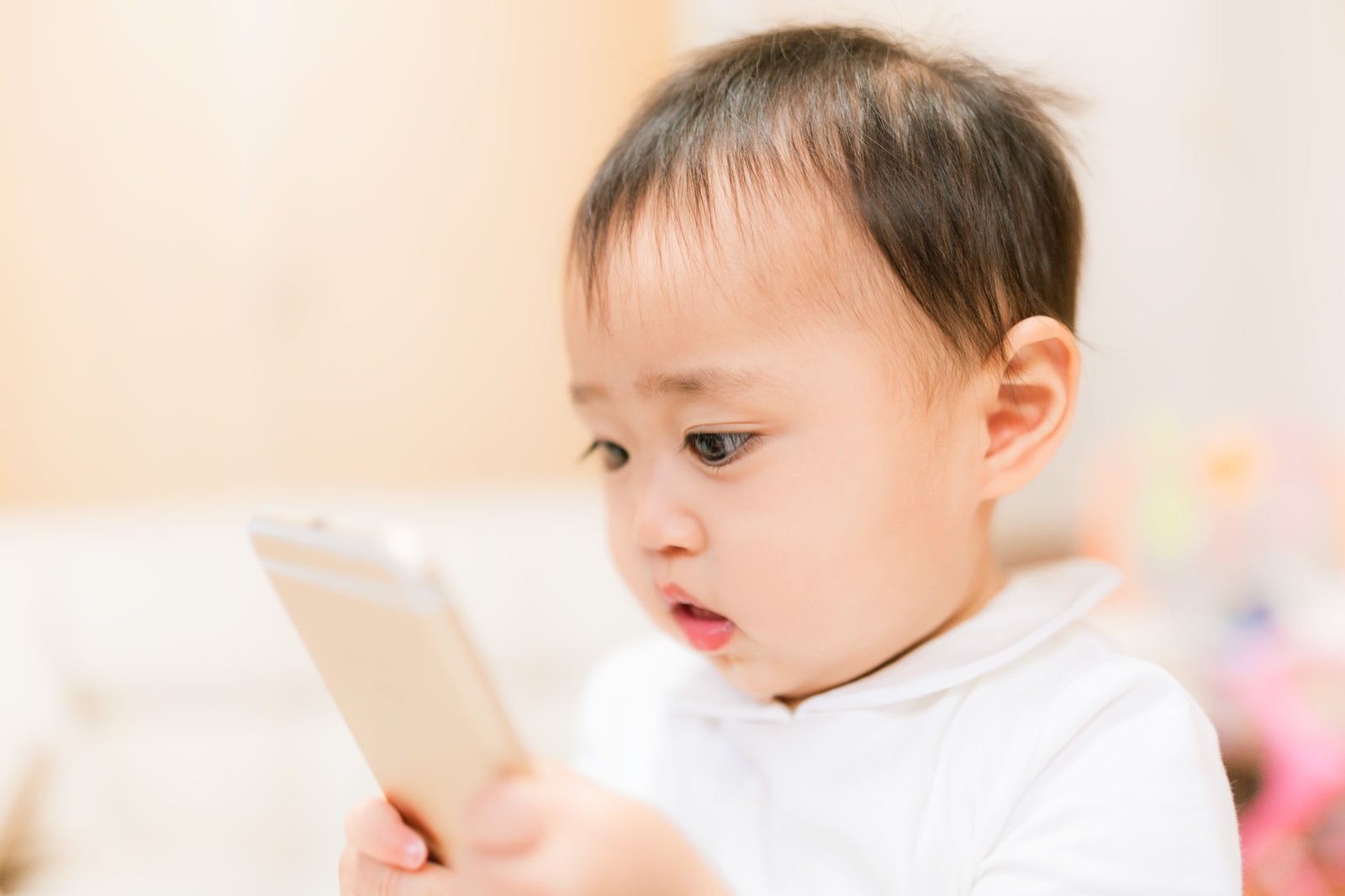
Australia drew global attention on December 10 when a law prohibiting social media use by children under the age of 16 came into effect. Naturally, the news was covered widely in Japan as one of the major international stories of the day.
Meanwhile, some local governments in Japan, though not imposing direct restrictions on social media use—and without any binding force—have enacted ordinances that encourage children to limit their smartphone usage. Today, we will look at two such cases.
Kagawa Prefecture’s “60-Minute Gaming” Ordinance
Japan’s administrative structure can be viewed through three layers: the national government, prefectures, and municipalities (the wards of Tokyo are sometimes misunderstood as being equivalent to cities, but legally they are considered autonomous local entities that function together with the Tokyo Metropolitan Government). Municipalities make up prefectures, and the country of Japan consists of 47 prefectures.
One of these prefectures, Kagawa, enacted the “Kagawa Prefecture Internet and Game Addiction Prevention Ordinance” in 2020. Outside Japan, Kagawa is known for the contemporary art island of Naoshima and for its Sanuki udon noodles.

The ordinance states that gaming time should be limited to 60 minutes per day, or 90 minutes on school holidays, as a general guideline. It also sets guidelines for smartphone use: children who have not yet completed compulsory education (under 16) should stop using their phones by 9 p.m., and older adolescents (ages 16–18) should aim to stop by 10 p.m.
There were objections to the idea—such as questioning whether time limits truly matter if gaming addiction is indeed a medical condition. While I recall heated debate both within and outside Kagawa at the time of the ordinance’s adoption, by 2025 it has largely faded from public attention.
Although restricting the behavior of children—or people in general—beyond what is necessary for basic public morals is rarely desirable, this ordinance is merely a guideline with no penalties attached. As a result, it has become largely symbolic.
Toyoake City in Aichi Prefecture: An Ordinance Aimed at “Ensuring Adequate Sleep”

Toyoake City in Aichi Prefecture also passed a similar ordinance earlier this year, which went into effect in October. Its name is the “Ordinance on the Promotion of Appropriate Use of Smartphones and Other Devices in Toyoake City.”
The Toyoake ordinance encourages children to limit their recreational smartphone use to two hours per day. It also recommends that elementary school children stop using their phones after 9 p.m., and junior high and high school students after 10 p.m.
Although the two ordinances—Kagawa’s and Toyoake’s—are very similar in content, their core objectives differ greatly. Kagawa’s aims to prevent addiction to games and internet use, while Toyoake’s seeks to ensure sufficient sleep. To gain public understanding, the city explained on its official website that “the purpose is not to monitor citizens or restrict their rights,” and that “there is absolutely no need to police each other with a rigid two-hour rule, which would be both meaningless and counterproductive.”
As with Kagawa’s ordinance, Toyoake’s attracted some skepticism. However, thanks to the city’s efforts to communicate its intentions—and perhaps because Australia had already enacted its child smartphone-use ban—some media outlets reported on the matter in a calm, observational tone.
A Cultural Aside: What These Ordinances Reveal About Japan’s Concept of ‘Uchi’ and ‘Soto’
This is slightly tangential to the main topic, but there is an insight here that may be useful to readers interested in doing business in Japan. In the article referenced as a source for Toyoake’s ordinance, the headline reads: “Controversy Over ‘Two-Hour Smartphone Limit’ Proposal—Critics Say ‘It’s None of Their Business,’ While City Explains It’s a ‘Principle-Based Ordinance.’”
Some readers may hold an image of Japanese people as being “conservative” or “obedient to authority.” There is some truth to that.
However, another important concept in Japanese thinking is the distinction between “uchi” (inside) and “soto” (outside). The character for “house,” ie, is sometimes pronounced “uchi” in this cultural sense.

This distinction reflects a cultural pattern: while Japanese people may tend to follow rules and norms in public (soto), once inside the home (uchi), they strongly dislike outside interference. This represents the Japanese emphasis on privacy and the sanctity of one’s personal domain.
Two Ordinances That Serve Only as Guidelines
Both the Kagawa and Toyoake ordinances merely present guidelines for how much time children should spend on games or smartphones. They do not impose any penalties on companies or individuals. Readers working in business can rest assured on this point.
Because they lack binding force, these ordinances rarely become major topics of discussion among the Japanese public.
Meanwhile, concerns about the negative effects of smartphones and social media on children are shared not only in Australia and Japan but across the world. Those developing devices or services for children will need to consider these worries from the design stage onward.